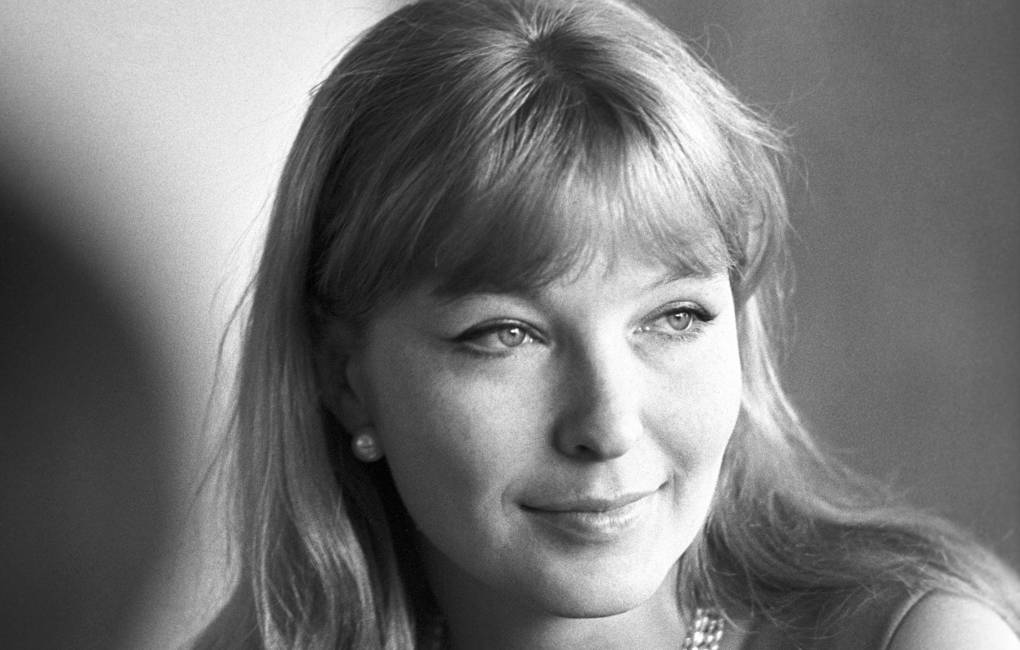
The news marks the end of an extraordinary life that took Vlady from an artistic Russian immigrant family outside Paris to some of the most celebrated stages and film sets in European cinema.
Born Catherine Marina de Poliakoff-Baïdaroff on May 10, 1938, in Clichy, France, Vlady grew up surrounded by the arts.
Her father, Vladimir Poliakoff, was an opera singer, while her mother, Militza, was a dancer. Vlady initially appeared destined to follow her mother into dance before finding her future in front of the camera.
She entered the film world remarkably young.
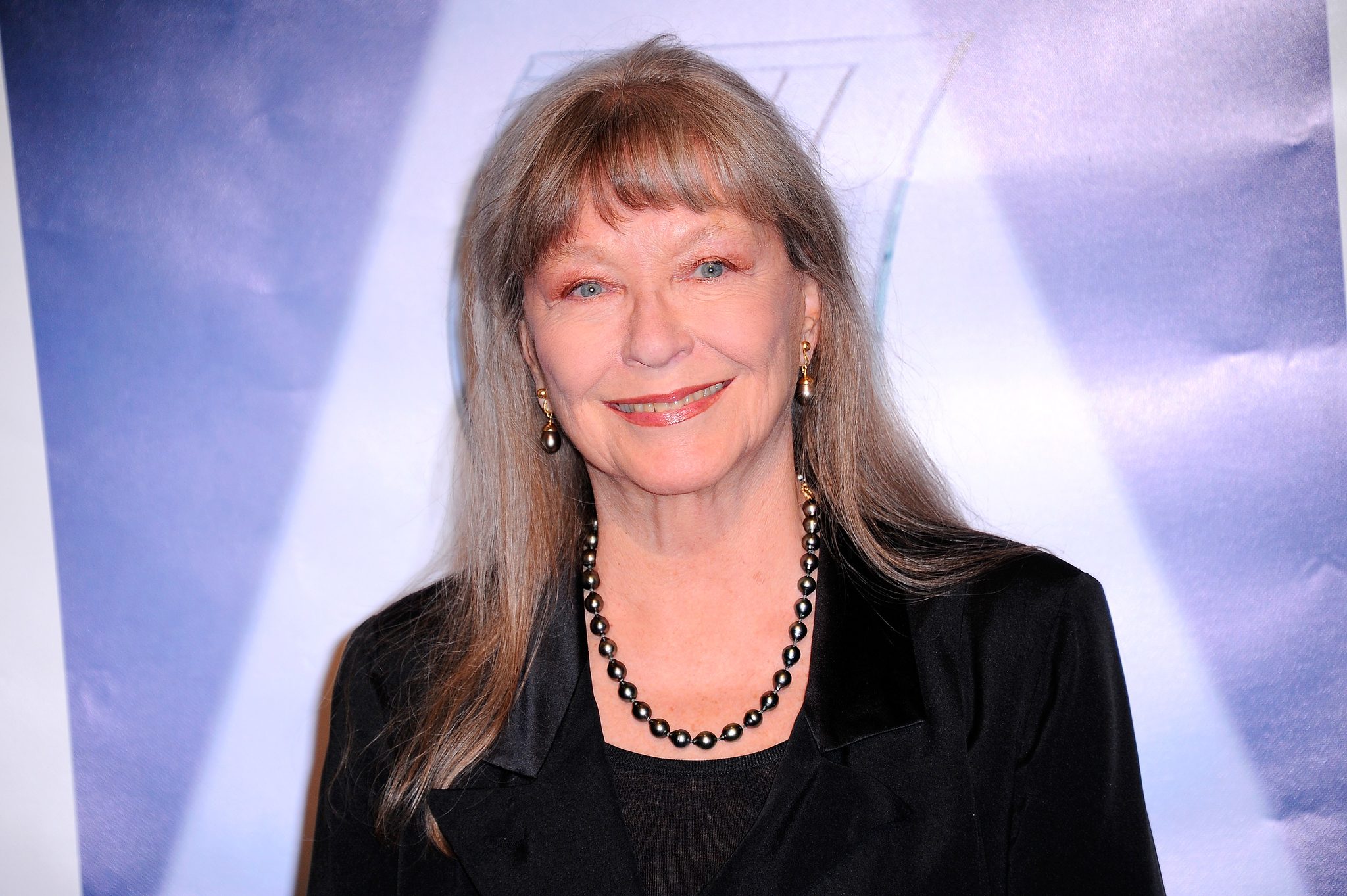
By her teenage years, it was already clear that she possessed something audiences and filmmakers noticed.
At just 16, Vlady received the Suzanne Bianchetti Prize, recognizing her as one of France’s most promising young actresses, for her work in André Cayatte’s Avant le déluge.
Her beauty initially helped establish her screen presence, but Vlady would ultimately build a career that went far beyond glamorous roles.
She moved between popular cinema and ambitious auteur projects, becoming a significant figure in both French and Italian film.
Her defining international breakthrough came in 1963.
Vlady starred opposite Ugo Tognazzi in Marco Ferreri’s The Conjugal Bed, known in French as Le Lit conjugal.
Her performance earned her the Best Actress prize at the Cannes Film Festival, one of the greatest honors of her career.
Two years later, she appeared as Lady Percy in Orson Welles’ Shakespearean production Chimes at Midnight, also known as Falstaff.
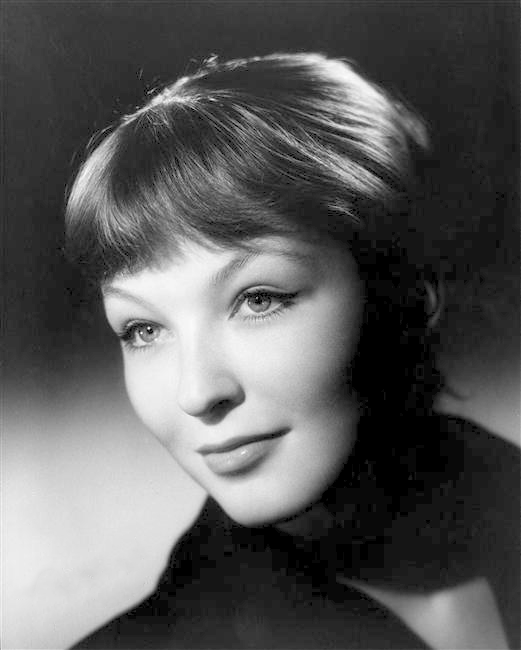
She later became the central figure in Jean-Luc Godard’s 1967 film Two or Three Things I Know About Her, further cementing her association with some of the most influential filmmakers of the era.
Vlady’s life away from the screen was equally remarkable.
She also pursued music, recording with her sisters, and became known for her political and social activism.
Her causes included opposition to the Algerian War, women’s reproductive rights, support for undocumented migrants and the fight for housing rights.
Her family specifically highlighted that activism following her death, recalling her involvement with causes ranging from the Manifesto of the 343 to the rights of undocumented migrants and the Droit au logement housing movement.
Later in her life, Vlady and her partner, physician and political activist Léon Schwartzenberg, became closely associated with the fight for housing rights.
But perhaps no relationship in Vlady’s personal life attracted more fascination than her marriage to Soviet singer, actor and poet Vladimir Vysotsky.
Their relationship unfolded largely across borders at a time when Vysotsky’s ability to leave the Soviet Union was heavily constrained.
Their love story became part of both artists’ legacies, inspiring some of Vysotsky’s work and later becoming the subject of Vlady’s memoir about their relationship.
Vlady’s personal life intersected repeatedly with the artistic and intellectual world that surrounded her.
Robert Hossein was her first husband, while Vysotsky became her third. She later shared her life with Schwartzenberg.

Yet reducing Marina Vlady to her famous relationships would overlook the extraordinary scope of her own career.
She was an actress who began working as a child and ultimately appeared in more than 80 films.
She was a Cannes Best Actress winner.
She worked with Orson Welles and Jean-Luc Godard.
She was also a singer, writer and activist who continued using her public voice far beyond movie sets.
Her children emphasized that larger life when announcing her death.
Rather than defining her final chapter only through loss, they remembered a woman who had lived fully.
For generations of film lovers, Marina Vlady will remain connected to an era when European cinema was undergoing enormous artistic change — and to unforgettable performances that allowed her to stand alongside some of the most important filmmakers of the 20th century.
From the young daughter of Russian émigré artists in Clichy to an internationally recognized actress standing at Cannes with its Best Actress prize, Vlady’s journey was anything but ordinary.
More than 80 films, music, writing, political activism and a personal life that crossed cultures and borders all became chapters in the same remarkable story.
Marina Vlady was 88.
{"post":114628,"page":2,"next":[{"id":114622,"title":"Beloved actress shares sad update amid stage 4 cancer battle","url":"https:\/\/new24.info\/114622"},{"id":114620,"title":"What Spilled Out Of My Son\u2019s Backpack That Afternoon, And The Promise His Father Left Behind In A Hospital Room","url":"https:\/\/new24.info\/114620"},{"id":114618,"title":"At 91, Shirley MacLaine Reflects on Her Storied Career and Her Approach to Aging","url":"https:\/\/new24.info\/114618"},{"id":114611,"title":"I poured white vinegar into my toilet tank and left it overnight for the first time in 15 years. This is what happened","url":"https:\/\/new24.info\/114611"},{"id":114609,"title":"What My Father Said Into That Speakerphone, And Why He Had Been Sitting In My Kitchen That Morning At All","url":"https:\/\/new24.info\/114609"},{"id":114607,"title":"When Grandma\u0027s \u0027Just for Emergencies\u0027 Phone Became a Secret Weapon Against Me","url":"https:\/\/new24.info\/114607"},{"id":114603,"title":"Sally Field\u0027s Honest Take on Her Worst On-Screen Kiss\u2014With Burt Reynolds","url":"https:\/\/new24.info\/114603"},{"id":114598,"title":"Backlash Erupts After Megyn Kelly Criticizes Cindy Crawford\u0027s Parenting Following Son\u0027s Death","url":"https:\/\/new24.info\/114598"},{"id":114594,"title":"He Stood at the Top of the Stairs, Breathing Without a Ventilator for the First Time in Years","url":"https:\/\/new24.info\/114594"},{"id":114591,"title":"Mark Consuelos Tells Kelly Ripa On Air He Needs to Step Back","url":"https:\/\/new24.info\/114591"},{"id":114588,"title":"Delinda Rood Stuns Ryan Seacrest With an Instant Bonus Round Solve","url":"https:\/\/new24.info\/114588"},{"id":114574,"title":"At a Company Party, I Found Out My Husband of 23 Years Was Seeing His Young Coworker and Called Me \u0027Nothing More Than His Housekeeper\u0027 \u2013 Then Our Boss Wiped That Smug Smile off His Face","url":"https:\/\/new24.info\/114574"},{"id":114571,"title":"Nobody at School Understood Why a Father Wouldn\u0027t Let His Daughter Cut Her Hair \u2013 She Explained Why and We Couldn\u0027t Look at Him","url":"https:\/\/new24.info\/114571"},{"id":114568,"title":"The Hidden Poison in Your Pantry: Why That Simple Garnish Could Be Making You Sick","url":"https:\/\/new24.info\/114568"},{"id":114565,"title":"This Mysterious Chunk of Steel Is Stumping Everyone: 99% Have No Idea What It\u2019s Really For!","url":"https:\/\/new24.info\/114565"},{"id":114563,"title":"Jonathan Taylor Thomas Detained After Late-Night DUI Stop, Case Still Unresolved","url":"https:\/\/new24.info\/114563"},{"id":114560,"title":"Presley Gerber, Son of Cindy Crawford, Dies at 27 Amid Suspected Overdose Investigation","url":"https:\/\/new24.info\/114560"},{"id":114553,"title":"Marc Singer, the Beastmaster and V Star, Spotted in a Rare Casual Moment at 78","url":"https:\/\/new24.info\/114553"},{"id":114540,"title":"This beloved Hollywood star has a refreshingly honest take on aging","url":"https:\/\/new24.info\/114540"},{"id":114537,"title":"My Future MIL Dumped All Our Stamped Wedding Invitations Into a Bucket of Dirty Water and Swore It Was \u0027Just a Mishap\u0027 \u2013 What My Fianc\u00e9 Did Next Was Her Worst Nightmare","url":"https:\/\/new24.info\/114537"}]}