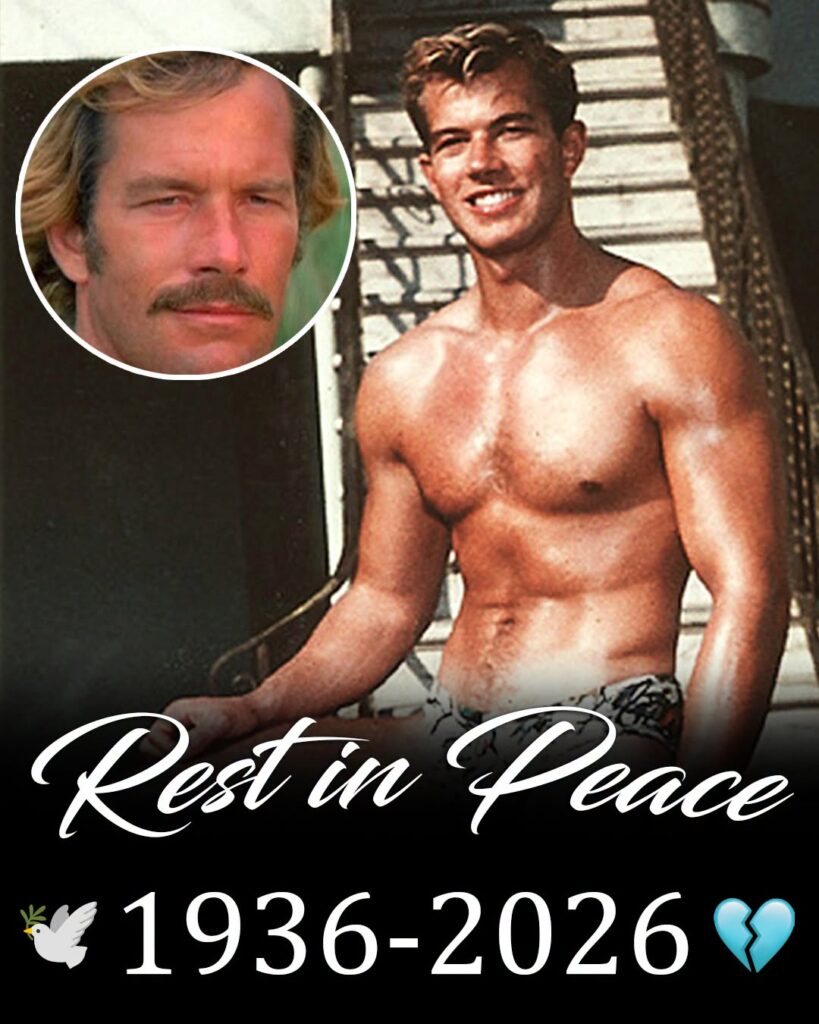
According to producer and longtime friend Joan Borsten, Harrison died Friday of natural causes in Los Angeles, bringing to an end a remarkable life that included more than 100 film appearances.
Yet one of the most fascinating parts of Harrison’s Hollywood story involves a movie he didn’t make.
Harrison once turned down the leading role in Sergio Leone’s A Fistful of Dollars.
Then, when filmmakers asked him to recommend another American actor, Harrison reportedly suggested a relatively unknown television star named Clint Eastwood.
His reason was surprisingly simple.
Eastwood knew how to ride a horse.
That recommendation helped set in motion one of the most legendary careers in movie history.
But Harrison’s own story was remarkable too.
Born in Salt Lake City on May 26, 1936, Harrison arrived in Hollywood as a teenager with dreams of becoming an actor.
He was only 17.
Before movies provided a living, his imposing physique opened other doors.
Harrison worked at gyms associated with prominent bodybuilders Vic Tanny and Bert Goodrich and also modeled for the physique magazines that were popular during the era.
The muscular look would eventually become one of his greatest professional advantages.
Harrison also took acting seriously, studying under respected teacher Sanford Meisner as he attempted to establish himself in the film industry.
Small parts gradually followed.
During the late 1950s and early 1960s, Harrison appeared in productions including Kronos, Jeanne Eagels, Too Much, Too Soon, South Pacific and Tall Story.
He was working in Hollywood.
But Hollywood wouldn’t be the place that made him a star.
That happened after Harrison made the bold decision to leave America for Europe.
Italy’s film industry was booming, and studios were producing enormous numbers of historical adventures, sword-and-sandal epics and, eventually, Westerns.
Harrison seemed almost designed for them.
He was tall, muscular and conventionally handsome, with the physical presence required to convincingly play warriors, gladiators and gunslingers.
Instead of competing for supporting roles in Hollywood, he suddenly had the opportunity to become a leading man overseas.
His breakthrough arrived with The Invincible Gladiator in 1962.
The film placed Harrison squarely inside the enormously popular “peplum” genre — the sword-and-sandal adventures that had already turned actors such as Steve Reeves into international stars.
More roles quickly followed.
Harrison appeared in movies including Avenger of the Seven Seas and Gladiator 7, establishing himself as one of the many American actors who discovered that European filmmakers were eager to cast them as heroes.
Then the cinematic landscape changed.
Audiences developed an appetite for a different kind of hero.
The swords were replaced by six-shooters.
Ancient arenas became dusty frontier towns.
And the spaghetti Western was born.
Harrison adapted easily.
In 1963, he starred in Gunfight in the Red Sands, an Italian-Spanish Western notable in part for its music by Ennio Morricone, the composer who would soon become inseparable from the sound of the genre.
Harrison had found another niche.
But his career could have taken an even more dramatic turn the following year.
Sergio Leone was preparing A Fistful of Dollars, the movie that would ultimately transform the Western genre and turn Clint Eastwood into an international star.
Harrison was reportedly offered the leading role.
He said no.
What happened next became one of the great “what if?” stories of movie history.
According to Harrison, filmmakers presented him with the names of three American actors they were considering as alternatives.
They weren’t particularly familiar with them, so they asked Harrison which one he would recommend.
Harrison knew all three.
He picked Clint Eastwood.
“After I affirmed I would not do the film they read me three names of actors from Hollywood that had been sent to them,” Harrison later recalled in an interview with Nanarland.
“Since they did not know who they were they asked me to recommend one of them. I knew of all three.”
Then came his wonderfully practical explanation.
“My choice was Clint, only because he knew how to ride a horse. So many American actors were not able to ride well.”
Eastwood accepted the role.
A Fistful of Dollars became a sensation.
He returned as the mysterious gunslinger in For a Few Dollars More and The Good, the Bad and the Ugly, completing Leone’s famous Dollars Trilogy and becoming one of cinema’s defining Western stars.
Harrison’s recommendation therefore became a fascinating footnote in film history.
Had he accepted the role himself, both men’s careers might have unfolded very differently.
Instead, Harrison continued building his own unconventional filmography.
He became one of the dependable international actors working throughout Europe’s thriving low-budget movie industry.
These weren’t necessarily the lavish Hollywood productions that won Academy Awards.
Many were made quickly.
Budgets could be modest.
Titles were sometimes changed repeatedly for different international markets.
Actors from multiple countries might appear together, sometimes speaking different languages while filming scenes that would later be dubbed.
But the movies traveled.
They played in cinemas and drive-ins around the world.
And decades later, many became cult favorites.
Harrison’s ability to adapt helped keep him working long after many of his contemporaries disappeared.
By the end of the 1970s, however, the European genre-film boom that had sustained much of his career was beginning to change.
So Harrison reinvented himself again.
This time, the journey took him even farther from Hollywood.
He went to Hong Kong.
There, Harrison became involved in a prolific period of low-budget action filmmaking, particularly the strange world of ninja movies that developed an enthusiastic international audience during the 1980s.
The experience became one of the most unusual chapters of his career.
Footage featuring Harrison could be incorporated into movies in ways that left even the actor himself bewildered by the finished products.
He later spoke with remarkable bluntness about that period.
“This experience made me feel very dirty,” Harrison said. “I really felt like a prostitute.”
He recalled seeing part of one of the films and barely recognizing what he had participated in.
“They were thrown in my face all the time,” he said. “I saw part of one once, it had something to do with witches. I don’t think I had more than a couple of scenes in it.”
It wasn’t exactly the kind of career retrospective most actors dream of giving.
But it perfectly illustrated the unpredictable world Harrison had entered.
The films were inexpensive.
They were frequently bizarre.
And Harrison sometimes had little idea what the final product would ultimately become.
Yet those same movies eventually developed cult audiences of their own.
What had once seemed like disposable low-budget entertainment became fascinating to collectors and fans interested in exploitation cinema, martial-arts movies and the wonderfully strange international film industry of the era.
By the time Harrison stepped away from acting, his résumé contained more than 100 films.
He had played gladiators.
Pirates.
Cowboys.
Soldiers.
Adventurers.
Action heroes.
And characters in ninja films so unusual that even he struggled to explain them.
He also moved behind the camera and directed several projects.
His final screen appearances included the 1993 thriller Angel Eyes and the 2000 movie Jerks.
Harrison never became the kind of American superstar whose name was instantly recognized in every household.
But that doesn’t tell the whole story.
For decades, there was another movie industry existing alongside mainstream Hollywood.
It stretched from Rome to Madrid to Hong Kong.
It produced Westerns, historical adventures, martial-arts movies and countless low-budget genre films.
American actors traveled overseas and suddenly found themselves starring on posters in countries they had never imagined visiting.
Harrison became one of the recognizable faces of that world.
And then there is the Clint Eastwood story.
It is almost impossible not to wonder what would have happened if Harrison had said yes to A Fistful of Dollars.
Would Richard Harrison have become Leone’s Man with No Name?
Would Eastwood have found another route from television into international movie stardom?
Would The Good, the Bad and the Ugly have looked completely different?
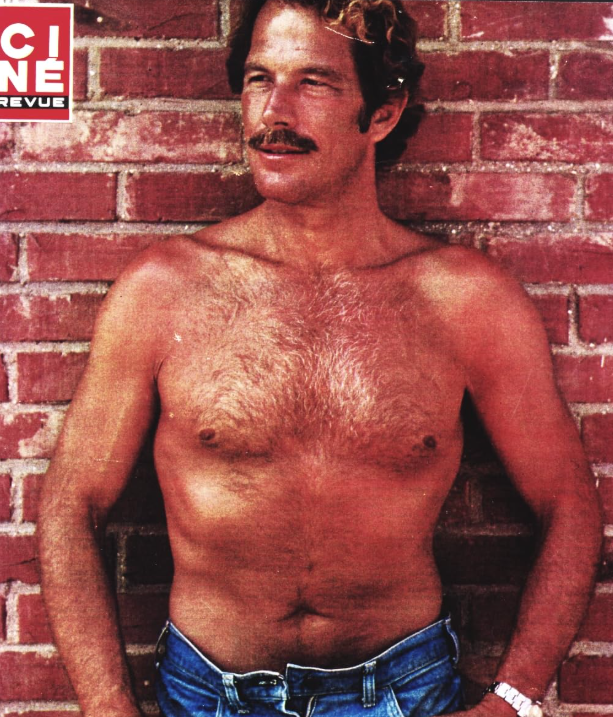
Film history is filled with casting decisions that appear insignificant at the time and enormous in hindsight.
Harrison happened to be involved in one of them.
He declined a role.
He was shown three names.
He picked the guy who could ride a horse.
And that guy became Clint Eastwood.
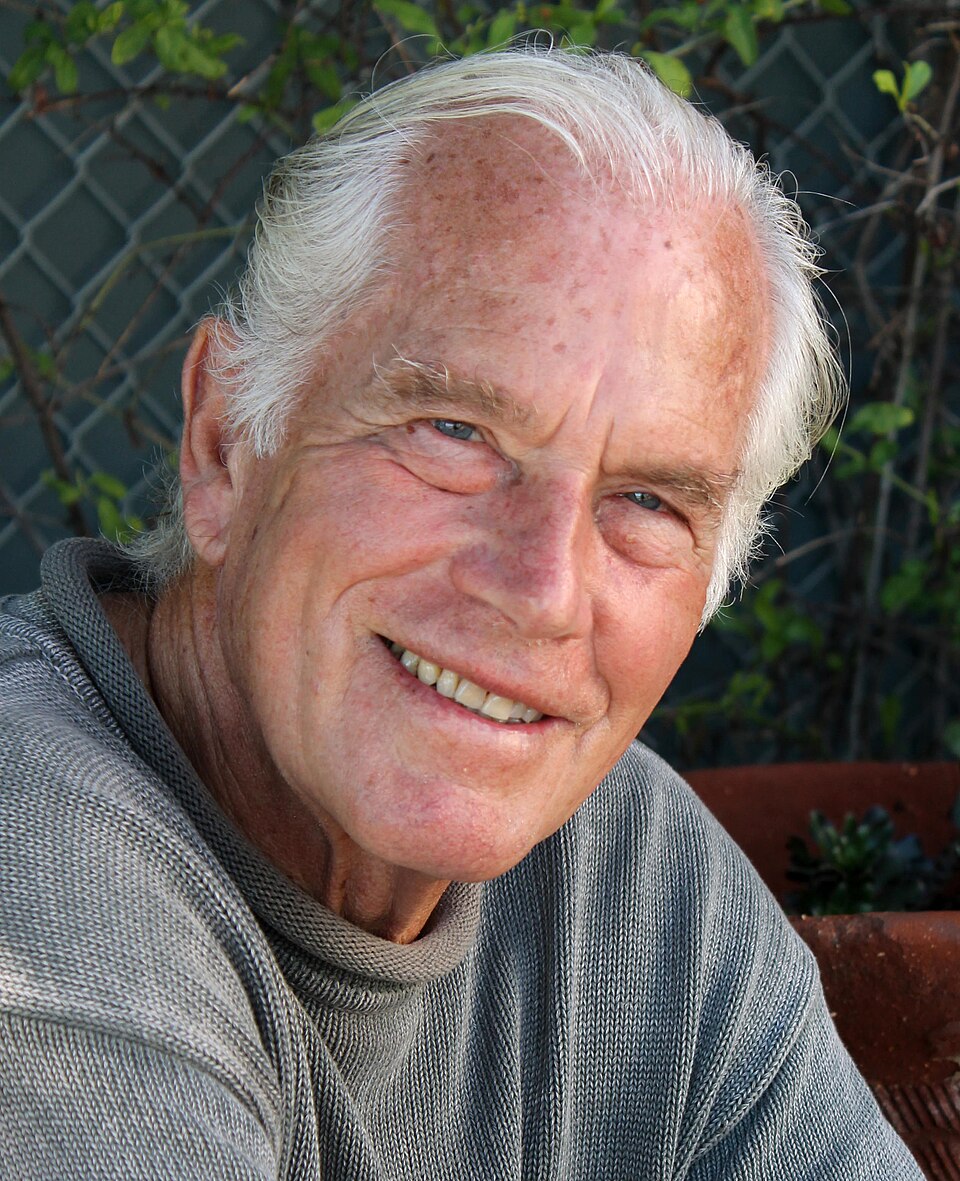
Harrison, meanwhile, followed his own strange and fascinating path through more than four decades of international cinema.
For fans who remember the golden age of spaghetti Westerns, his death represents another farewell to a generation of actors who made those films unforgettable.
The dusty landscapes may have been European.
The towns may have been movie sets.
The gunshots were fake.
But for millions of viewers, those films created a version of the Wild West that felt enormous on the big screen.
Richard Harrison was part of that world.
And more than half a century later, his face — and his surprising connection to one of Hollywood’s biggest stars — remains an unforgettable piece of movie history.