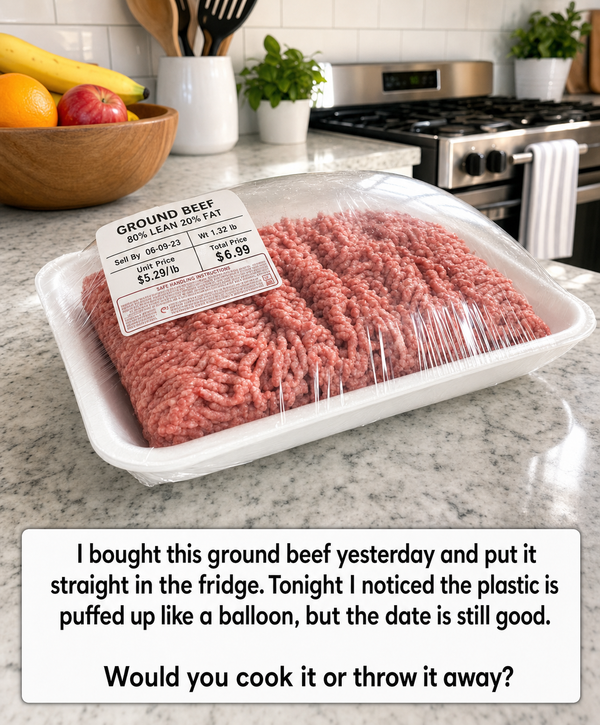
…planned by the manufacturer or produced by bacteria growing where they shouldn’t be. Telling the two apart isn’t always obvious, which is exactly why unexpected puffiness deserves a second look before anything gets eaten.
Why Some Packaging Is Supposed to Puff Up
Some foods are intentionally packed with gas. Bags of chips, for example, are cushioned with nitrogen so the contents arrive unbroken and stay fresh longer. That trapped air is part of the design, not a danger, and it’s a normal feature of many sealed snack products.
When Bloating Signals Spoilage or Danger
Perishable foods behave differently. Cheese, deli meats, sausages, dairy cups, and especially canned goods aren’t meant to swell on their own. When they do, it can mean gas produced by bacteria growing inside the package, which may point to spoilage or a real risk of foodborne illness.
The unsettling part is that most people can’t easily distinguish safe, intentional gas packing from the kind of bloating that signals something has gone wrong. A puffed-up package can look the same whether it’s protecting your food or warning you away from it.
How to Protect Yourself at the Store and at Home
Staying safe starts with a little healthy suspicion, both on the shelf and in your own kitchen. Skip any visibly swollen pack of refrigerated food, and avoid cans that are bulging, rusted, or leaking in any way.
Keep perishables cold and store dry goods somewhere cool. Check expiration dates, but don’t rely on them alone if a package looks or feels off in any way.
- Refrigerated packs that appear swollen: skip them
- Cans that bulge, rust, or leak: discard without opening
- Foods that hiss oddly or smell wrong when opened: throw them out
If something hisses strangely, smells wrong, or seems oddly puffy once opened, don’t negotiate with it. Food can be replaced; your health cannot.