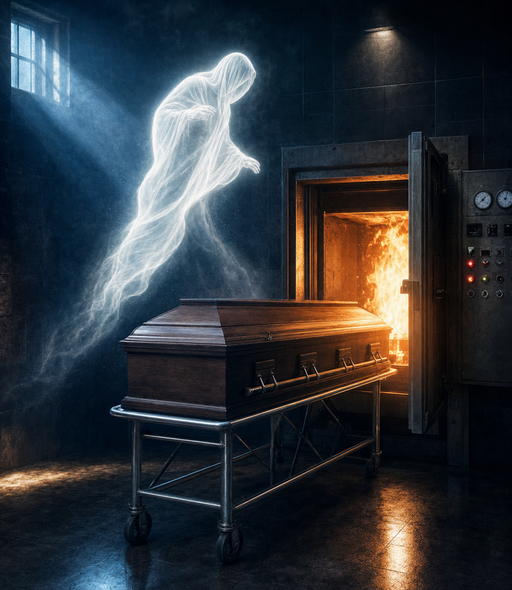
That something has been named and explained differently by cultures and faiths for centuries, and no single answer has ever emerged. Beliefs about the soul rest on spiritual tradition rather than physical fact, so cremation itself only ever changes the body, not the convictions people hold about what follows.
Hindu Beliefs on the Soul and Fire
In Hindu tradition, cremation is understood as part of the soul’s ongoing journey rather than its conclusion. The atman, or soul, is seen as eternal and fundamentally distinct from the physical body it occupies during life.
Fire is regarded as a purifying force within this process. Cremation is traditionally believed to help the soul detach from its earthly form, allowing it to continue through the cycle of reincarnation until liberation is eventually reached.
Buddhist and Christian Perspectives
Buddhist traditions differ widely across regions and schools of thought, but cremation is commonly practiced among them. Within these traditions, the act is generally not understood as bringing a person’s spiritual existence to an end.
Christianity approaches the question through its own theology. Many branches permit cremation and teach that how a body is handled after death does not prevent resurrection or determine where the soul ultimately goes.
Even so, funeral customs and beliefs vary considerably from one denomination and community to another. Some traditions emphasize burial, while others accept cremation without reservation, reflecting real diversity within Christian practice.
What Science and Faith Agree On
Cremation itself is simply a physical process. Science has no method for measuring or confirming what, if anything, happens to a soul once that process is complete.
For those who hold religious or spiritual beliefs, the answer depends entirely on their faith and their understanding of what follows death. No universal doctrine applies across all traditions.
Still, a common thread runs through many belief systems. The physical body may return to nature through cremation, but a person’s spiritual meaning, legacy, or soul is not widely regarded as something that process destroys.
In the end, cremation marks a transformation of the body, not necessarily an ending for the self. What remains afterward, in whatever form a tradition defines it, continues to be a matter of faith rather than proof.