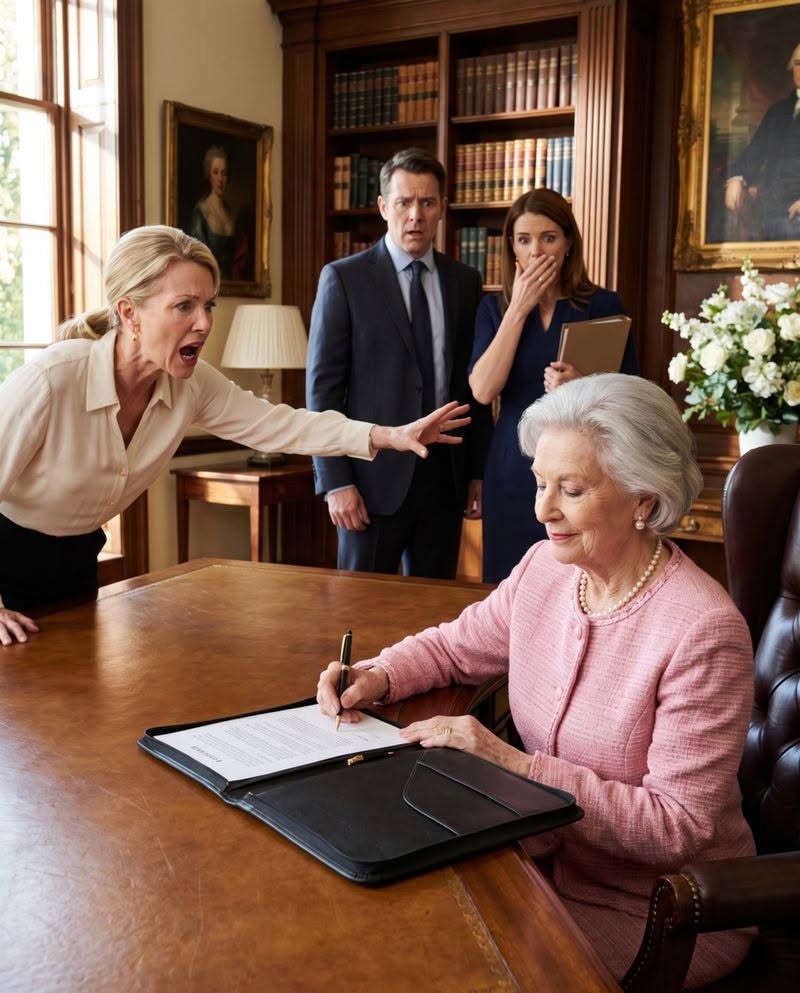
After all, I had spent $93,600 helping Benjamin and his family that year alone.
Then, at 6:18 p.m., my phone buzzed.
“Mother, the arrangements for this evening have shifted.”
Before I could even stand, another message arrived.
“You are not invited to the townhouse tonight because my wife does not want you present at the table.”
I read it twice.
Then a third time.
Rain tapped against my kitchen window.
On the mantel was a photograph of my late husband, Thomas.
Beside it sat the townhouse brochure Benjamin had proudly mailed me months earlier.
“This is for you too, Mother,” he’d said.
I had believed him.
Mothers sometimes mistake being needed for being loved.
Genevieve had never liked me.
She didn’t shout or openly insult me.
She was too polished for that.
Her cruelty arrived disguised as manners.
“Your mother tends to make social situations rather awkward,” she’d once told Benjamin while drinking a fourteen-dollar coffee I’d paid for.
“She means well, of course.”
That “of course” had told me everything.
But I’d smiled.
I’d always smiled.
That evening, I didn’t.
I opened the drawer of my mother’s antique desk and removed a thick folder labeled:
BENJAMIN.
Fifteen years of financial help sat inside.
Tuition.
Insurance.
Mortgage payments.
Private school fees.
Car payments.
Utilities.
Emergency transfers.
Country club dues.
Repairs.
Business expenses.
There was always another emergency.
Always another reason my son needed me.
At 6:47, my seven-year-old granddaughter Clara texted.
“Grandma, are you coming soon?”
My heart broke.
She didn’t understand.
Children rarely know which adults are quietly building walls around them.
“I can’t come tonight, sweetheart,” I replied. “But I love you very much.”
Then I picked up my telephone.
I didn’t call Benjamin.
I didn’t call Genevieve.
I called my bank.
After verifying my identity, the representative asked which recurring authorizations I wanted terminated.
“All of them connected to Benjamin Kelley.”
There was a pause.
Then I heard typing.
At 7:03, I sent my son one final message.
“Since I’m no longer invited, you and your wife can begin paying for your own lifestyle from this moment forward.”
Then I removed my pearls.
The following morning, I sat across from Rebecca, my longtime banker.
Eight pages were spread across her desk.
Mortgage drafts.
Insurance premiums.
Utilities.
Club dues.
School tuition.
Subscriptions.
Vehicle payments.
And one business account I didn’t recognize.
Rebecca counted everything.
One hundred and seventy-four recurring payments.
“Are you absolutely certain?” she asked.
“Yes.”
I signed the final authorization.
By 11:26 a.m., transactions began declining.
First one.
Then another.
Then another.
Less than an hour later, tires crunched across my driveway.
Genevieve climbed out first in an expensive cream coat.
Benjamin followed, staring frantically at his phone.
Then my granddaughter Clara emerged from the back seat wearing a yellow raincoat and carrying the stuffed rabbit I’d sewn for her after Thomas died.
I waited before answering the door.
For fifteen years, I’d answered their demands too quickly.
When I finally opened it, Clara ran straight into my arms.
“Grandma!”
I kissed her hair.
Genevieve walked inside without being invited.
“We need to have a serious conversation.”
Benjamin followed.
“Mother, what did you do to our accounts?”
I looked at him.
“My accounts?”
His face reddened.
“That isn’t fair.”
There it was.
The favorite word of people whose privileges have suddenly disappeared.
Fair.
I brought them into the kitchen.
The BENJAMIN folder was still on the table.
Genevieve immediately noticed it.
“Whatever stunt you’re pulling has gotten completely out of hand.”
I sat.
“Sit down.”
Genevieve remained standing.
Benjamin obeyed.
“I know last night’s message sounded bad,” he began, “but it was a misunderstanding.”
“It seemed quite clear.”
“Genevieve was upset.”
She shot him a furious look.
“Don’t put this on me.”
Interesting.
Yesterday they’d been united enough to exclude me.
Today responsibility had become something neither wanted.
Genevieve finally explained that the dinner had included important investors.
“Appearances matter,” she said.
I looked directly at my son.
“Did my money matter?”
Silence.
I opened the folder.
“Mortgage. Insurance. Tuition. Utilities. Country club. Preschool. Medical premiums. Lawn service. Two car notes. Three storage units. Seventeen streaming subscriptions. And a business line I don’t remember approving.”
Benjamin rubbed his forehead.
“One hundred and seventy-four payments,” I said.
“All stopped.”
Genevieve stared.
“You can’t do that.”
“My banker disagrees.”
Benjamin leaned toward me.
“Mother, our mortgage payment bounced.”
“I assumed it would.”
“Our insurance too.”
“Yes.”
“The school called.”
“That was fast.”
Genevieve’s expression hardened.
“Clara’s school shouldn’t be used as a weapon.”
I glanced toward my granddaughter.
“No. Children should never be weapons. That’s why I’ve been paying for her education while you remodeled your kitchen twice.”
Genevieve had no answer.
Then she tried another approach.
“You made us dependent on you.”
For several seconds, I simply stared at her.
“I made you dependent?”
“You offered the money.”
I almost laughed.
“No. I was invited whenever money was required and excluded whenever human dignity was required.”
Benjamin flinched.
Then he finally admitted something important.
They were in serious financial trouble.
The townhouse was connected to a development deal.
Genevieve’s family and several investors were involved.
And Benjamin was expected to contribute capital.
“How much?”
He hesitated.
“Two hundred and fifty thousand dollars.”
“By when?”
“Friday.”
It was Wednesday.
Suddenly last night’s dinner made sense.
“You were going to ask me for $250,000.”
Benjamin looked away.
“At the dinner I wasn’t invited to?”
“Genevieve thought it would be better if I spoke to you privately afterward.”
Better.
Cleaner.
Less emotional.
I looked toward Thomas’s photograph.
Then I said one word.
“No.”
That’s when Clara appeared in the doorway.
“Mommy said Grandma would fix it.”
Everyone froze.
Genevieve closed her eyes.
Clara continued innocently.
“The house and Daddy’s work thing and my school. Mommy said Grandma gets upset sometimes, but she always fixes everything after she calms down.”
Something inside me became very still.
They hadn’t brought Clara because she missed me.
They’d brought her because they thought I couldn’t say no while holding my granddaughter.
“Did I do something wrong?” Clara asked.
I opened my arms.
She ran to me.
“No, sweetheart. You didn’t.”
Benjamin looked devastated.
Genevieve looked inconvenienced.
That was the difference between them.
My son could still feel shame.
Genevieve only hated consequences.
Then I showed them something else.
Rebecca had calculated how much money I’d transferred to Benjamin over fifteen years.
$742,918.63.
Nearly three-quarters of a million dollars.
Benjamin stared at the number.
“I didn’t know.”
“I believe you.”
Relief flashed across his face.
Then I finished.
“Because you never wanted to know.”
He closed his eyes.
For the first time, his apology sounded real.
“Mother, I’m sorry.”
I’d waited years to hear those words.
Strangely, they were no longer enough.
“I hear you.”
Genevieve immediately interrupted.
“An apology doesn’t solve our accounts.”
I looked at her.
“No. It doesn’t.”
“What do you want?”
There it was.
The question beneath fifteen years of transactions.
What will it cost?
“I want my house quiet again. I want my bank accounts to belong to me. I want Clara to know she can love me without being used as a messenger.”
I paused.
“And I want you both to leave.”
But the morning wasn’t finished with us.
When I reviewed the canceled payments again, one account bothered me.
Kelley Consulting Group.
Authorized payer: Marianne T. Kelley.
“I never signed this.”
Benjamin went pale.
“I was going to fix it.”
My stomach tightened.
“What did you do?”
He confessed.
Genevieve’s father wouldn’t approve Benjamin’s business arrangement unless Benjamin could demonstrate recurring financial backing.
So Benjamin had told him I was an investor.
I wasn’t.
He’d used documents from years earlier to create authorization in my name.
“How much?”
“About eighty-four thousand dollars.”
My son had forged my financial authorization.
Before I could fully absorb it, Genevieve returned to the room.
“Did you know?” I asked.
She looked at Benjamin.
And her expression told me everything.
No surprise.
Only anger that he’d told me.
“You idiot,” she snapped.
Then my doorbell rang.
Rebecca stood outside with a silver-haired man named Daniel Stone from the bank’s fraud investigations division.
The canceled authorizations had triggered a deeper review.
And they’d found something far worse.
According to documents filed eighteen months earlier, I had supposedly transferred authority over my house, liquid accounts, and the remainder of Thomas’s estate into a family management trust.
“No.”
Rebecca looked at me sadly.
“That’s why we came.”
Then Genevieve smiled.
She reached into her purse and produced the original document.
My name was there.
My signature was there.
Almost perfectly.
Almost.
Years earlier, after a minor stroke caused my hand to tremble, Thomas had taught me a peculiar habit.
“Always cross your T like you’re closing a gate,” he’d say.
The T on this document was open.
I looked at Genevieve.
The signature was forged.
And then Clara screamed from outside.
We ran into the garden.
She wasn’t hurt.
She was pointing toward Thomas’s old flowerbed.
A strange man was digging beneath the hydrangeas.
When the bank investigator shouted, he ran.
He disappeared behind the shed and escaped through the rear lane.
But Clara had seen what he’d done.
“He took something from Grandma’s flowers.”
I looked at Genevieve.
Her face wasn’t confused.
It was frightened.
She recognized what was happening.
Later, my attorney examined the forged trust.
The signature wasn’t the only problem.
The notary seal was genuine.
But the notary’s commission had expired two years before the document was supposedly signed.
Benjamin finally admitted the truth.
I had never knowingly signed any trust.
But the deeper mystery remained.
What had the man taken from my garden?
Then I remembered something Thomas once told me.
“If I ever forget things someday, check the places I tried to improve.”
At the time, I’d laughed.
Now I remembered his stubborn attempts to grow lavender in one particular patch of soil.
We searched there.
Someone had removed a box.
But Thomas had apparently anticipated that too.
Behind his framed photograph on my mantel, I found a tiny brass key.
It opened a locked cabinet in his study.
Inside was an envelope.
My name was written across it.
For Marianne, when the accounts stop making sense.
My hands shook as I opened it.
Thomas had written the letter eight months before his death.
He apologized for hiding his concerns from me.
Then he explained.
He had noticed irregularities in Benjamin’s finances years earlier.
He didn’t believe our son was naturally dishonest.
But he feared Benjamin was easily manipulated by people who offered status, admiration, and wealth.
Thomas had also become suspicious of Genevieve’s family.
His final warning broke me.
“Do not let guilt spend what love saved.”
And beneath it:
“Please, my darling, use the good cup.”
I pressed the letter against my chest and cried.
But Thomas had left more.
Inside the cabinet were old emails, financial documents, legal notes, and a photograph.
It showed Genevieve standing beside another woman.
On the back, Thomas had written:
Genevieve Mills and Rachel Mills. Ask why Rachel disappeared from the filings.
“Who’s Rachel?” I asked.
Benjamin stared at the photograph.
“Genevieve’s sister.”
He’d been told Rachel had moved overseas.
But the records showed something different.
Rachel had once been connected to Benjamin’s company.
Then her name disappeared.
Thomas had written another note:
Not settled. Silenced. Find child.
That night, someone knocked on my door.
A woman in her early forties stood outside with a teenage boy.
“My name is Rachel.”
Benjamin went white.
The boy beside her had gray eyes.
Thomas’s eyes.
Rachel rested her hand on the boy’s shoulder.
“This is Noah.”
Then she looked at Benjamin.
“I tried to tell you once.”
Benjamin gripped the chair.
Rachel explained that before Benjamin married Genevieve, she’d had a child.
Benjamin’s child.
Genevieve knew.
Her father knew.
They told Rachel that Benjamin had chosen the family’s arrangement and wanted nothing to do with her or the baby.
They even claimed Thomas had paid Rachel to disappear.
Benjamin had known none of it.
Thomas eventually discovered what happened.
He secretly found Rachel and helped support Noah.
He’d preserved documents because he feared Genevieve’s family might eventually try to take control of my estate.
Noah looked toward Clara, who had awakened on the sofa.
“Is she my sister?”
Benjamin covered his mouth.
“Yes,” he whispered. “I think she is.”
Clara looked at Noah.
Then she lifted her battered stuffed rabbit.
“Do you like rabbits?”
Noah blinked.
“I guess.”
“This one’s Captain Button. Grandma fixed his ear.”
And just like that, two children began doing what adults had failed to do for years.
They made room for each other.
The weeks that followed weren’t magical.
Families don’t repair themselves that easily.
The fraudulent trust was frozen and eventually invalidated.
My house remained mine.
My accounts were secured.
Benjamin accepted responsibility for the authorizations he’d signed and cooperated with investigators.
He lost the townhouse.
He lost the club membership.
He sold the expensive car.
Eventually, he moved into a small apartment above a bakery.
Rachel and Noah didn’t instantly become family either.
Noah was polite but cautious.
He loved astronomy and hated mushrooms.
And whenever he concentrated, he tapped two fingers against his knee exactly the way Thomas had.
The first time I noticed, I had to leave the room.
Rachel found me crying in the kitchen.
“Thomas loved you very much,” she said.
She told me he’d spoken about me whenever he visited.
“He said you were the bravest person he knew, but you sometimes mistook endurance for duty.”
That sounded exactly like my husband.
Months later, I invited everyone to dinner.
Benjamin.
Clara.
Rachel.
Noah.
Rebecca.
My attorney.
Not Genevieve.
Some closed doors protect the warmth inside.
I used the good plates.
The crystal glasses.
Thomas’s serving spoon.
After dessert, Benjamin stood.
He’d opened an account to begin repaying me.
“I know I’ll never repay everything,” he said. “Not just the money. But I can start.”
I left the statement unopened.
“Do you know what I want more than repayment?”
“What?”
“Receipts.”
He looked confused.
“Not bank receipts. Life receipts.”
I pointed toward Clara.
“Show up for her school plays.”
Then Noah.
“Remember his birthday.”
Then Rachel.
“Learn her story without making yourself the center of it.”
I looked back at my son.
“Visit your father’s grave when nobody is watching. Make your own tea. Wash your own cup. Bring me flowers you paid for yourself, even if they came from a gas station.”
Benjamin smiled through tears.
“I can do that.”
“I know.”
Thomas had left one final surprise.
Years earlier, he’d secretly purchased the empty strip of land behind my garden.
The developers had wanted it because it provided access to their project.
Thomas had attached a note to the deed.
For Marianne, if she ever needs room.
The following spring, we turned that land into a community garden.
Noah painted the sign.
Clara decorated it.
Benjamin installed it.
I corrected the lettering because it leaned.
THOMAS KELLEY FAMILY GARDEN
Soup Sundays.
Open Gate.
Good Cups Only.
We planted lavender again in the stubborn patch.
This time it grew.
On the first anniversary of the night I’d been told I wasn’t welcome at my son’s table, everyone gathered in the garden.
I wore the same navy dress.
No pearls.
The chairs didn’t match.
The soup was too salty because Benjamin made it.
Clara spilled lemonade.
Noah rescued Thomas’s telescope from a toddler.
Rachel laughed.
Then, at exactly seven, Benjamin raised his glass.
“To Mother.”
I prepared myself for a speech.
Instead, he looked around the table.
“Thank you for closing the door when we needed to learn how to knock.”
The table went silent.
Then Clara added:
“And for opening it after.”
I reached across the table and took my son’s hand.
Not because everything had been forgotten.
It hadn’t.
Not because every wound had healed.
Some hadn’t.
But love doesn’t require pretending there was never a cost.
Sometimes love means closing the account.
Sometimes it means closing the door.
And sometimes, when people finally learn how to knock, it means deciding whether you’re ready to open it again.
Thomas’s photograph rested beside the lanterns.
Lavender moved in the evening breeze.
My granddaughter was laughing.
Noah was no longer hidden.
Rachel finally had a place at the table.
Benjamin was changing, slowly and imperfectly.
And for the first time in years, I wasn’t a guest in a life I’d spent my savings supporting.
I was home.
A few minutes later, Benjamin brought me tea.
Not in the old chipped mug I’d used for years while saving my best things for other people.
He brought it in the good china cup.
I took it from him.
And this time, I didn’t save it for later.