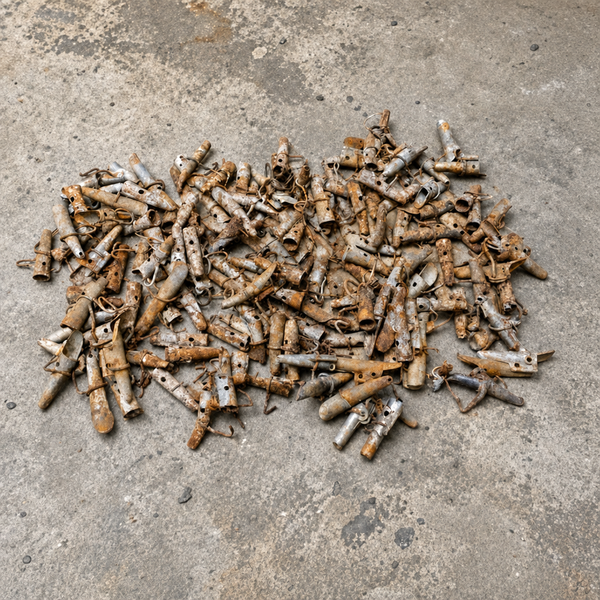
That mysterious rhythm made sense once the objects were identified: they were maple syrup spiles, the small metal taps once hammered into maple trunks each winter to draw out sap.
A Strange Find in the Attic
The bucket’s contents looked like random hardware at first glance. But each hollow metal tube had a purpose tied to a very specific season, one that depended on freezing nights and softening days rather than any calendar date.
These spiles weren’t scattered by accident. They were stored together, likely cleaned and counted after their last use, waiting in the attic for a season that eventually stopped coming.
The Forgotten Art of Tapping Maple Trees
At winter’s end, when nights still froze but days warmed just enough to stir the trees, each spile was gently hammered into a maple trunk. Buckets hung from hooks fitted to the taps, ready to catch the sap as it dripped.
The sap itself looked nothing like syrup. It ran clear and watery, with only a faint sweetness, giving little hint of what it would eventually become.
Families moved from tree to tree, emptying the pails into larger barrels. The work was steady and time-sensitive, shaped by daylight hours and the fleeting conditions that made sap flow at all.
From Sap to Syrup: A Homestead Tradition
Once collected, the sap was hauled back to a sugar house, where fires burned for hours to boil it down. Steam rose in thick, sweet clouds as the liquid slowly thickened.
The ratio was steep: roughly forty buckets of sap were needed to produce just one bucket of finished syrup. The process demanded patience, plenty of wood, and constant attention to keep the boil from turning.
Trees were tapped with care so they could heal after each season’s use. Afterward, the spiles were cleaned, counted, and stored, ready to be pulled out again when the next thaw arrived.
The bucket found in that attic likely represents the tail end of exactly this cycle. It’s a quiet leftover from a homestead ritual, one where a family’s breakfast sweetness came not from a store shelf, but from the maples growing just beyond the back door.