An accident.
An assault.
Maybe even another man.
Instead, I found Maeve perfectly safe.
She was standing in the middle of a brightly lit warehouse surrounded by children’s clothes, diapers, food and medical supplies.
Then she smiled at me and said:
“Surprise.”
That’s when I discovered she’d been lying to me for eight months.
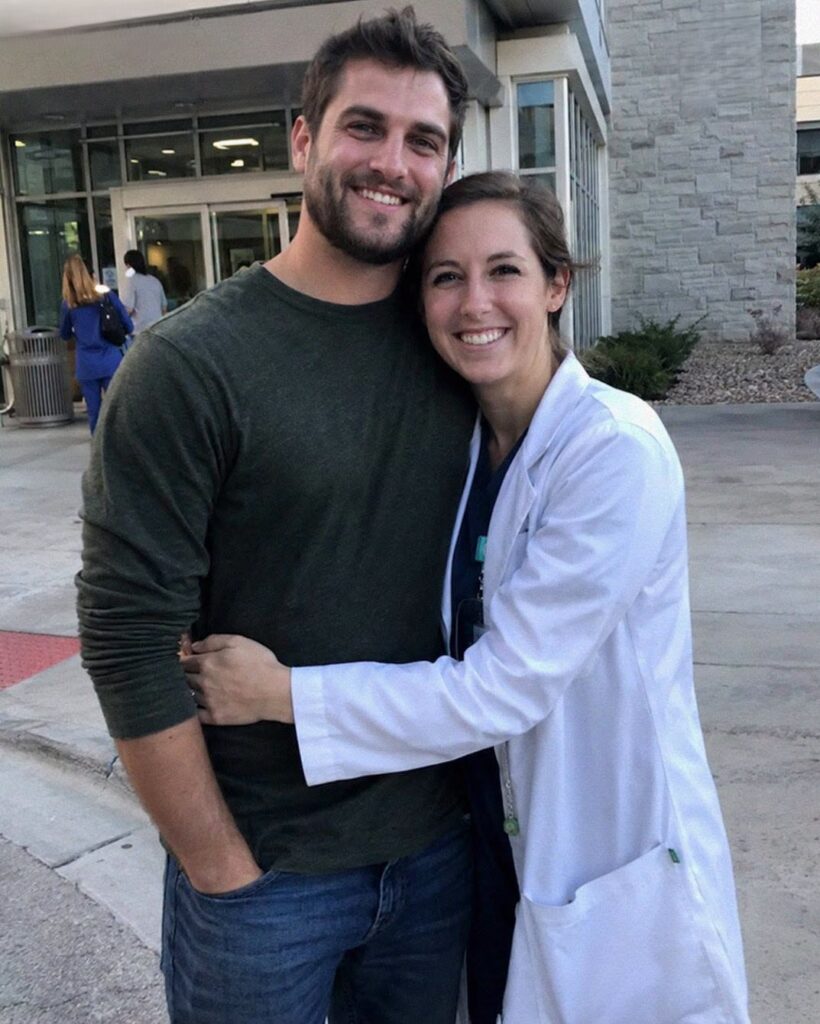
My wife, Maeve, is a pediatric nurse.
She’s also the most reliable person I’ve ever known.
If she’s running ten minutes late, she texts.
If her phone battery reaches twenty percent, she plugs it in.
If she’s supposed to meet you at seven, she’ll probably arrive at 6:50 and apologize for making you wait even though you weren’t waiting.
That’s Maeve.
Or at least, that’s who I thought she was.
Her job has never been easy.
Pediatric nursing means scared children, exhausted parents and shifts that don’t always end when the schedule says they should.
Sometimes she’d come home emotionally drained.
Other times she’d sit in our driveway for ten minutes before coming inside because she needed a moment to stop being Nurse Maeve and become my wife again.
Lately, though, something had been different.
There was one patient she’d mentioned several times.
A six-year-old girl named Ava.
Maeve never violated the family’s privacy or told me medical details.
She only said Ava’s family was struggling.
One evening, she told me:
“Sometimes we fix the medical problem and send them right back into everything that helped create the crisis.”
“What do you mean?”
“Food. Rent. Transportation. Parents missing work. Other children at home.”
She shook her head.
“Discharge doesn’t magically make a family okay.”
I remember thinking about that.
Then life moved on.
But Maeve didn’t.
She became distracted.
Secretive, even.
One night, I woke around midnight and realized she wasn’t in bed.
I found her downstairs at the kitchen table.
Her laptop was open.
Papers were spread everywhere.
The moment she saw me, she closed the computer.
“What are you doing?”
“Hospital stuff.”
She gathered the papers into a folder.
“At midnight?”
“I couldn’t sleep.”
She kissed my cheek.
“Go back to bed.”
I did.
But something bothered me.
There were other nights like that.
Phone calls she took outside.
Emails she closed when I entered the room.
Occasional Saturday errands that took three hours.
I’m ashamed to admit that eventually one possibility entered my mind.
Another man.
I hated myself for even thinking it.
Maeve had never given me a reason not to trust her.
So I dismissed it.
Then came yesterday.
Maeve kissed me before leaving for work.
“I’ll be home around 7:15.”
“Thai?”
“Obviously.”
“Your turn to pick it up.”
“I know.”
She pointed at me.
“Don’t order without me.”
“I wouldn’t dare.”
That was the last normal conversation we had.
At 7:30, she wasn’t home.
Nothing unusual.
At 8:00, I texted.
No response.
At 8:30, I called.
Voicemail.
At 8:45, I called again.
Nothing.
That’s when I contacted the hospital.
A nurse I vaguely knew answered.
“Maeve? She left on time.”
“What time?”
“A little after seven, I think.”
“Did she say where she was going?”
“Home.”
My stomach tightened.
I called Maeve again.
Straight to voicemail.
By nine, I’d contacted her sister, Nora.
“Is Maeve with you?”
“No. Why?”
“She isn’t home.”
“Did she get stuck at work?”
“They said she left.”
Then I called Dana.
Nothing.
Priya.
Nothing.
At ten, I contacted the police.
I tried to sound calm.
I wasn’t.
The dispatcher asked several questions.
Did Maeve have any medical problems?
Was there any reason someone might want to hurt her?
Had we argued?
Could she have gone somewhere voluntarily?
Eventually, I was told that without evidence of immediate danger there wasn’t much they could act on yet, but if I found her vehicle abandoned or discovered anything concerning, I should call again.
By eleven, my hands were shaking.
Four hours.
Maeve didn’t disappear for four hours.
I imagined her car in a ditch.
Someone following her through the hospital parking garage.
Maeve lying unconscious somewhere while her phone rang inside her purse.
Then I remembered something.
The tracking app.
We’d installed it years earlier because I traveled occasionally for work.
Maeve liked knowing when my plane had landed without waiting for me to call.
We almost never used it anymore.
I opened the app.
Her location appeared immediately.
My heart started pounding.
“What the hell?”
She wasn’t moving.
She was in the industrial district.
I grabbed my keys.
The drive took eighteen minutes.
It felt like an hour.
By then, my fear had started turning into something else.
Why was she there?
Why hadn’t she called?
Why was her phone off?
And then the thought I’d tried to suppress returned.
What if she was meeting someone?
I hated myself for thinking it.
But after months of secretive behavior, I couldn’t stop.
The location led me to a row of warehouses and commercial buildings.
I found Maeve’s SUV behind a long gray building.
No damage.
No broken windows.
Nothing.
I parked beside it.
Then I noticed a rear door.
It was open.
Fluorescent light spilled onto the concrete.
I walked toward it.
My heart was pounding so hard I could hear it.
I didn’t call Maeve’s name.
I’m still not sure why.
Maybe I was afraid nobody would answer.
Maybe I was afraid someone would.
I stepped through the doorway.
Maeve’s phone was sitting on a folding table.
I picked it up.
Off.
Not dead.
Not broken.
She had deliberately switched it off.
That’s when I became genuinely frightened.
Then I heard movement.
I walked farther inside.
And stopped.
There were shelves everywhere.
Children’s clothes.
Diapers.
Formula.
Blankets.
School supplies.
Toothbrushes.
Coloring books.
Boxes were labeled:
INFANT.
SIBLING SUPPORT.
POST-DISCHARGE.
Fresh lumber and partially finished shelving made it obvious this wasn’t temporary.
Someone had been working there for months.
And standing in the middle of everything was my wife.
Maeve was arranging children’s socks beside a box of coloring books.
She looked up.
Our eyes met.
Then she smiled.
“Finally!”
I couldn’t speak.
She walked toward me.
“What took you so long?”
I stared at her.
“You’re okay.”
“Of course I’m okay.”
I looked toward her phone.
“You turned your phone off.”
Her smile weakened.
“Well… yeah.”
“Why?”
“So you’d use the tracker.”
I thought I’d misheard.
“What?”
“The location app.”
She gestured around us.
“I wanted you to find me.”
I stared at her.
“You wanted me to track you here?”
“Yes.”
Then she smiled again.
“Surprise.”
Something inside me snapped.
“I called the hospital.”
Her smile disappeared.
“I called Nora.”
“Wait—”
“I called Dana.”
Her face changed.
“I called Priya.”
“Okay…”
“I called the police, Maeve.”
She froze.
“What?”
“I spent four hours thinking you were dead.”
“Oh.”
“Oh?”
“I thought you’d check the tracker first.”
“Why would I?”
She didn’t answer.
“You told me you were coming home.”
“I thought you’d realize—”
“Realize what?”
I pointed toward the phone.
“That when my wife disappears and turns off her phone, I’m supposed to think it’s a scavenger hunt?”
She looked genuinely ashamed.
“I didn’t think it through.”
“No.”
I stared at her.
“You really didn’t.”
My body was still trying to understand that she was alive.
The relief was enormous.
So was the anger.
Eventually, I looked around.
“What is this?”
Maeve’s expression softened.
“You know how I’ve been buying things for families?”
“Yes.”
“Diapers. Food cards. Clothes. Stuff like that.”
“Yes.”
“I decided to make it bigger.”
I stared at the shelves.
“How much bigger?”
“This.”
I walked slowly between them.
Despite everything, I couldn’t deny what I was seeing.
It was thoughtful.
Organized.
Useful.
It was painfully, unmistakably Maeve.
“Ava?” I asked.
Maeve nodded.
“She was part of it.”
She explained that Ava’s family had struggled with transportation, food, rent and supplies.
Maeve had helped them once.
Then Ava returned to the hospital.
“The hospital can treat a child,” Maeve said. “But sometimes we’re sending them back to a family that’s falling apart financially.”
“So this place helps after discharge?”
“During treatment too.”
She began pointing.
“That’s clothing. Those are emergency food packages. That section will be for siblings because they get forgotten when one child is sick. Eventually I’d like to help parents with transportation and temporary lodging.”
I looked around.
It was incredible.
It really was.
Then I asked:
“Who’s helping you?”
“Rachel. Theo. Priya. A few others.”
I nodded.
“And who’s paying for it?”
Maeve stopped.
That tiny hesitation changed everything.
“Maeve?”
She looked at me.
“I signed the lease.”
“With what?”
Silence.
“With what money?”
“Our savings.”
I actually laughed.
Not because it was funny.
Because sometimes your brain doesn’t know what else to do.
“Our savings?”
“Yes.”
“How much?”
She told me.
I sat down.
The warehouse changed instantly.
Thirty seconds earlier, I’d been looking at a generous project my wife had created.
Now I was looking at our future stacked on shelves.
Deposits.
Rent.
Renovations.
Supplies.
Legal costs.
Money we’d spent years saving.
“Maeve…”
“We can rebuild it.”
I looked at her.
“We?”
She stopped.
Then another thought hit me.
“If you’re doing this, what happens to the hospital?”
She looked at the floor.
That was when I knew.
“You quit.”
“I gave notice.”
“When?”
“Three weeks ago.”
My stomach dropped again.
“When is your last day?”
“Next Thursday.”
I stood.
“So you signed a lease.”
“Yes.”
“Spent our savings.”
“Some of them.”
“A lot of them.”
She said nothing.
“And quit your job.”
“I was going to tell you.”
“When?”
“Tonight.”
“No.”
“What?”
“You were going to show me.”
I pointed around us.
“You weren’t going to ask me.”
Maeve’s eyes filled.
“I knew you’d worry.”
“Of course I’d worry!”
“You would’ve told me to slow down.”
“Maybe.”
“You would’ve told me not to quit without secure funding.”
“Yes.”
“You would’ve said we couldn’t afford this.”
“Maybe we couldn’t!”
She folded her arms.
“This place will help people.”
“I know.”
“Families with sick children.”
“I know!”
“Then why are you acting like I gambled the money away?”
“Because it wasn’t yours to spend alone!”
Silence.
“Our savings weren’t a donation you could make without asking me.”
“We’ll earn it back.”
“That isn’t the point.”
“What is the point?”
“The point is that you thought I might disagree, so you removed my ability to disagree.”
She stared at me.
There it was.
The truth.
Finally, Maeve said:
“I thought you might say no.”
“So you made sure I couldn’t.”
Her eyes filled with tears.
Before she could answer, a door opened.
Voices.
Three people walked in carrying pizza and drinks.
Rachel.
Theo.
Priya.
Rachel smiled.
“He found you!”
Nobody responded.
Her smile vanished.
“What happened?”
I looked at Maeve.
Then at them.
“Did you know I hadn’t agreed to this?”
Rachel frowned.
“What?”
“The warehouse.”
Nobody spoke.
“The lease. The money. Maeve leaving the hospital.”
Priya went pale.
“I thought you knew.”
“So did I,” Theo said.
Rachel slowly placed the pizza boxes down.
“Maeve?”
My wife stared at the floor.
Rachel looked genuinely stunned.
“You told us he supported this.”
Maeve wiped her face.
“I thought he would.”
Rachel shook her head.
“That’s not the same thing.”
Nobody yelled.
That somehow made everything worse.
Priya looked at me.
“I believe in this project.”
“I do too.”
She seemed surprised.
I looked around.
“This isn’t about whether sick children deserve help.”
Then I looked at Maeve.
“It’s about whether my wife gets to secretly redesign our entire life and call it a surprise.”
Rachel crossed her arms.
“We can’t open like this.”
Maeve looked at her.
“What?”
“Not until everything is sorted out.”
“Rachel—”
“No.”
She looked around.
“Ownership. Finances. Governance. Everything.”
Priya nodded.
“And I’m not asking anyone for donations while there’s confusion about where the original money came from.”
Maeve sat down.
For the first time that night, she seemed to understand what she’d done.
Not the project.
The deception.
Eventually, everyone left.
Maeve and I remained in the warehouse.
She cried.
Not dramatically.
Quietly.
“I messed everything up.”
I didn’t answer.
“I quit without telling you.”
Silence.
“I spent our money without asking.”
I looked away.
“And I lied to everyone because I wanted this so badly that I didn’t want anybody to stop me.”
That was closer to the truth.
“I didn’t want you to have a vote,” she whispered.
I finally looked at her.
“That’s the part that hurts.”
She nodded.
“I’m sorry.”
I didn’t say it was okay.
Because it wasn’t.
She didn’t ask me to.
Instead, she opened her laptop.
“What can we fix tonight?”
We started with the finances.
Some money was recoverable.
A lot wasn’t.
The warehouse deposit was gone.
Renovation costs were gone.
Many supplies had already been purchased.
We froze everything else.
That night, Maeve emailed everyone involved.
Opening plans were suspended.
No additional spending.
No fundraising.
Nothing until the finances and ownership were properly reviewed.
Then she turned the laptop toward me.
“Send?”
I read it.
“Yes.”
She clicked.
It was after two in the morning when we got home.
The kitchen light was still on.
Two empty plates were waiting on the counter.
I’d put them there for Thai food.
That detail almost broke me.
Maeve stood beside me.
“Do you want me to sleep somewhere else?”
“No.”
I picked up a blanket.
“I’ll take the couch.”
“You don’t have to.”
“I know.”
I looked at her.
“I’m not trying to punish you.”
She nodded.
“I just can’t lie beside you tonight and pretend we’re okay because you finally told me everything.”
She started crying again.
I went downstairs.
The next few weeks were ugly.
Not explosive.
Worse.
Quiet.
Maeve gave me access to every account.
Every document.
Every contract.
Not because I wanted to police her forever.
Because trust had been damaged, and transparency was the first thing we could rebuild.
We also started counseling.
Maeve eventually admitted something she’d been avoiding.
She’d convinced herself that because her goal was good, her methods didn’t matter.
Helping sick children had become the justification for every lie.
And every time she crossed another line, she told herself the result would eventually make me understand.
The center survived.
But not the way Maeve imagined.
Rachel, Priya and Theo stayed involved.
A local church offered support.
Then a community foundation became interested.
Eventually, the project was reorganized as a much smaller nonprofit.
There was a board.
A separate bank account.
Financial controls.
Budgets.
Donors.
Oversight.
No secret withdrawals from our savings.
No major decisions made by one person.
Maeve’s original dream had been enormous.
The real version started much smaller.
And strangely, I think that saved it.
It also saved us from losing even more money.
Our marriage has been harder.
People like stories where somebody apologizes, the other person forgives them, and suddenly everything is fixed.
That’s not what happened.
Eight months of lies didn’t disappear because Maeve cried in a warehouse.
We lost money.
A lot of it.
Maeve left a stable career before either of us was financially prepared for the change.
And I lost something too.
The automatic certainty that when my wife tells me something, I’m hearing the entire truth.
She’s earning that back.
Slowly.
There are no more secret accounts.
No hidden meetings.
No mysterious folders slammed shut when I enter a room.
And Maeve doesn’t call what she did a surprise anymore.
She calls it what it was.
A betrayal committed in service of something she believed was good.
That’s an uncomfortable sentence.
But it’s an honest one.
The center opened several months later.
There were no balloons.
No giant launch party.
Just a modest sign near the entrance and shelves stocked with donated supplies.
One afternoon, I stopped by.
A father was leaving with a grocery box under one arm and a bag of children’s clothes in the other.
His little girl walked beside him carrying a coloring book.
Maeve stood near the door.
She didn’t know I’d arrived.
The father said something to her.
Maeve smiled.
Then he hugged her.
I understood again why she’d wanted the place so badly.
That had never been the problem.
Maeve noticed me.
She walked over.
“What are you doing here?”
“I was nearby.”
She smiled.
Then hesitated.
“Do you like it?”
I looked around.
“Yes.”
Her eyes filled.
“But?”
“No but.”
I took her hand.
“I always liked the dream.”
She looked down.
“I just wish you’d trusted me enough to let me help decide how we got here.”
“I know.”
We stood there for a moment.
Then a volunteer called her name.
Maeve squeezed my hand.
“I should…”
“Go.”
She walked away.
I watched her help another family.
I’m proud of what she’s building.
I’m still hurt by how she started it.
Both things can be true.
That’s probably the biggest thing I’ve learned from all of this.
Someone can do something extraordinarily generous and still hurt the people closest to them.
Good intentions don’t erase deception.
Love doesn’t mean surrendering your right to be part of decisions that affect your own life.
And forgiveness isn’t pretending betrayal never happened.
Maeve and I are still together.
We’re still working on it.
Some days feel almost normal.
Other days, something small brings the warehouse back.
But this time, whatever happens next will happen differently.
No secrets.
No surprises that require someone else to surrender their voice.
No building a future for strangers by secretly dismantling our own.
Maeve’s center is still helping families.
Our savings are slowly growing again.
And so is our marriage.
The difference is that this time, we’re rebuilding both the same way.
Together.