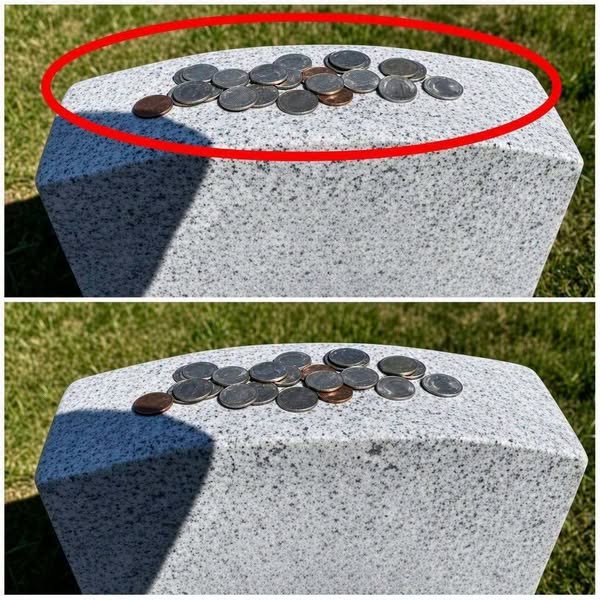
As it turned out, there was nothing sinister behind them. In most cases, coins left on a headstone are quiet, deliberate gestures of remembrance—placed by visitors who wanted the person buried there to know they had not been forgotten.
A Quiet Tradition Among the Graves
The custom is especially common in the United States, particularly at the graves of fallen service members. Visitors leave a coin not as payment or offering, but as a small, silent signal that someone came, remembered, and cared enough to stop.
To someone unfamiliar with the practice, finding a coin balanced on a loved one’s headstone can be unsettling. Understood in context, though, it is meant as a gesture of respect rather than anything to fear.
What Each Coin Is Said to Mean
According to a commonly shared tradition, the type of coin left behind can carry its own meaning. A penny generally signals that someone visited and wanted the deceased to know they were remembered.
A nickel is often associated with someone who trained or served alongside the person. A dime is said to represent someone who served with them during combat and shared some of the same difficult experiences.
A quarter is sometimes described as carrying the most emotional weight of all. Traditionally, it is said to indicate that the person leaving it was present when the service member died.
These interpretations are customs passed down informally, not official or universal rules. Many visitors leave coins simply for personal reasons that have nothing to do with military tradition. The monetary value of the coin never matters—the meaning lies in the memory, friendship, sacrifice, or respect it represents.
Where the Custom May Have Come From
Coins have appeared in burial traditions across many cultures throughout history, including ancient Greek and Roman customs tied to beliefs about the afterlife. Modern military coin traditions, however, are not necessarily a direct continuation of those older practices.
What to Do If You Find One
If you come across a coin resting on a gravestone, the respectful thing to do is leave it exactly where it is. It isn’t loose change waiting to be picked up—it’s someone’s quiet message to the person buried there.
Whether a specific coin carries a particular military meaning or simply reflects a private memory known only to the person who left it, the gesture itself speaks plainly. A small piece of metal, placed gently on stone, can say what words sometimes cannot: I remember you.