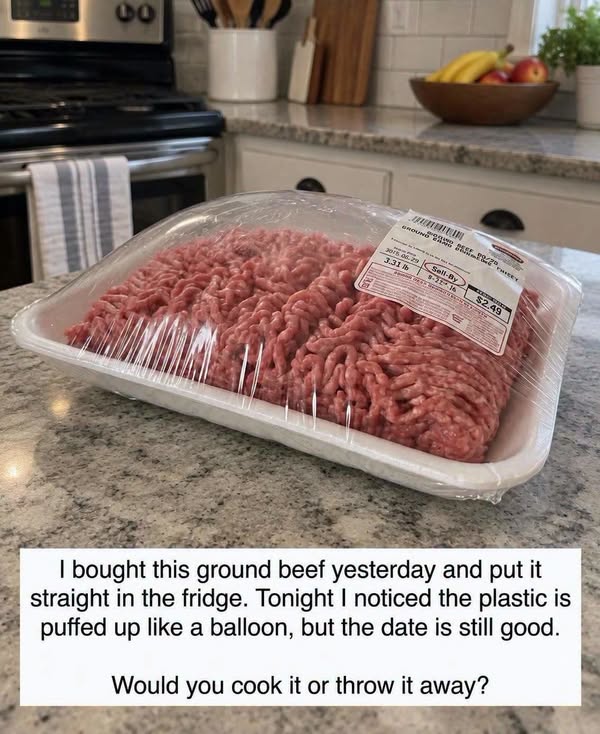
The difference comes down to what’s actually causing the gas inside the package. In one case, it’s a deliberate design choice. In the other, it’s a warning sign that shouldn’t be ignored.
When Bloating Is Normal: The Chip Bag Explanation
That puffed-up chip bag is filled with nitrogen gas on purpose. The gas isn’t spoilage-related at all—it’s added intentionally to protect the chips from breaking during transport and to help keep them fresh.
This kind of bloating is a packaging feature, not a defect. It’s designed to preserve taste and texture until the bag is opened.
When Bloating Signals Danger: Perishables and Bacteria
Perishable foods tell a completely different story. Items like sausages, cheese, dairy products, and canned goods should never appear bloated under normal circumstances.
When swelling does occur in these products, it’s typically because bacteria are growing inside the package and producing gas as a byproduct. That gas buildup is a sign the food may be spoiled or unsafe to eat.
Some of the microorganisms responsible simply affect taste and quality. Others, however, can lead to food poisoning or more serious illness, which is why swollen refrigerated or canned items should never be taken lightly.
How to Shop and Store Food Safely
Prevention starts at the store. Avoid purchasing any product with unusual bulging or visibly damaged packaging, since these are early signs something may already be wrong.
At home, proper storage matters just as much. Keep perishables cold in the refrigerator, and store canned goods in a cool, dry place away from heat and moisture.
- Check expiration dates before use
- Inspect smell, texture, and appearance closely
- Avoid products with damaged or bulging packaging
When in Doubt, Throw It Out
If a food item seems off in any way—smell, texture, appearance, or packaging condition—it’s safer to discard it than to risk your health.
Not all bloated packaging spells trouble. But learning to tell the difference between a protective design and a warning sign is what keeps a minor puff of gas from turning into a real health risk.