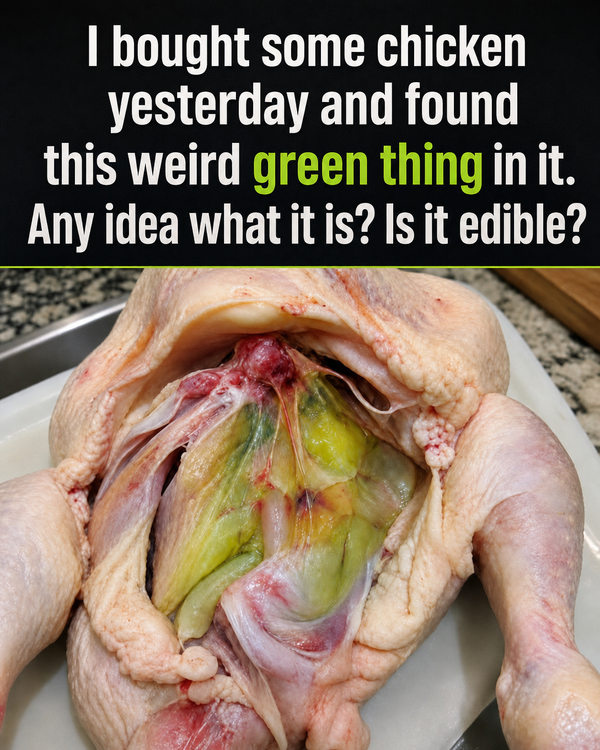
As it turns out, that panic is often misplaced, because green meat doesn’t automatically mean spoilage. In many cases the color comes from something far less alarming than bacteria: rough handling during processing, or a specific condition tied to how fast-growing birds’ muscles develop as they’re raised.

When Green Doesn’t Mean Rotten
Bruising is one straightforward explanation. Chicken flesh can discolor from physical handling long before it ever reaches a store shelf, leaving a green tint that has nothing to do with bacteria or decay.
Another cause is tied to how modern chickens are raised. Fast-growing birds can develop a condition where certain muscles are pushed harder than they’re built for, leading to internal changes that show up as color, not contamination.
Green Muscle Disease Explained
This condition, known as Green Muscle Disease, occurs when the inner breast muscles of fast-growing birds are overworked. Those muscles can die off internally and turn green, even while the outside of the breast looks completely normal.
If the chicken is otherwise fresh, has no off odor, and is cooked to an internal temperature of 165°F (74°C), this type of green discoloration is technically safe to eat. That said, the appearance and texture may still be unappetizing enough that many people choose to discard it—not because it’s dangerous, but because it’s simply unpleasant.
Spotting Real Spoilage
The real warning signs show up when green coloring is paired with other red flags. A sour or sulfur-like smell, a slimy or sticky surface, or flesh that feels mushy are all signals of spoilage and bacterial growth.
That combination is where the actual risk lies. Spoiled chicken carries a genuine chance of food poisoning, and that risk doesn’t shrink because the chicken was expensive or because you’re hungry and don’t want to waste it.
Trust Your Senses Before You Cook
Before deciding whether green chicken belongs in the pan or the trash, the source material points to a simple sequence: smell it, touch it, and look closely at the texture and color together.
Odor and texture matter just as much as color when judging whether meat is still good. Color alone, without a bad smell or slimy texture, doesn’t tell the whole story.
When those senses raise doubt—an off smell, a stickiness that shouldn’t be there, flesh that feels mushy instead of firm—the safest move is the simplest one: when in doubt, throw it out.