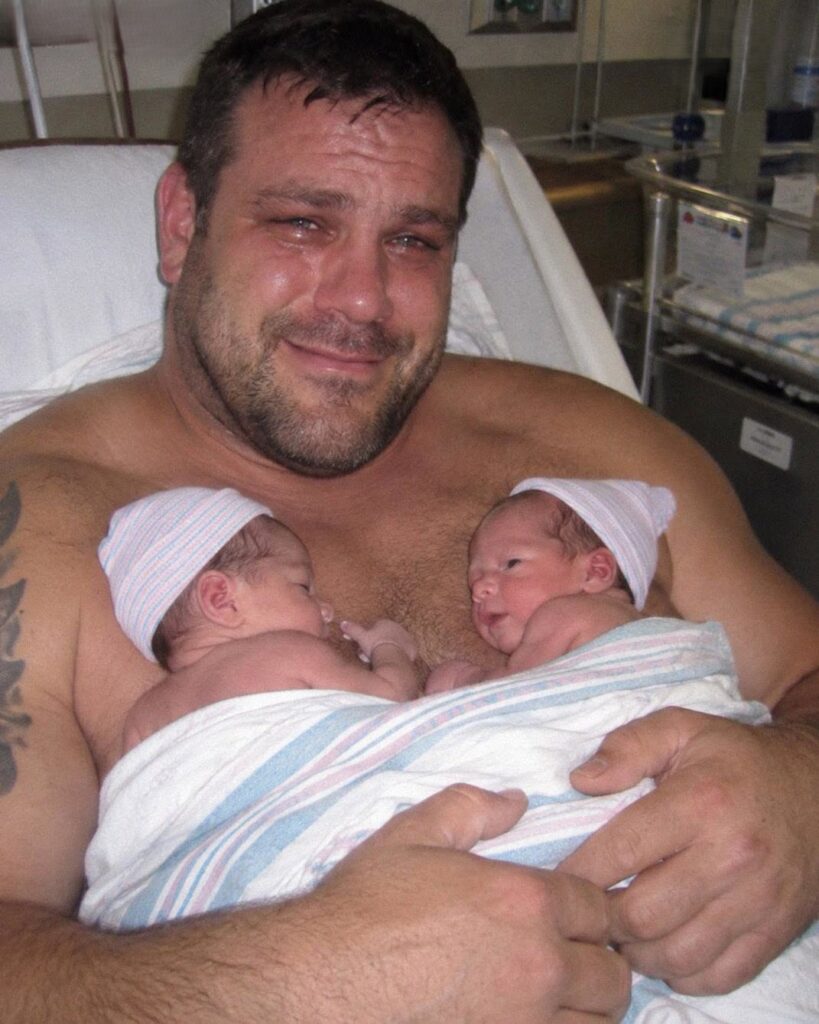
Inside were two newborn hats.
Two hospital bracelets.
And eighteen years of letters addressed to a daughter who had no idea she’d once had a twin sister.
Her name was Rosie.
She was born eleven minutes after Hannah.
Hannah arrived screaming.
Rosie barely made a sound.
“Already letting her sister do all the talking,” David joked.
I laughed.
We were twenty-seven years old, exhausted and happier than I knew a person could be.
Rosie weighed six pounds, one ounce.
She had dark hair and a tiny crease beside her left eye that appeared whenever she cried.
Hannah was louder.
Hungrier.
More demanding.
I used to joke that Hannah cried enough for both of them.
Nine days after we brought our daughters home, Rosie died.
There was no warning.
No long illness.
No diagnosis that gave us time to prepare.
One moment, I was the mother of twin girls.
Then I wasn’t.
The official explanation was SIDS.
Sudden Infant Death Syndrome.
People told me nobody had done anything wrong.
They meant it as comfort.
It wasn’t.
When something unimaginable happens to your child, sometimes you desperately want someone to blame.
A doctor.
A mistake.
Yourself.
Anybody.
Because anger gives your grief somewhere to go.
Helplessness doesn’t.
The morning after Rosie died, David went to the funeral home.
While he was gone, I took her crib apart.
Every screw.
Every rail.
Every piece.
By the time David came home, the mattress was leaning against the garage wall.
He stood in the nursery doorway.
“You did this?”
“I couldn’t look at it.”
He stared at the empty space where the crib had been.
Then he nodded.
That was all.
We were young.
We didn’t know how to grieve together.
So we learned to grieve separately.
And somehow, in the middle of that grief, we made a decision that would shape the next eighteen years.
We wouldn’t tell Hannah.
At first, it didn’t feel like a lie.
She was a baby.
What could we possibly tell her?
Then she was two.
Then three.
Then five.
And every year, the conversation became harder.
When Hannah was seven, David brought it up while we were driving home from a birthday party.
“Maybe it’s time.”
I looked at him.
“For what?”
“To tell Hannah.”
“Tell her what?”
He gave me a look.
“About Rosie.”
My stomach tightened.
“No.”
“Helen.”
“She’s seven.”
“I didn’t say tonight.”
“Then when?”
He sighed.
“I don’t know. But someday.”
I stared through the windshield.
“What exactly do you want to tell a seven-year-old? That she had a twin sister who died?”
“The truth.”
“And then what?”
He didn’t answer.
“What happens when she starts wondering why she survived?”
“We don’t know that she will.”
“You don’t know that she won’t.”
Neither of us spoke for the rest of the drive.
That became our pattern.
David would bring up Rosie.
I would find a reason it wasn’t the right time.
And David would eventually let the subject drop.
When Hannah was eight, she started asking questions about being a baby.
Not now, I thought.
At twelve, she had a terrible year at school.
Definitely not now.
At fifteen, she became anxious about grades.
At sixteen, she went through her first serious breakup.
At seventeen, college applications consumed her life.
There was always something.
Some reason that learning the truth might be too much.
Eventually, “not yet” quietly became eighteen years.
The secret grew beyond David and me.
My mother had once displayed a photograph from the hospital.
Two newborn girls.
Before Hannah was old enough to ask questions, I made Mom take it down.
My sister knew not to mention Rosie.
My brother knew.
My father once accidentally referred to “the girls” when Hannah was eight.
I shot him a look across the dinner table.
He quickly pretended he meant Hannah and her cousin.
Everyone knew.
Everyone helped us hide it.
Even Hannah’s birthday became complicated.
Every September 9, our house filled with balloons and cake.
Hannah opened presents.
Friends came over.
We sang to her.
She blew out candles.
And every September 9, I silently thought:
Rosie would be ten today.
Rosie would be thirteen.
Rosie would be sixteen.
I never said it aloud.
David had his own ritual.
After Hannah’s birthday celebration ended, he disappeared into the garage.
Sometimes for thirty minutes.
Sometimes an hour.
I never asked what he was doing.
I assumed he needed to be alone.
My ritual was laundry.
Even if there wasn’t enough for a full load, I washed something.
Towels.
Sheets.
Anything.
Folding laundry gave my hands something to do while my mind remembered holding two babies.
David went to the garage.
I folded towels.
That was how we survived birthdays.
Then Hannah turned eighteen.
We threw a big party.
About thirty people came.
Family.
Neighbors.
Her closest friends.
My brother stood at the grill.
My sister brought enough potato salad for a small army.
There was a grocery-store sheet cake with HAPPY 18TH, HANNAH! written in blue icing.
And David and I had bought her a used car.
Nothing fancy.
But when he handed her the keys, Hannah screamed.
“Oh my God!”
She threw herself around his neck.
“You actually bought it?”
David grinned.
“No. That’s some random person’s car. We’re hoping they don’t notice.”
She smacked his shoulder.
I laughed.
For a moment, everything felt perfect.
I remember thinking:
Look how happy she is.
For eighteen years, Hannah’s happiness had been my excuse for silence.
Why ruin today?
Why burden this moment?
Why introduce grief into joy?
Apparently, David had finally stopped asking those questions.
After the presents, he stood.
“Can everyone give us a few minutes?”
I looked at him.
He wouldn’t meet my eyes.
My stomach dropped.
My sister understood immediately.
So did my mother.
“No.”
I said it quietly.
David finally looked at me.
His expression wasn’t angry.
That would have been easier.
He looked resolved.
“Today’s the day.”
My heart began pounding.
“David.”
“It’s time.”
Hannah looked between us.
“What’s happening?”
Nobody answered.
My mother stood first.
“Come on, everyone. Let’s give them some privacy.”
People carried plates inside.
Hannah’s friends looked confused.
My family looked terrified.
Within a few minutes, only the three of us remained on the patio.
Then David disappeared into the garage.
When he returned, he was carrying something I had never seen before.
A wooden chest.
It was about two feet wide.
Dark wood.
Handmade.
The corners weren’t perfectly aligned.
Neither were the hinges.
David placed it on the table.
I couldn’t stop staring.
We had lived in that house nearly eighteen years.
I had never seen that chest.
Not once.
Hannah ran her fingers across the lid.
“Dad?”
He sat opposite her.
“What is this?”
David took a breath.
“Something I should have given you a long time ago.”
She smiled uncertainly.
“Okay…”
Then he said:
“There’s something about you that Mom and I never told you.”
Her smile disappeared.
She looked at me.
I couldn’t meet her eyes.
“You weren’t born alone.”
Hannah frowned.
“What?”
David’s voice cracked.
“You had a twin sister.”
Silence.
Hannah stared at him.
“Her name was Rosie.”
She didn’t move.
“She was born eleven minutes after you.”
Hannah looked toward me.
I nodded.
David continued.
“We brought both of you home.”
His eyes filled.
“And nine days later, Rosie died.”
Hannah’s hands remained on the wooden lid.
I waited for screaming.
Crying.
Questions.
Instead, she whispered:
“I had a sister?”
“Yes.”
“A twin?”
“Yes.”
Then she asked the question I hadn’t prepared for.
“Who knows?”
I swallowed.
“What?”
“Who knows about her?”
David looked down.
“Most of the family.”
“Grandma?”
“Yes.”
“Aunt Lisa?”
“Yes.”
“Uncle Matt?”
“Yes.”
Her face changed.
“So everybody knew?”
I tried to explain.
“Hannah—”
“Everybody knew except me?”
“Yes.”
The hurt in her voice was worse than anger.
She looked at the chest.
“What is this?”
David swallowed.
“I started making it after Rosie died.”
He opened the lid.
Inside, carved carefully into the wood, were two names.
HANNAH & ROSIE.
My breath caught.
Then I saw what he’d saved.
Two hospital bracelets.
Two tiny newborn hats.
A pink blanket.
Birth records.
Sympathy cards.
Photographs.
Dozens of them.
Pictures I hadn’t seen in eighteen years.
There I was, sitting in a hospital bed with both daughters in my arms.
Another showed David asleep on the couch.
Rosie rested against his chest.
Hannah was tucked against his arm.
Another showed the girls side by side in matching sleepers.
I touched the photograph.
My hands began shaking.
At the bottom of the chest was a stack of envelopes tied with blue ribbon.
Hannah picked up the first.
Written across the front was:
HANNAH — AGE 1.
“What are these?”
David’s voice was barely audible.
“Letters.”
“From who?”
“Me.”
“To me?”
“Yes.”
She looked at the stack.
“There are eighteen?”
David nodded.
“One for every birthday.”
“What did you write?”
“Things about Rosie.”
Hannah stared at him.
Then she laughed.
It wasn’t a happy laugh.
“You wrote me letters every year about the sister you weren’t telling me existed?”
David’s face crumpled.
“Yes.”
Hannah stood.
“This is insane.”
“Hannah.”
“No.”
She stepped backward.
“You all knew.”
I stood too.
“We thought we were protecting you.”
Her eyes snapped toward me.
“From what?”
“From…”
I couldn’t finish.
“From knowing I had a sister?”
“From carrying guilt.”
Her face changed again.
“What guilt?”
“For surviving.”
The second I said it, I heard how terrible it sounded.
Hannah stared at me.
“So you decided I’d feel guilty?”
“I was afraid you might.”
“You decided what I would feel before you even gave me the chance to feel anything?”
“I was trying to protect you.”
“Mom, I didn’t even know her name.”
That silenced me.
She looked at David.
“You wanted to tell me?”
“Yes.”
“When?”
“Years ago.”
“Then why didn’t you?”
David looked toward me.
Hannah saw it.
“Because Mom said no?”
“That’s not fair.”
“Isn’t it?”
“We were both afraid.”
“Great.”
She grabbed her purse.
I followed her toward the house.
“Where are you going?”
“Aunt Lisa’s.”
“Please don’t leave.”
She turned.
“Why?”
“Because we need to talk.”
“You had eighteen years to talk.”
I stopped.
She wiped her eyes.
“I need one night.”
Then she left.
The following morning, the wooden chest sat on our dining-room table.
I stared at it for almost an hour.
Finally, I asked David:
“Why didn’t you tell me about this?”
He looked exhausted.
“Because you would have wanted it gone.”
“I would not.”
He looked at me.
“You dismantled Rosie’s crib before I came home from the funeral home.”
“That was different.”
“You made your mother hide the hospital photograph.”
“I couldn’t look at it.”
“Exactly.”
I sat down.
David opened the chest.
I picked up one of the newborn hats.
It fit in my palm.
“I thought if I kept seeing these things, I’d fall apart.”
“I know.”
“So you hid them in the garage?”
“In a cabinet behind my tools.”
Suddenly I understood.
“The birthdays.”
He nodded.
“That’s where you went.”
“Yes.”
“To write letters?”
“Yes.”
“What did you put in them?”
He looked at the envelopes.
“Everything I wished we had told her.”
I started crying.
“You should have made me tell her.”
His face hardened.
“I tried.”
“No.”
I shook my head.
“You asked.”
“Helen.”
“You asked, I said no, and you stopped.”
“What was I supposed to do?”
“Tell her.”
“Behind your back?”
“Maybe!”
The word shocked both of us.
I covered my face.
“Maybe somebody should have.”
For the first time in eighteen years, I stopped defending what we’d done.
Hannah came home two days later.
She barely spoke.
She carried the chest upstairs.
For three days, she read David’s letters.
Sometimes she came downstairs angry.
Sometimes crying.
Sometimes she said nothing.
On the fourth evening, she entered the kitchen carrying an envelope.
HANNAH — AGE 12.
She placed it on the table.
“Dad.”
David looked up.
“You wanted to tell me when I was twelve.”
He nodded slowly.
“I wrote that?”
“You wrote that Mom thought I was already having a difficult enough year.”
I looked down.
Hannah unfolded the letter.
“You wrote, ‘I hope someday you’ll understand that we’re afraid of what knowing might do to you.’”
David closed his eyes.
“I don’t remember writing that.”
“You did.”
She sat across from us.
Then she said something that destroyed the argument I’d used for eighteen years.
“I don’t feel guilty.”
I looked up.
“What?”
“I don’t feel guilty that I’m alive.”
Her eyes filled.
“I feel sad that Rosie died.”
I started crying.
“I feel strange knowing I had a twin.”
She touched the letter.
“I feel like I’m supposed to miss someone I never got the chance to know.”
My throat tightened.
“But I don’t feel guilty.”
I reached across the table.
This time, Hannah let me take her hand.
“You were right,” I whispered.
“About what?”
“We decided what you could handle without letting you decide for yourself.”
She nodded.
“I should have known her name.”
“Yes.”
“I should have had pictures.”
“Yes.”
“I should have known why Grandma sometimes cried on my birthday.”
I covered my mouth.
“Yes.”
Hannah looked at me.
“You were protecting yourself too, Mom.”
That hurt.
Because it was true.
I’d spent eighteen years calling silence protection because admitting the alternative was harder.
I wasn’t only protecting Hannah from grief.
I was protecting myself from having to speak Rosie’s name.
From seeing photographs.
From answering questions.
From remembering that for nine days, I’d had two daughters.
“I’m sorry.”
Hannah nodded.
She didn’t tell me it was okay.
I’m grateful she didn’t.
Some apologies shouldn’t immediately erase consequences.
Then she looked at both of us.
“I know you didn’t want to hurt me.”
“We didn’t.”
“But you did.”
David nodded.
“Yes.”
That was the first completely honest conversation the three of us ever had about Rosie.
A week later, Hannah came downstairs carrying the wooden chest.
“Where is she?”
I knew exactly what she meant.
“The cemetery.”
“I want to go.”
So on Saturday morning, the three of us drove there.
David brought flowers.
Hannah brought one of his letters.
I carried nothing.
I didn’t know what you brought to the grave of a daughter you’d spent eighteen years pretending wasn’t part of your living child’s story.
Rosie’s headstone was small.
Her name.
Two dates separated by nine days.
BELOVED DAUGHTER.
Hannah stood in front of it for a long time.
Then she crouched.
She touched the stone.
And quietly said:
“Hi.”
David started crying.
So did I.
Hannah took out the letter from her first birthday.
She read part of it silently.
Then she placed a copy beneath the flowers.
There was writing on the back.
Her writing.
I didn’t ask what she’d written.
For eighteen years, we’d controlled Hannah’s relationship with Rosie.
I wasn’t going to do that anymore.
Whatever she’d written belonged to her.
Before we left, Hannah looked at the headstone again.
“I don’t want her hidden anymore.”
“She won’t be.”
“I mean it.”
“So do I.”
“No pretending I was born alone.”
“No.”
“No making Grandma hide pictures.”
“No.”
“And we can say Rosie’s name?”
I couldn’t answer immediately.
My throat closed.
Then I said it.
“Rosie.”
Hannah looked at me.
I hadn’t realized how long it had been since I’d spoken my daughter’s name without whispering.
“Rosie,” I repeated.
Hannah nodded.
“Good.”
On the drive home, the wooden chest sat beside her.
She decided to keep it in her bedroom.
Not displayed prominently.
Not hidden either.
Just there.
A piece of her history she could open whenever she wanted.
My mother’s hospital photograph went back on the wall too.
Two newborn girls.
Hannah and Rosie.
There had always been two.
For eighteen years, I believed silence could protect my daughter from grief.
It didn’t.
It only delayed her grief until she was old enough to understand that everyone she trusted had known something fundamental about her life except her.
And then grief arrived carrying betrayal with it.
I understand now that there may not have been one perfect age or one perfect conversation.
Maybe we shouldn’t have told her at three.
Maybe five would have been too young.
But eighteen years was far too long.
David knew that before I did.
His wooden chest proved it.
Every birthday, while I folded towels and tried not to remember, my husband sat alone in the garage and wrote to the daughter we still had about the daughter we’d lost.
He kept two hospital bracelets.
Two hats.
Two names.
I tried to survive by erasing.
David survived by remembering.
Neither of us handled grief perfectly.
But Hannah taught us something neither approach had allowed us to see.
Rosie wasn’t only our grief.
She was part of Hannah’s history too.
And that history had never belonged to us to hide forever.
Hannah still gets angry sometimes.
I don’t blame her.
Sometimes I’m angry too.
Mostly at myself.
But now, when September 9 comes, we don’t pretend the day belongs to only one memory.
We celebrate Hannah.
We remember Rosie.
There is room for both.
And when I visit my mother’s house, I sometimes stop in front of that old hospital photograph.
Two tiny babies lie beside each other.
For years, I couldn’t bear to look at it.
Now I make myself look.
Not as punishment.
Because both girls deserve to be seen.
I spent eighteen years believing that protecting someone you love sometimes means hiding what might hurt them.
I know differently now.
Grief may explain why I made that choice.
Fear may explain why I kept making it year after year.
But neither gave me the right to decide that my daughter could never know her own story.
Rosie lived for nine days.
It wasn’t long enough.
But it was long enough for her to be Hannah’s sister.
Long enough for her to be our daughter.
Long enough to have a name.
And after eighteen years of silence, we finally stopped being afraid to say it.