
“It is with immense sadness that the family and loved ones of Catherine Ringer announce her death, taken by a fast-acting cancer in the night of September the 14th, 2026,” her children said in a statement to AFP.
They remembered their mother not simply as a successful singer, but as an artist whose originality made her impossible to imitate.
“A major French artist and one half of Les Rita Mitsouko, Catherine Ringer left her mark on several generations with her voice and songs, her immense freedom, and her uniqueness,” the statement continued.
Those qualities defined Ringer throughout a career that refused to fit comfortably into any single musical category.
Born on October 18, 1957, in Suresnes, near Paris, Ringer grew up in a family shaped by an extraordinary history.
Her father, Sam Ringer, was a Holocaust survivor.
Years later, Catherine would confront and honor his experiences through music, writing “C’était un homme,” meaning “He Was a Man,” about his story.
But it was another relationship that would transform the direction of her own life.
In 1979, Ringer met guitarist Fred Chichin.
Their meeting became the beginning of both a musical partnership and an enduring love story.
Together, they formed Les Rita Mitsouko.
What followed was unlike almost anything else happening in French popular music at the time.
Ringer and Chichin mixed rock, funk, electronic music, new wave and French chanson without appearing particularly interested in whether the combination fitted anyone else’s expectations.
Ringer herself was equally difficult to categorize.
Her voice could move from theatrical and playful to raw and emotionally intense.
Her stage presence was eccentric, colorful and unpredictable.
And she never seemed particularly concerned with behaving like somebody else’s idea of a rock star.
“I met Fred and entered the rock’n’roll circus,” she once told The Art Desk.
Even then, she recalled encountering people who questioned whether she belonged.
“The rock people were like, ‘She’s not a real rocker. She’s not a blues singer.’ I sang easy-listening tracks that I loved. I didn’t have their way to wear the clothes.”
Instead of conforming, Ringer turned that difference into one of her greatest strengths.
By the 1980s, Les Rita Mitsouko had become one of France’s most recognizable musical acts.
Songs including “C’est comme ça” and “Andy” helped establish their distinctive sound.
But it was “Marcia Baïla” that became one of their defining breakthroughs.
The song helped turn Ringer and Chichin into household names and secured Les Rita Mitsouko a lasting place in French pop and rock history.
Their appeal stretched well beyond any one genre.
The music was strange, sophisticated, playful and sometimes deliberately theatrical.
Ringer’s voice sat at the center of it all.
But behind the public partnership was something deeply personal.
Ringer and Chichin were not merely bandmates.
They became partners in life and had three children together: Ginger Romàn, Simone Ringer and Raoul Chichin.
For years, their professional and personal worlds were intertwined.
They wrote together.
Performed together.
Built a family together.
Then, in 2007, everything changed.
Chichin died from cancer at just 53.
For Ringer, losing the man who had shared both her music and her private life created a silence she initially did not know how to escape.
She later admitted that she was not even certain she would continue making music.
“I wasn’t sure I was going to make an album,” she recalled.
“I had stopped, not even singing in the shower anymore.”
For someone whose voice had become so central to her identity, the admission revealed how profoundly grief had affected her.
Ringer retreated into her studio, working mostly by herself and occasionally alongside other people.
There was no certainty that the work would become anything.
Then the songs began accumulating.
“When I had 10 songs, I thought, hey, I have something,” she said.
Slowly, music returned.
Ringer eventually continued performing and established a successful solo career, carrying forward her own artistic identity while preserving the legacy she had created with Chichin.
But continuing did not mean forgetting.
Years after his death, Ringer acknowledged that the anniversary remained particularly difficult.
In 2024, she described experiencing “a total lack of energy, as if everything had been sucked out of me” whenever that date approached.
Her response was not to pretend the grief had disappeared.
Instead, she learned to make room for it.
“So, I need to take a little break at that time,” she explained.
Then she offered a characteristically unsentimental reflection on happiness.
“It’s not a goal in life to only be happy. Life is made up of ups and downs. And if there were no downs, there would be no ups; it would be flat.”
It was a revealing comment from an artist whose career had contained both extraordinary creative success and devastating personal loss.
Ringer continued working well into the final chapter of her life.
As recently as February 2026, she was still appearing onstage in Paris.
Her public identity also extended beyond music.
Throughout her life, Ringer expressed concern for issues including women’s rights and environmental causes, reinforcing the independence that had characterized her artistic career from the beginning.
Following news of her death, tributes began appearing across France.
Among those honoring her was French President Emmanuel Macron.
“Catherine Ringer had turned her voice into a theater and every song into an expression of freedom,” Macron wrote on X.
He also paid tribute to the partnership that had defined such an important part of French music.
“With Fred Chichin, she gave Les Rita Mitsouko a sound and colors like no other.”
Macron described Ringer as an artist who resisted easy classification.
“She was impossible to categorize, irreverent, and deeply French,” he wrote. “She danced. She radiated. She will be missed.”
It is difficult to summarize Ringer’s career without returning to that idea of being impossible to categorize.
She never sounded quite like anyone else.
She did not perform like anyone else.
And Les Rita Mitsouko never seemed interested in staying within the boundaries separating rock, pop, funk, electronic music or chanson.
That freedom became their signature.
For Ringer, however, the story was always inseparable from Chichin.
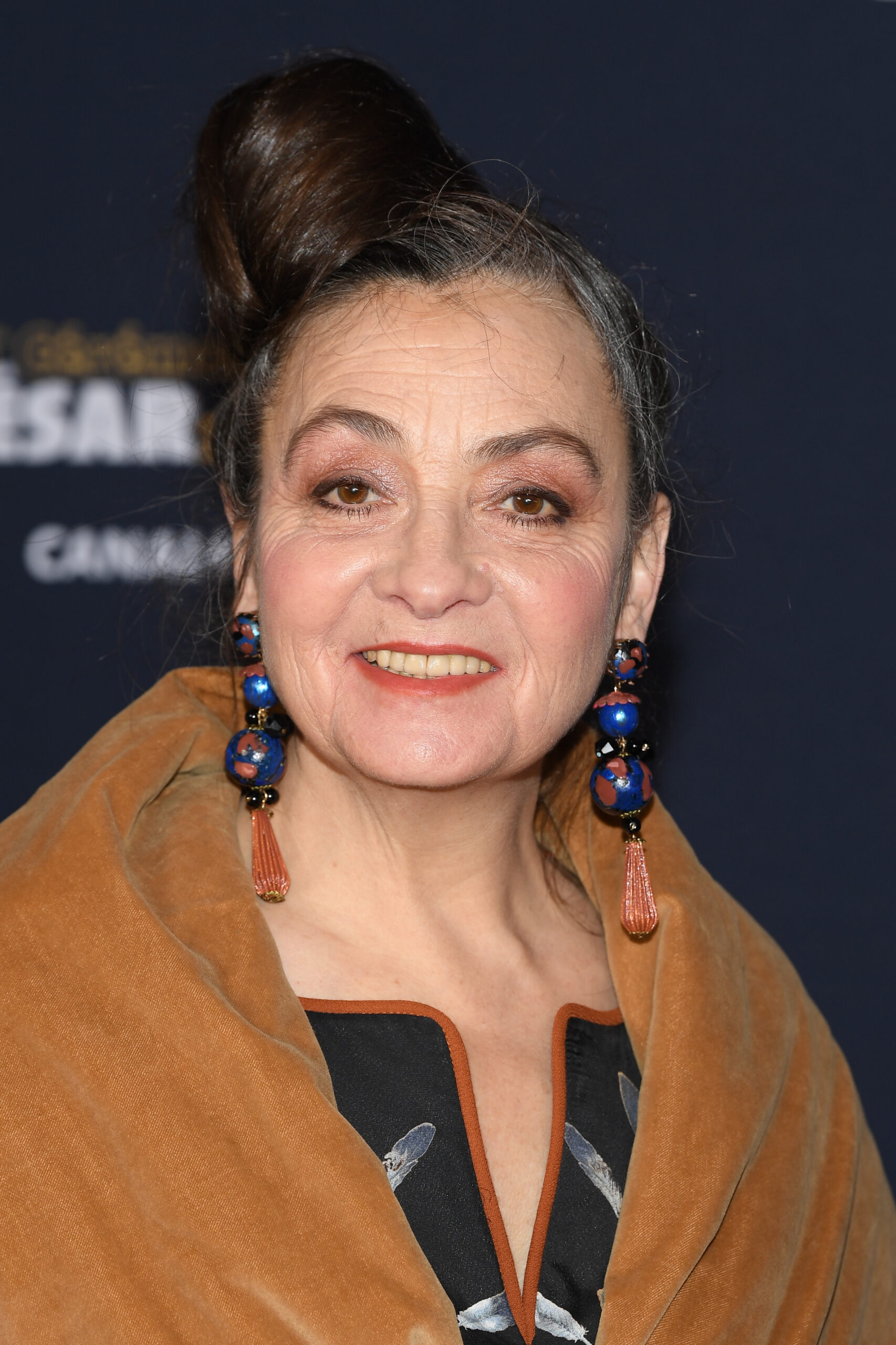
They met in 1979 and built something that crossed the line between a band and a life together.
When he died in 2007, Ringer had to discover whether music could exist for her without him.
Eventually, she found that it could.
Not in exactly the same form.
Not without grief.
But it could continue.
And it did for nearly two more decades.
Now Ringer’s own death closes another chapter of the Les Rita Mitsouko story.
She leaves behind her children, an unmistakable catalog of music and generations of listeners who grew up hearing a voice that could never be mistaken for anybody else’s.
From “Marcia Baïla” and “C’est comme ça” to her later solo work, Ringer spent decades demonstrating that originality did not have to be softened to achieve success.
She could be theatrical.
She could be unconventional.
She could be irreverent.
Most importantly, she could remain entirely herself.
After losing Chichin, she once wondered whether she would ever make another album.
She did.
She returned to the stage.
She continued creating.
And she carried their shared musical legacy forward until the final year of her life.
Catherine Ringer was 68.
Her voice, however, had already earned something far more enduring than a place on the charts.
It had become part of French music history.