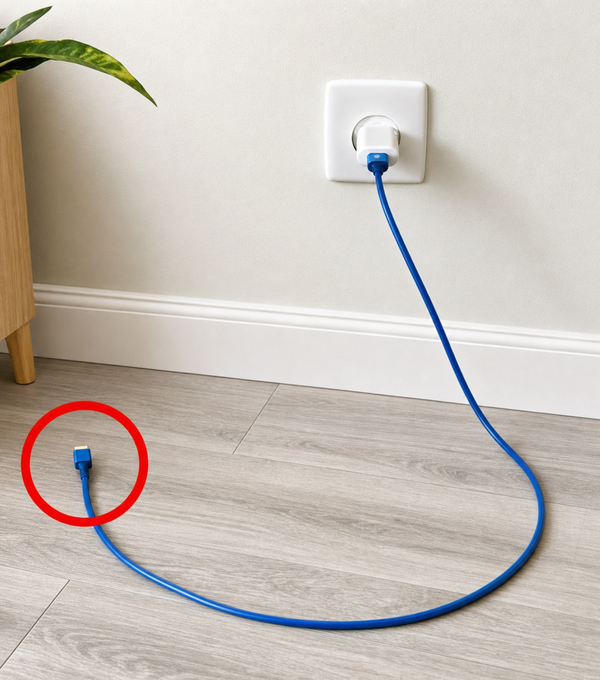
That slow, invisible wear is the real concern. Most adapters still pull some power even without a device connected, and that steady warmth can gradually stress the components hidden inside the casing.
The Hidden Cost of an ‘Empty’ Charger
A charger sitting in an outlet isn’t simply resting. It’s quietly heating internal parts every time it’s connected to power, whether or not a phone is charging.
Over time, that repeated warming can wear down materials that were never designed to run continuously, setting the stage for problems that aren’t visible from the outside.
How Small Wear Turns Into Real Danger
With enough time, insulation inside a charger can grow brittle and solder joints can weaken. These small failures often stay hidden until something pushes the charger past its limit.
That push could come from a power surge, a poorly made knockoff charger with weak safety standards, or an outlet that’s already loose. In those moments, a normally harmless device can produce smoke, sparks, or fire.
Everyday Risks You Don’t Expect
Not every hazard comes from the charger itself. Everyday household behavior adds its own strain. A child tugging on a dangling cord, a pet chewing through a live cable, or an adult yanking a charger out by the wire instead of the plug can all stress the connection.
Each small habit adds wear over time, increasing the chance that a weakened charger eventually fails.
Simple Habits That Prevent Big Problems
The safeguard here isn’t complicated. Unplugging chargers when they’re not in use limits the hours they spend quietly heating and aging.
Replacing chargers that look damaged, frayed, or otherwise suspicious removes an unnecessary risk before it becomes a real one. Keeping outlets clear and tidy, rather than crowded with idle cords, also helps.
None of these steps require special tools or expertise—just a small shift in habit. As the reminder goes, a two-second check can spare a home from a much bigger regret.