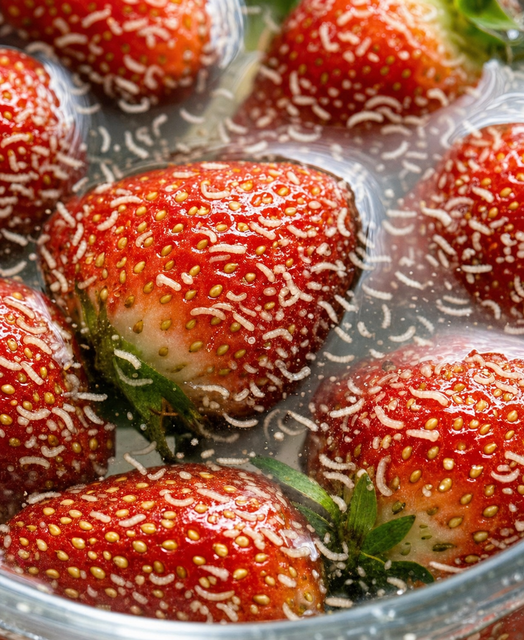
rather than a sign of contamination or spoiled produce, it’s often a natural byproduct of how strawberries are grown outdoors. Understanding where these larvae come from can turn that initial panic into informed reassurance.
What Those Tiny White Larvae Actually Are
In many cases, the culprit is the spotted wing drosophila, a small fruit fly with an unusual habit. Unlike common fruit flies that target fruit that’s already damaged or overripe, this species lays its eggs inside healthy strawberries while they’re still ripening on the plant.
That means the larvae may already be present by the time the fruit is picked, packaged, and sold. Because they’re extremely small and nearly transparent, most people never notice them at all. They typically stay hidden inside the fruit and only become visible if the strawberry is cut open or soaked in a way that draws them out.
Why Insects Sometimes End Up in Fresh Produce
Experts stress that finding these larvae is not considered a significant health risk. Fruits and vegetables grown outdoors are naturally exposed to insects, weather, and other environmental factors throughout the growing season.
Even with modern farming techniques and inspection systems, it’s simply not possible to eliminate every naturally occurring insect from crops grown in open fields. Food safety standards actually account for this reality, allowing very small amounts of harmless insect material in agricultural products.
Growers rely on monitoring systems, pest control strategies, and careful sorting processes to keep contamination as low as possible. Even so, a small presence can still occasionally slip through despite these precautions.
How to Wash and Store Strawberries Safely
To prepare strawberries safely, experts recommend rinsing them under cool running water just before eating. This simple step helps remove dirt, dust, and any surface residue that may have accumulated.
Some people choose to soak their berries in salt water or a diluted vinegar solution to draw out additional debris or tiny insects. These extra steps can offer peace of mind, but they’re optional rather than necessary for food safety.
- Keep strawberries refrigerated to help maintain freshness
- Wash them only right before eating, not immediately after purchase
- Rinse under cool running water to remove surface debris
Waiting to wash strawberries until you’re ready to eat them helps prevent excess moisture from speeding up spoilage in the meantime.
Should You Still Eat Them?
Despite the occasional unwelcome surprise, strawberries remain one of the more nutritious fruits available. They offer vitamin C, fiber, antioxidants, and other compounds that support overall health.
Experts generally agree that properly washed, fresh strawberries are safe for most people and can still be enjoyed as part of a balanced diet. Finding larvae inside a strawberry may be unpleasant, but it reflects a natural aspect of outdoor agriculture rather than evidence of a widespread food safety problem.
Recognizing that distinction may make the next handful of fresh berries a little easier to enjoy with confidence.