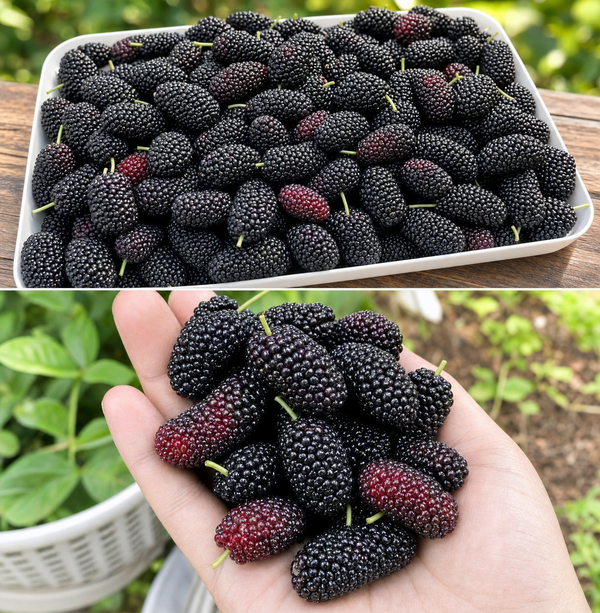
What you’re likely looking at is a mulberry, not a blackberry at all. The two fruits share a similar dark color and clustered structure, but their shape, growth habit, and even the plants they come from set them apart once you know what to check.
Not Blackberries—Meet the Mulberry
Mulberries have a slightly elongated shape with small clustered segments and a delicate stem still attached. Blackberries tend to look rounder and grow without that same thin stalk.
The plants themselves are the clearest giveaway. Mulberries grow on trees, while blackberries grow on thorny bushes, so the surrounding foliage and structure can help confirm which fruit you’ve found.
Color offers another clue, though not a definitive one. Mulberries range from red to deep purple and almost black, with their rich color coming from natural compounds called anthocyanins, the same pigments found in many other dark fruits.
What Makes Mulberries Nutritious
Beyond their appearance, mulberries offer a modest nutritional profile worth noting. They contain fiber, vitamin C, potassium, and various plant compounds that can contribute to a varied, balanced diet.
Fiber supports normal digestion, while vitamin C plays a role in immune health and skin maintenance. These aren’t dramatic effects, just the everyday benefits associated with including more fruit in your meals.
Fresh vs. Dried: What Changes
Fresh mulberries are soft, juicy, and naturally sweet, making them easy to eat on their own or mix into other foods. Their mild flavor works well stirred into yogurt, oatmeal, smoothies, or fruit salads.
Dried mulberries are a different matter. Removing the water content concentrates the sugars and calories, so a handful of dried berries packs more of both than the same amount fresh.
Enjoying Mulberries the Right Way
Despite some exaggerated claims circulating online, mulberries aren’t a miracle cure for anything. They’re simply a flavorful, nutritious fruit that can be a pleasant addition to a healthy diet.
Whether tossed into a smoothie or eaten straight off the stem, mulberries offer a seasonal treat worth recognizing—and now, distinguishing correctly from their thornier lookalike.