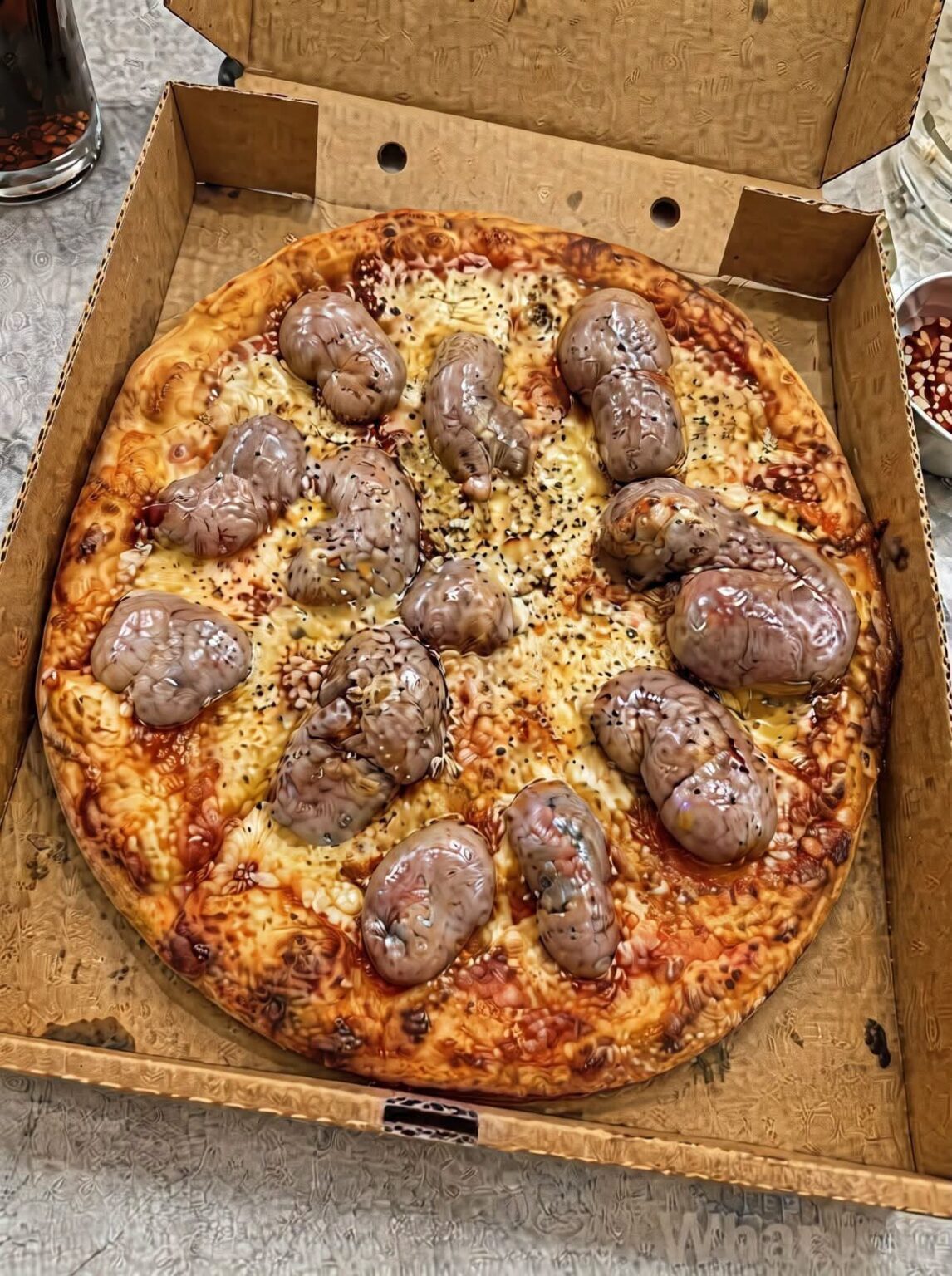
Tiny pale or white areas on cheese can have several explanations.
Some cheeses naturally develop visible crystals or protein-rich areas as they age, although this is much more characteristic of aged cheeses than the fresh or low-moisture mozzarella commonly associated with pizza.
So don’t diagnose a white spot from color alone.
Instead, look at the pizza as a whole.
Was it freshly prepared?
Does it smell normal?
Is the suspicious area smooth and consistent with the surrounding cheese—or does it look fuzzy and appear to be growing on the surface?
Those clues are much more useful.
Shiny or Oily Cheese Is Usually Normal
Freshly melted mozzarella is supposed to look glossy.
When cheese heats, its fat and protein structure changes and some fat can migrate toward the surface.
That can produce:
- A shiny surface
- Small pools of oil
- Bubbles
- Brown or golden patches
- Uneven melting
Different cheeses also behave differently in the oven.
Fresh mozzarella, low-moisture mozzarella, cheddar, provolone and processed pizza-cheese blends won’t all melt identically.
A little visible oil is therefore not evidence that something is wrong.
Translucent or Stretchy Cheese Isn’t Plastic
Another viral claim suggests that mozzarella containing long, stretchy or slightly transparent strands must contain plastic.
That’s not how mozzarella works.
Mozzarella is famous for stretching because of its protein structure.
When heated, those proteins become flexible while the fat and moisture contribute to the cheese’s characteristic elasticity.
Thin pieces can also appear somewhat translucent as light passes through them.
That’s melted cheese—not evidence of synthetic material.
What About “Slimy” Cheese?
This requires more caution.
There’s an important difference between hot, glossy mozzarella and cheese that has developed an abnormal slippery or slimy texture while cold.
Freshly melted cheese can look wet because of its moisture and fat.
But unexpected slime accompanied by discoloration, an unpleasant odor or other signs of deterioration is different.
That’s when the pizza deserves suspicion.
Brown Spots Are Usually Just Browning
Golden and brown bubbles are a normal consequence of baking pizza at high temperatures.
Mozzarella can develop toasted patches, darker edges and even small blistered areas.
Those are often some of the most flavorful parts of the pizza.
Heavily blackened, bitter or carbonized cheese is overcooked, but that’s primarily a quality problem—not evidence that the cheese contains mold or plastic.
What Does Actual Mold Look Like?
Mold can vary, so appearance alone isn’t always enough to identify it.
More concerning signs include:
- Fuzzy growth
- Green, blue or gray patches
- White areas that are visibly fuzzy
- Spreading unusual discoloration
- Other obvious signs of deterioration
If pizza or another soft, high-moisture food clearly has mold, don’t simply cut off the visible section and eat the rest.
Mold can extend beyond what you can see.
Discard the affected food.
Smell Helps—but Doesn’t Prove Safety
A sour, rotten, musty or otherwise abnormal odor is a good reason not to eat the pizza.
But the opposite isn’t necessarily true.
Food can contain harmful microorganisms without developing an obvious smell or visible change.
Use smell as one clue rather than a definitive safety test.
Time and Temperature Matter More Than a Shiny Spot
If you’re worried about delivered pizza, how it was handled may matter much more than whether the mozzarella looks glossy.
Perishable food shouldn’t remain unrefrigerated indefinitely.
USDA guidance generally recommends refrigerating perishable foods within 2 hours, or within 1 hour when temperatures are above 90°F (32°C).
A pizza arriving merely lukewarm doesn’t automatically make it unsafe. The important question is how long it has spent at unsafe temperatures.
Normal Pizza Cheese vs. Warning Signs
Usually normal:
- Glossy melted cheese
- Stretchy mozzarella
- Small oil pools
- Golden or brown bubbles
- Slightly translucent thin strands
- Cheese becoming rubberier after cooling or reheating
More concerning:
- Visible fuzzy mold
- Strong abnormal odor
- Unexpected spreading discoloration
- Slimy deterioration
- Evidence of prolonged improper storage
- Damaged or contaminated packaging
No single photograph can reliably determine whether food is safe.
Context matters.
What If Your Delivered Pizza Looks Spoiled?
Don’t taste suspicious food just to test it.
Stop eating it, photograph the problem if necessary, retain the receipt or packaging, and contact the restaurant or delivery service.
If there’s obvious mold or spoilage, discard the pizza rather than attempting to salvage individual slices.
If you’ve already eaten some, don’t panic simply because the cheese looked unusual.
Watch for symptoms such as vomiting, diarrhea, abdominal pain or fever. Seek medical advice for severe or persistent illness or more serious symptoms such as dehydration, bloody diarrhea, confusion or difficulty breathing.
The Bottom Line
A dramatic close-up can make completely ordinary mozzarella look alarming.
Melted pizza cheese can naturally be shiny, stretchy, oily, bubbly, browned and even slightly translucent.
None of those characteristics alone proves that you’re looking at mold, plastic or contamination.
What deserves more attention is genuine fuzzy growth, abnormal odors, deterioration, unusual discoloration and improper storage.
So don’t let a viral photograph diagnose your dinner.
Sometimes that suspicious-looking white or glossy patch is simply cheese doing exactly what melted cheese does.
And when something genuinely looks or smells wrong?
You don’t need to take another bite to find out.