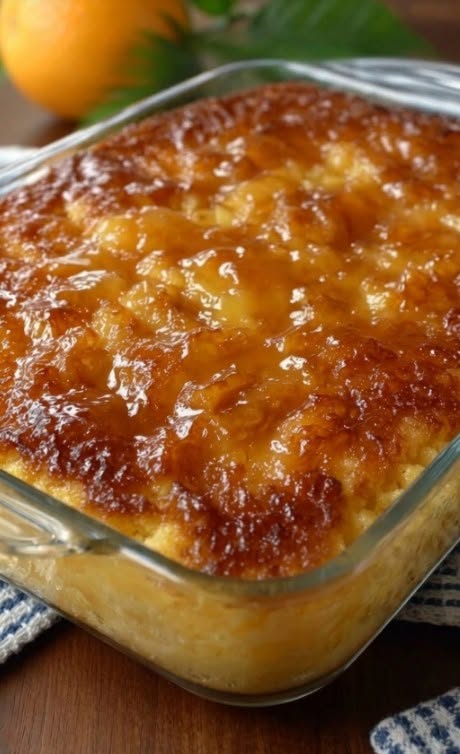
- 2 cans (20 ounces each) crushed pineapple, well drained
- 6 cups white bread, cut into roughly 1-inch cubes
- ½ cup unsalted butter, melted
- ¾ cup granulated sugar
- 3 large eggs
- 1 teaspoon vanilla extract
- ½ teaspoon ground cinnamon
- ¼ teaspoon salt
- 2 tablespoons brown sugar, optional, for topping
Slightly stale bread works best because it absorbs the pineapple mixture while maintaining some structure. If your bread is very fresh, cube it and leave it uncovered for about 20–30 minutes first.
How to Make Pineapple Bake
Preheat the oven to 350°F (175°C) and grease a 9×13-inch baking dish.
Drain the crushed pineapple thoroughly. Press it gently against a strainer to remove excess juice; too much liquid can make the casserole soggy.
Place the bread cubes in a large mixing bowl.
In a separate bowl, whisk together the melted butter, granulated sugar, eggs, vanilla, cinnamon and salt until combined.
Stir in the drained pineapple.
Pour the pineapple mixture over the bread and gently toss until all the cubes are coated. Let everything sit for about 5 minutes so the bread can absorb some of the liquid.
Transfer to the prepared baking dish and spread evenly. If desired, sprinkle the brown sugar over the top.
Bake uncovered for 40–50 minutes, until the center is set and the top and edges are golden.
Let the casserole rest for 10 minutes before serving.
Variations
The basic version works well on its own, but you can easily change it.
For more texture, add ½ cup chopped pecans. For a tropical version, mix in ½ cup shredded coconut. Brioche or challah can replace sandwich bread for a richer casserole.
A pinch of nutmeg adds more warmth, while a teaspoon of orange or lemon zest makes the pineapple taste brighter.
For deeper caramel notes, replace part of the granulated sugar with brown sugar.
If you prefer a less-sweet casserole, reduce the granulated sugar from ¾ cup to ½ cup.
What to Serve With It
Pineapple Bake works particularly well beside salty, savory foods. Serve it with baked or glazed ham, roast chicken, turkey, mashed potatoes, green beans or roasted vegetables.
For brunch, pair it with eggs, fruit and coffee.
To turn it into dessert, serve it warm with whipped cream or a scoop of vanilla ice cream.
Tips for the Best Texture
Drain the pineapple very well. Excess juice is the most common reason the casserole turns overly wet.
Use slightly stale bread. Very soft fresh bread can become mushy.
Don’t overbake it. The center should be set but still moist rather than dry.
Rest it before serving. Ten minutes allows the casserole to settle and makes it easier to scoop.
Make It Ahead
The casserole can be assembled several hours ahead, covered and refrigerated until baking.
If baking directly from the refrigerator, allow approximately 5–10 additional minutes in the oven.
For the best texture, avoid assembling it more than one day in advance.
Storage
Cover leftovers and refrigerate for 3–4 days.
Individual servings can be reheated in the microwave, although reheating at 325°F (165°C) in the oven does a better job of restoring the lightly crisp top.
Pineapple Bake can also be frozen for up to 2 months, although the bread will become somewhat softer. Thaw overnight in the refrigerator before reheating.
Recipe at a Glance
Prep: 15 minutes
Bake: 40–50 minutes
Rest: 10 minutes
Total: About 1 hour 15 minutes
Servings: 8–10
Difficulty: Easy
Sweet pineapple, butter and custardy bread make this one of those remarkably simple casseroles that can sit comfortably beside a holiday dinner or finish the meal as dessert.
The key is simply to drain the pineapple well, let the bread absorb the mixture, and pull it from the oven while the center is still tender and the edges are beautifully golden.