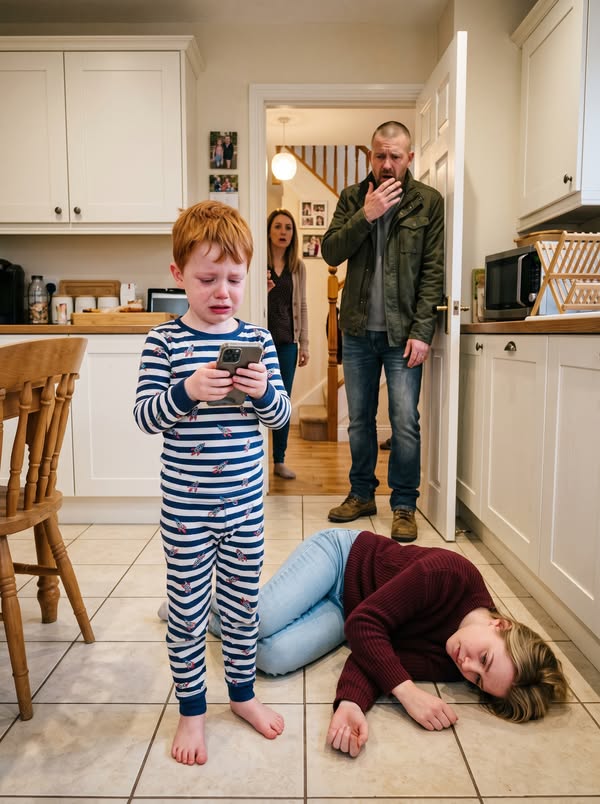
He pressed the contact marked with a tiny fishing-boat icon, the one he’d learned meant safety. My father answered on the second ring, and within seconds his calm, steady voice was coming through the speaker, asking Noah simple questions while I tried to remember how to breathe.
A Phone Call in the Dark
We lived in a split-level house in Tacoma, Washington, with creaking stairs and a hook by the door where Evan hung the keys. For seven years he had decided when I could use the car, how money was spent, and where I was allowed to go without explaining myself.
That night the fight started over seventy-three dollars I had quietly saved in a separate account, made up of grocery change and small gifts from my sister. It wasn’t enough to leave. It was only enough to imagine that someday I might.
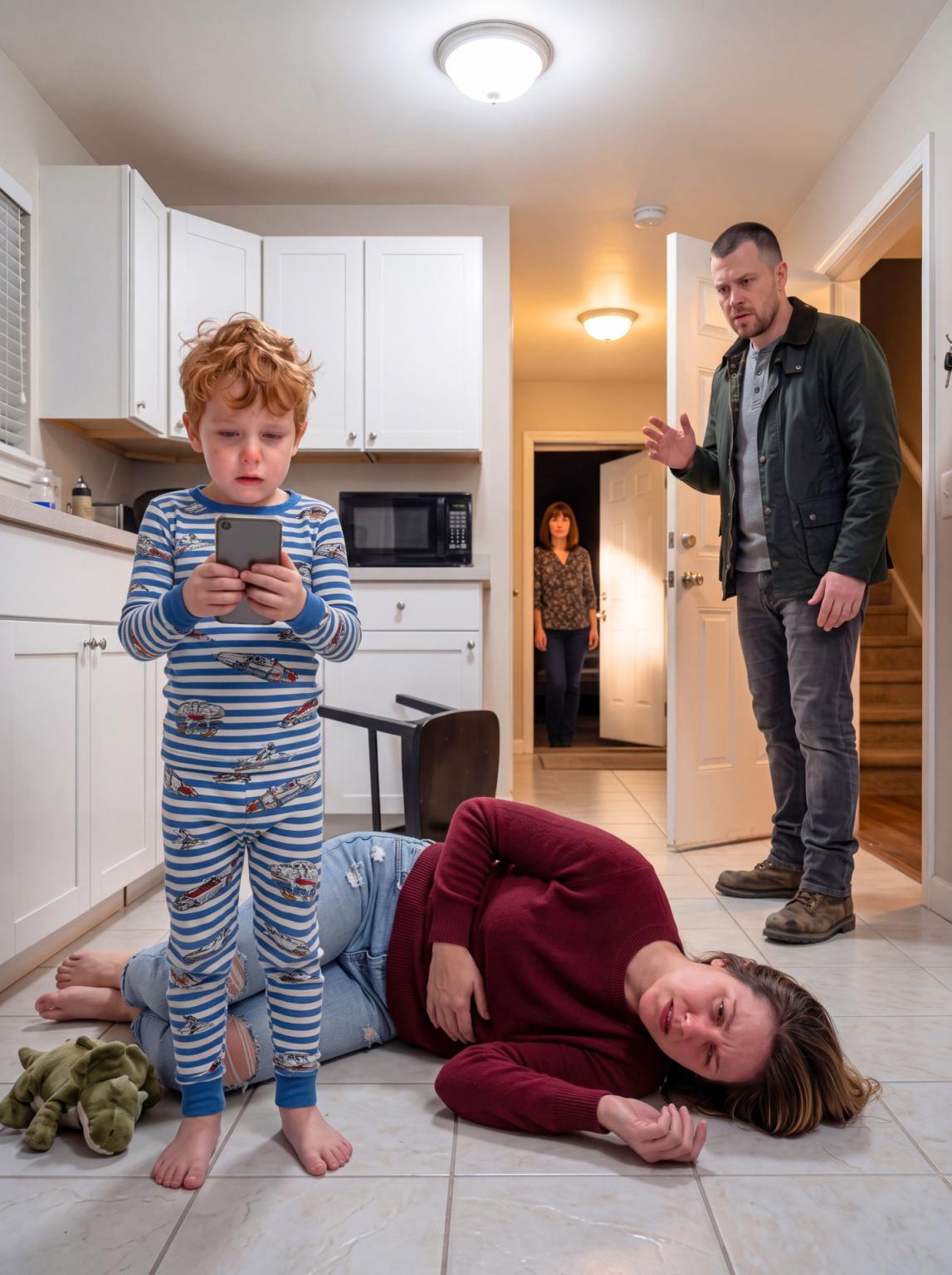
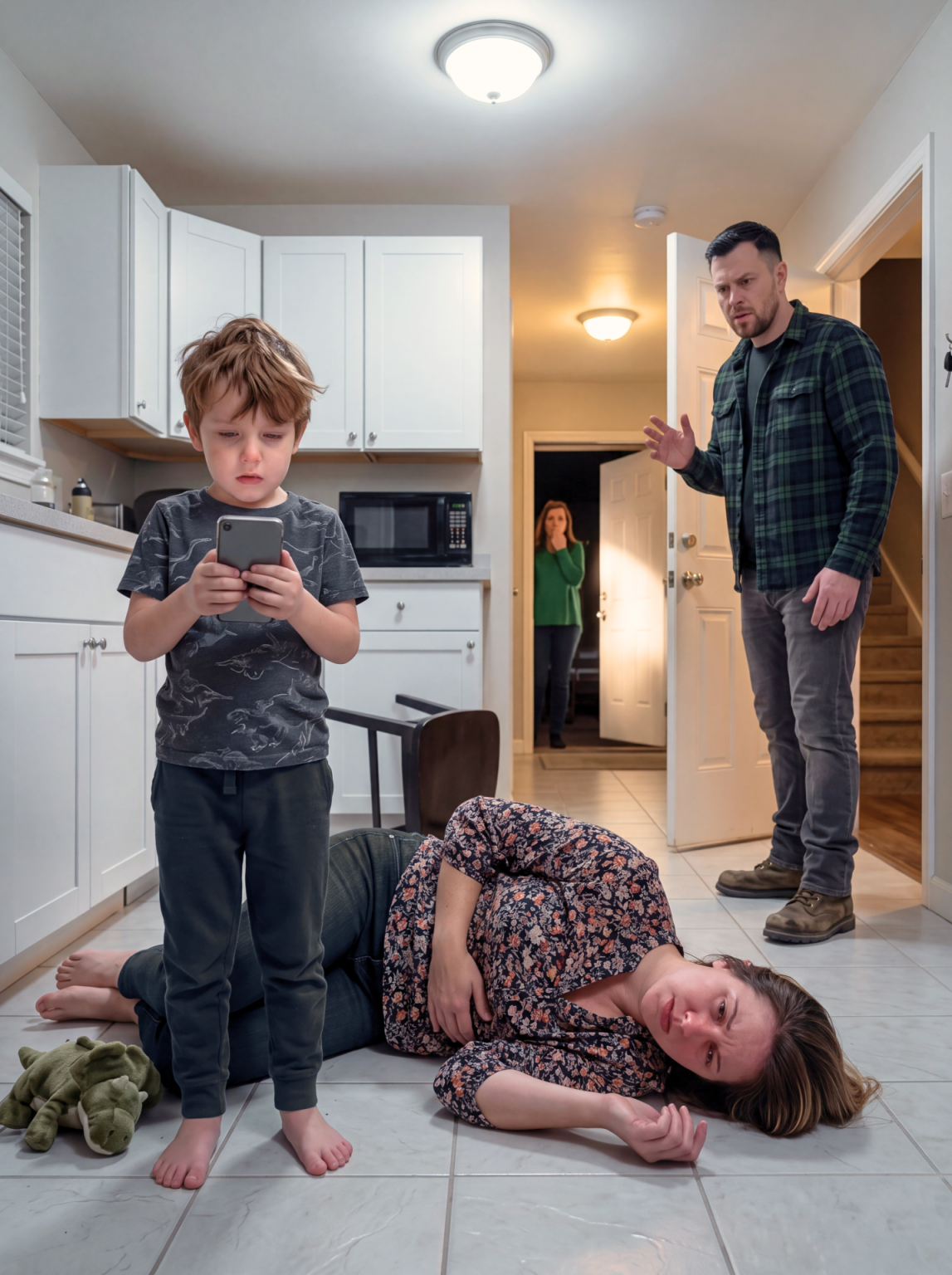
When Evan saw the banking app open on my phone, the argument turned physical. I ended up on the kitchen floor, struggling to breathe, while Noah watched from the hallway in his dinosaur pajamas.
Evan told me to clean myself up, took my keys, and left. That was when Noah found the phone and called the one person his father had always tried to keep at a distance.
“Grandpa, please come. Mom needs help,” Noah said. My father, a retired dock foreman used to handling emergencies, told him to stay close to me and asked, gently, whether Evan was responsible. I tapped the floor once, and for the first time in years, someone outside our house finally knew.
When the Truck Returned
Before my father could arrive, headlights swept back across the driveway. Evan walked in and saw the phone still in Noah’s hands.
“Who did you call?” he demanded.
Noah backed toward me without answering. Then my father’s voice came through the speaker, calm and unmistakable: “Me.”
Evan froze, glancing between Noah, me, and the open front door, as if trying to decide which version of the night he could still control. Sirens were already approaching outside.
When officers and paramedics arrived, Evan tried to explain quickly, saying I had fallen and that Noah had simply misunderstood an argument. A paramedic knelt beside me, noticed the overturned chair and the way I was breathing, and asked if someone had hurt me.
Before I could answer, Noah spoke. “He hurt Mama,” he said, and the kitchen went still.
In that same moment, a notification lit up my cracked phone screen: a login attempt on my banking app at 8:31 p.m., just after Evan had come back inside. He hadn’t returned out of worry. He’d returned for the account.
Evidence That Didn’t Match His Story
At the hospital, doctors confirmed several broken ribs and documented injuries that didn’t match the story Evan kept changing. First he said I had fallen. Later he called it an accident. The medical records, photographs, and paramedics’ notes stayed the same no matter how his version shifted.
An investigator took my statement the next morning, and the bank confirmed the login attempt had happened within minutes of Noah’s call for help. It was a small detail, but it fit a larger, consistent pattern that Evan’s explanations never could.
As the case moved toward a hearing, prosecutors uncovered text messages Evan had sent that night before he came back. In them, he weighed how to describe me as “unstable,” considered saying I had simply fallen, and asked whether he could access my account while I was “too upset to deal with it.”
The messages showed something I hadn’t wanted to admit: he hadn’t simply lost his temper that night. He had been managing the story he wanted people to believe.
When I testified, I described the slow arrival of control in our marriage—the driving, the questions about every purchase, the checked phone. I explained why the seventy-three dollars had mattered, even though it was never enough to leave on its own.
The court ultimately found Evan guilty, weighing the medical evidence, the bank record, Noah’s statement to officers, and the messages together. Protective orders followed, along with custody changes that gave Noah and me the distance we needed to begin again.
What Bravery Looks Like
My ribs healed slowly, and for weeks even small movements ached more than I expected. The emotional recovery took longer—learning to make decisions without waiting for approval, to open a bank app without feeling guilty, to breathe without bracing.
Noah started therapy soon after. He didn’t say much in early sessions, choosing instead to draw houses, phones, and one image that kept reappearing: a large fishing boat.
When his therapist asked why the boat was always so big, Noah answered simply, “That means Grandpa is coming.”
My father never asked why I had stayed quiet for so long. He fixed the lock on our door, drove Noah to school on hard mornings, and sat beside me through every hearing without needing to be asked twice.
Eventually Noah and I moved into a smaller home with brighter windows and a yard where his dinosaur toys could stay scattered on the grass. There was no hook by the door meant to remind me who was in charge, and no engine sound that made either of us freeze.
One evening, while I folded laundry in our new living room, Noah looked up from his toys.
“Was I brave that night?” he asked.
I sat beside him and took his hand. “Yes, you were.”
He thought about it for a moment. “But I was scared.”
“I know,” I told him. “You can be scared and brave at the same time.”
He nodded, satisfied, and went back to his toys. Watching him, I thought about the night he found my phone beneath the fallen chair—and how one small, steady call had finally opened a door I had believed was locked for good.