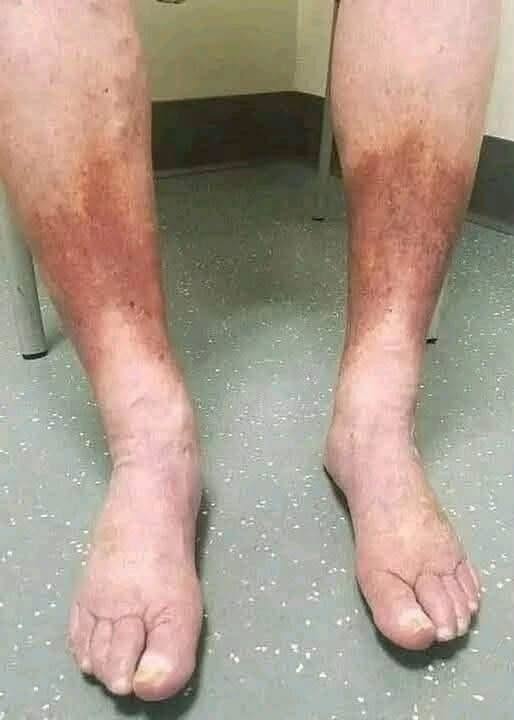
deeper circulation problems that can quietly build over time. That kind of prolonged swelling may mean blood or fluid isn’t moving through the body the way it should, a signal worth paying attention to rather than dismissing as an ordinary sign of aging.
Why Legs Swell and When It Matters
Swollen legs have plenty of everyday explanations. Standing for long stretches, eating too much salt, or simply sitting still for hours can all cause temporary puffiness that fades with rest and elevation.
These common triggers usually resolve on their own once the underlying activity changes. A person who spends a long shift on their feet, or takes a lengthy flight, may notice their ankles look swollen by evening and normal again by morning.
The concern grows when swelling doesn’t go away. Persistent swelling, particularly when it affects both legs, may suggest that blood or fluid movement through the body has become impaired rather than a passing inconvenience tied to a single day’s habits.
This distinction matters because the body’s circulatory system relies on a steady, efficient cycle of blood flowing out to the limbs and returning back toward the heart. When that return trip slows down or stalls, fluid can pool in the lower legs, and that pooling is what shows up as swelling.
Dark or Thickened Skin: A Circulation Warning Sign
Over time, poor circulation in the legs can leave visible marks on the skin itself. Darkening or thickening around the ankles and lower legs sometimes develops after long periods of inadequate blood flow, and these changes tend to appear gradually rather than overnight.
Because the shift happens slowly, it can be easy to overlook at first, especially if there’s no pain involved. A patch of skin that looks slightly discolored or feels a bit firmer than the surrounding area might simply be brushed off as an odd mark rather than recognized as a signal.
These skin changes may be tied to chronic venous problems, conditions where veins struggle to return blood efficiently to the heart. When veins in the legs don’t work as well as they should, blood can back up and put extra pressure on the surrounding tissue.
If the discoloration or thickening continues or gets worse, it shouldn’t be dismissed as a cosmetic issue alone. Ongoing changes in skin tone or texture around the lower legs are worth mentioning to a healthcare provider, even if they seem minor compared to other symptoms.
Red Flags That Need Immediate Attention
Certain symptoms raise the level of concern beyond routine swelling. Pain, warmth, redness, open sores, sudden swelling, or one leg becoming noticeably larger than the other are all signs that warrant closer medical attention rather than a wait-and-see approach.
Each of these signs points to a different possible issue, but together they share one thing in common: they suggest the swelling isn’t simply the result of standing too long or eating salty food. A sore that won’t heal, or a leg that swells much faster than the other, tells a different story than ordinary tiredness.
Some situations call for urgency. Sudden swelling paired with chest pain or difficulty breathing requires immediate medical evaluation, as these combinations can indicate a more serious underlying issue that needs to be addressed without delay.
Recognizing these red flags early gives a person the best chance to get help before a smaller problem has room to grow. Waiting to see if symptoms fade on their own isn’t the safest choice when these particular signs are present.
Why Early Evaluation Makes a Difference
The core message behind these warning signs is straightforward: persistent swelling and unusual skin changes deserve a proper medical look, not a shrug and an assumption that it’s simply part of aging. Growing older doesn’t automatically explain away swelling or skin discoloration that keeps building over time.
Getting checked early allows a healthcare provider to identify what’s actually causing the swelling or skin changes. A proper evaluation can help sort out whether the cause is something manageable and common, or something that needs closer, ongoing attention.
Catching the underlying cause sooner rather than later can help prevent complications from developing further down the line. Addressing an issue while it’s still limited in scope tends to be more straightforward than dealing with it after it has had time to progress.
None of this means every case of swollen ankles signals a serious problem. Many instances have simple, temporary causes tied to daily habits like standing, salt intake, or sitting for long periods without moving.
But when swelling sticks around, spreads, or comes with other concerning symptoms, a timely conversation with a doctor remains the safest path forward. Paying attention to how the legs look and feel over time, rather than assuming changes are ordinary, is a reasonable and cautious approach to protecting long-term health.