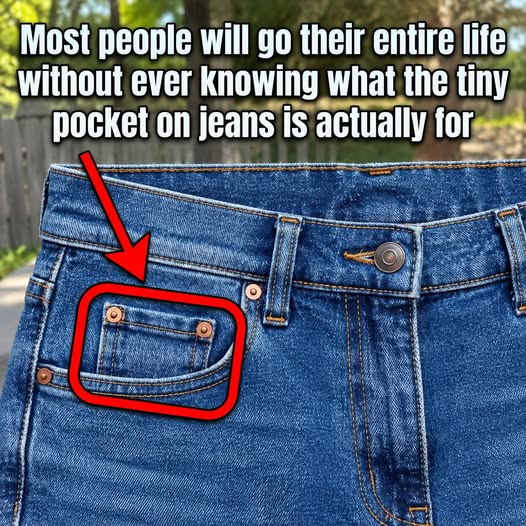
Long before anyone called them a design detail, these tiny rivets were solving a painful, repetitive problem that cost workers their pants and their patience. The fix wasn’t dreamed up by a designer chasing a trend. It came from someone who was simply tired of watching the same fabric fail in the same places, over and over, no matter how carefully it was sewn back together.
Why Jeans Kept Ripping in the First Place
In the late 1800s, miners and railroad laborers lived in clothes that weren’t built for their jobs. Heavy tools, constant bending, and rough physical labor put enormous strain on pockets and seams every single day, and ordinary cotton simply wasn’t designed to handle that kind of punishment.
The weak points were predictable. Pocket corners and stress seams took the brunt of the movement, and fabric alone couldn’t hold up. Pants tore again and again in the exact same spots, no matter how often they were patched or reinforced with extra thread.
For workers who couldn’t afford to keep replacing torn trousers, this was more than an annoyance. It was a real financial and practical burden, one that repeated itself week after week in mining camps and along rail lines, eating into wages and free time alike.
One Tailor’s Frustration Sparks an Idea
A tailor named Jacob Davis saw this problem up close, over and over. Customers kept bringing him the same damaged pants, torn at the same predictable seams, and he grew tired of stitching temporary fixes to what was clearly a structural problem, not a sewing one.
Davis started thinking differently about the issue. Instead of treating each tear as a one-off repair, he asked a more useful question: what if the fabric itself could be reinforced before it ever failed in the first place?
His answer was surprisingly simple. He began placing small metal rivets at the corners of pockets and along key stress seams, essentially anchoring the fabric at the exact points where it kept giving out under pressure.
The results were immediate and obvious. Pants reinforced this way held together under pressure that would have torn ordinary seams apart within days, and word of the fix started to travel among workers who noticed the difference firsthand.
The Levi Strauss Partnership That Changed Denim
Davis knew he had something worth protecting, but turning an idea into a widely available product took more than a good fix. He partnered with Levi Strauss, and together they moved to patent the riveting method so the innovation couldn’t simply be copied without credit.
That partnership mattered because it gave the innovation staying power. Once patented, riveted construction stopped being a local tailor’s trick and became a defining feature of a new kind of workwear built specifically for hard labor.
Riveted jeans quickly earned a reputation for being tough in a way ordinary trousers simply weren’t. Workers noticed the difference, and word spread that these pants could survive conditions that destroyed regular clothing within weeks of daily wear.
The choice of metal wasn’t random either. Copper and brass rivets were selected specifically because they spread tension evenly across the fabric instead of concentrating stress in one spot. They also resisted rust, which meant they held up through sweat, dirt, and years of hard use without corroding or weakening.
Why These Tiny Rivets Still Matter Today
Fast forward to now, and those same small metal studs are still riveted onto jeans, largely unchanged in purpose. They’re not there because a designer thought they looked nice against blue denim, though they do add a bit of visual texture and contrast.
They’re there because the fundamental problem Jacob Davis solved never really went away. Pocket corners and seams are still the weakest points on any pair of pants, and reinforcing them still works exactly the way it did back in the 1800s.
Every rivet on a modern pair of jeans is a small, functional nod to that original fix. It’s a piece of practical engineering hiding in plain sight, doing quiet work most people never notice until it’s missing or worn smooth.
So the next time someone asks why jeans have those tiny metal studs, the answer isn’t about style at all. It’s about a tailor who got tired of fixing the same tear, a partnership that turned his fix into an industry standard, and a simple piece of metal that still holds your pockets together more than a century later.