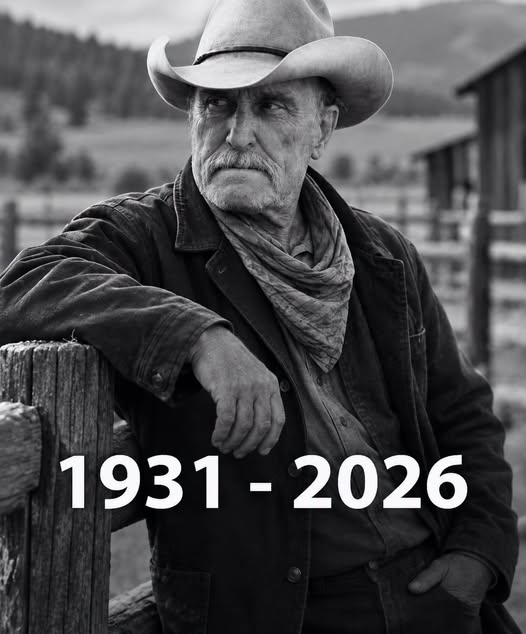
…what that discipline cost him, and what it gave to everyone who watched him work, is something the public will likely never know in complete detail. What remains instead is the evidence left on screen: performances built not from flourish but from stillness, from small gestures and unspoken tension that made even quiet scenes feel charged with truth. Duvall was never an actor who seemed to be performing. He simply became the men he played, and audiences trusted that transformation without needing to understand how he achieved it.
Among the roles that shaped his legacy, three in particular remain touchstones of American film. As Tom Hagen in The Godfather, he embodied a kind of controlled loyalty, a man whose calm exterior carried the weight of difficult choices made in service of family and power. As Lieutenant Kilgore in Apocalypse Now, he delivered a performance so vivid and unsettling that it became inseparable from the film itself, a portrait of bravado shadowed by something darker beneath the surface. And as Mac Sledge in Tender Mercies, he offered something quieter and more intimate, a portrait of a man trying to rebuild a life far from noise or applause. Each role showed a different facet of the same underlying gift: the ability to make difficult, complicated men feel entirely human.
What connected these performances, and so much of his other work, was a refusal to rely on obvious displays of emotion. Directors who worked alongside him came to trust him almost immediately, confident that he would never fake a moment or reach for an easy effect. Fellow actors often spoke of learning from his patience, from the way he let silence carry weight that dialogue could not. Audiences, even without articulating exactly why, sensed they were watching something closer to observed life than staged performance.
That same instinct for honesty extended well beyond the camera. Duvall was known for guarding his privacy, choosing the discipline of his craft over the pull of public attention. He did not court the spotlight in the ways so often associated with celebrity, preferring instead to let his work stand on its own. This was not distance for its own sake, but a clear ordering of priorities, one in which the work itself mattered more than visibility or spectacle.
He carried that same unguarded honesty into how he allowed himself to be seen on screen. Duvall aged naturally in front of the camera, without the vanity that leads many performers to disguise the passage of time. The lines in his face and the changes in his voice were never treated as flaws to be hidden. Instead, they became part of the characters he inhabited, lending weight and authenticity to men shaped by years of hard living, quiet regret, or hard-earned resilience. Rather than working against time, he let it work through him, and his performances were richer for it.
Those who directed him and those who acted beside him consistently described the same quality: a deep, quiet trust. Directors knew he would arrive prepared and disappear fully into the role without demanding attention be drawn to the effort behind it. Fellow performers often said that sharing a scene with him required a kind of honesty they could not fake, because his presence made pretense impossible to sustain. That trust, built over a long career, became one of the most consistent threads running through everything he did.
His death marks the close of a significant era in American cinema, one shaped in part by his insistence that acting was a form of craft rather than a stage for personal spectacle. He belonged to a period of filmmaking that valued restraint and lived-in truth, and his passing closes a chapter that will not be written again in quite the same way. There will be no attempt here to summarize a single dramatic triumph as the measure of his career, because his legacy was never built on one moment. It was built on consistency, on the accumulation of performances that never repeated themselves and never asked for undue attention.
What remains now is the work itself. Robert Duvall leaves behind a body of film that will continue to be watched, studied, and returned to by audiences who value honesty over spectacle. The characters he created, from the calculating to the broken to the quietly enduring, remain part of the larger story of American cinema. At 95, his passing closes a meaningful chapter in that story, and the performances he leaves behind stand as his lasting legacy, unembellished, deeply felt, and enduring.