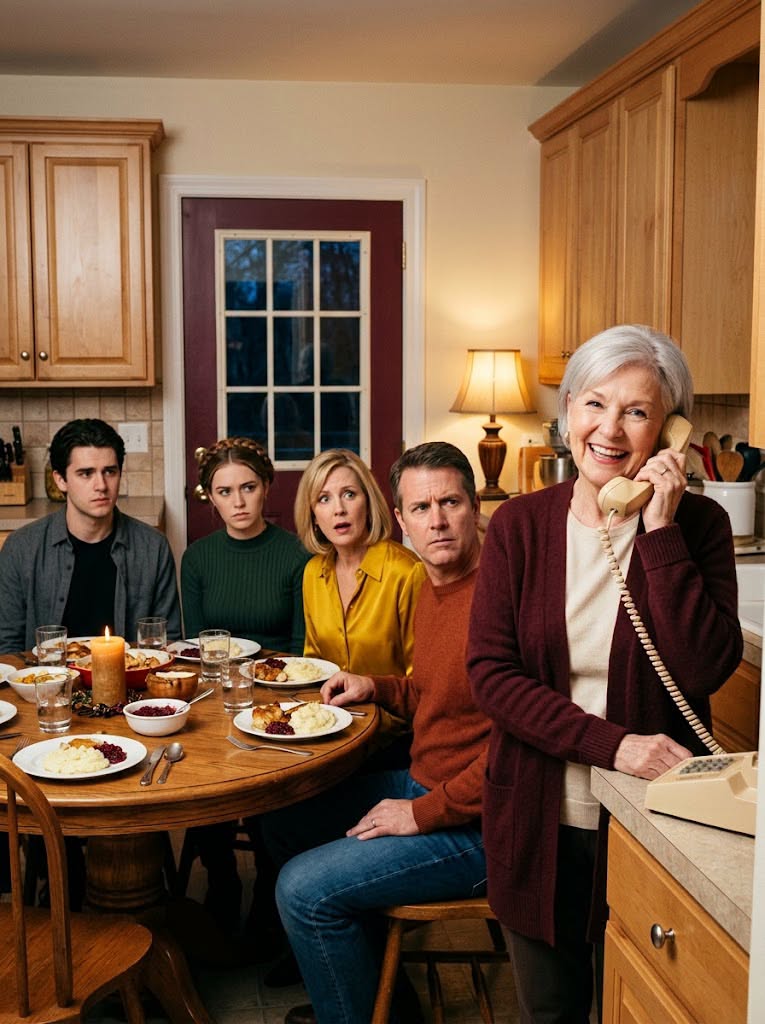
He stared at his plate.
That hurt more than anything Linda said.
I’d spent the entire afternoon making beef stew and fresh bread because I thought my family needed comfort.
Less than twenty-four hours earlier, Edward had called me desperate.
He’d lost his management job at a logistics company.
He and Linda had spent years maintaining an expensive suburban lifestyle—larger house, newer cars, constant expenses—but hadn’t built enough savings to carry them through a serious setback.
They needed somewhere to stay.
I didn’t hesitate.
“Come here.”
My red-brick house on Chicago’s South Side wasn’t enormous, but it was mine.
My late husband Anthony and I had bought it decades earlier on two teachers’ salaries.
We skipped vacations.
We clipped coupons.
We watched every dollar.
Month after month, we paid that mortgage.
After Anthony died, the house became more important to me.
It wasn’t simply an asset.
It contained our life.
Still, when Edward needed help, I emptied the guest room.
I bought snacks for the children.
I rearranged closets.
I wanted everyone to feel welcome.
Linda apparently interpreted “welcome” differently.
Within days, she began complaining about space.
Then she suggested that she and Edward should have my master bedroom.
“No.”
She looked surprised.
“There’s more room in there.”
“I know.”
Anthony’s belongings were still in that room.
His watch remained in the drawer beside the bed.
A few shirts still hung in the closet.
Sometimes I could walk into that room and remember exactly how our ordinary life together had felt.
I didn’t explain any of that to Linda.
I’d learned that giving her ten reasons only gave her ten things to argue against.
The answer was simply no.
That evening, we sat down for dinner.
Linda was already irritated.
One complaint became another until she finally placed both hands on my dining table.
“We can’t keep living like this. Someone needs to be in charge.”
I looked at her.
“I am.”
She laughed.
Then she pointed toward the back door.
“If you’re going to make everything difficult, maybe you should eat outside.”
In my own house.
At my own table.
Eating food I’d cooked.
I looked at Edward.
Nothing.
“Are you going to say something?”
He kept staring downward.
And suddenly, I understood something I should have recognized years earlier.
Linda hadn’t become comfortable disrespecting me overnight.
I’d helped teach her she could.
For years, I’d swallowed comments at birthdays and holidays.
I’d ignored insults.
I’d changed plans to avoid arguments.
Whenever Edward looked uncomfortable, I backed down because I didn’t want my son “caught in the middle.”
I called it keeping the peace.
But peace that requires the same person to surrender every time isn’t peace.
It’s permission.
I pushed my chair away from the table.
Linda probably thought I was going outside.
Instead, I walked into the kitchen and called the attorney who handled my property and estate matters.
I briefly explained that family members staying temporarily in my home were now refusing to respect my boundaries and asked what I would need to do if I wanted them to leave.
The attorney explained that I shouldn’t improvise or physically remove anyone myself; if it came to that, we’d follow whatever formal notice and legal process applied.
That was enough.
I returned to the dining room.
Edward had finally looked up.
Linda’s confidence had disappeared.
“This is my home,” I told her. “You are here because I love Edward and because your family needed somewhere safe to stay.”
She started to interrupt.
I raised my hand.
“I pay the mortgage expenses. I pay the taxes. I pay the utilities. And I decide where I sit in my own house.”
Silence.
“You don’t have to like me. You don’t even have to agree with me. But if you’re living here, you will treat me with basic respect.”
Then I made the boundary clear.
If that couldn’t happen, they would need to find somewhere else to live, and I would handle that properly through the legal process if necessary.
That’s when Edward finally stood.
“Mom’s right.”
Linda turned toward him.
He looked terrified.
But he continued.
“She took us in because I asked her to. This is her house.”
Then he looked at me.
“I’m sorry.”
It wasn’t a magical moment.
Nine years of silence don’t disappear because someone finally finds his voice once.
But it was a beginning.
I didn’t ask them to leave that night.
Partly because of Edward.
Partly because of the children.
And partly because setting a boundary didn’t mean I wanted revenge.
I wanted respect.
Over the following months, Edward found another steady job.
He began contributing toward household expenses while they rebuilt their savings.
He and Linda also started working seriously on their finances instead of treating the next paycheck as guaranteed.
Linda and I never became best friends.
I don’t need to pretend we did.
But something changed between us.
She stopped treating my home like territory she needed to conquer.
Eventually, she apologized.
It wasn’t a dramatic speech.
Just:
“I shouldn’t have spoken to you like that.”
“You shouldn’t have.”
“I know.”
That was enough for me.
Edward changed too.
He became less willing to disappear whenever his wife and mother disagreed.
Sometimes keeping a marriage healthy means defending your spouse.
Sometimes being a good son means defending your mother.
And sometimes being an adult means telling someone you love that they’re wrong.
The biggest change, however, happened inside me.
I’d spent years believing that being the older woman in the family meant absorbing discomfort so younger people didn’t have to.
I was wrong.
That night, after everyone had calmed down, I returned to the dining room.
My stew was cold.
The bread wasn’t fresh anymore.
I reheated my food and sat back down.
In my chair.
At my table.
Inside the house Anthony and I had spent decades earning.
Linda telling me to eat outside wasn’t the moment I lost my place in the family.
It was the moment I finally stopped giving it away.