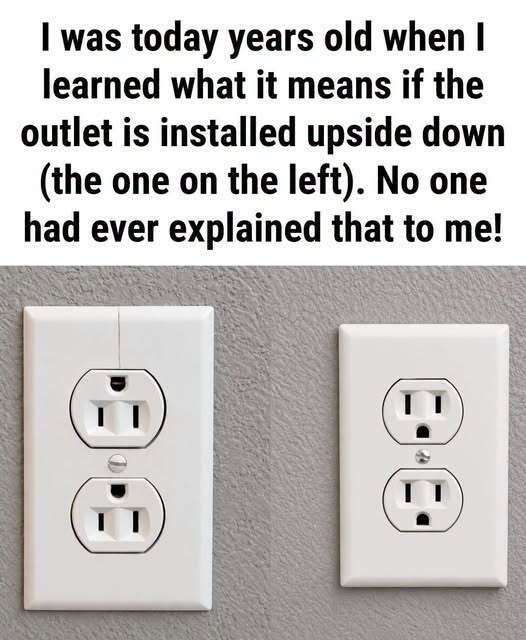
This practice was historically common in older homes that lacked dedicated ceiling lighting fixtures. In those architectural layouts, a floor lamp or table lamp plugged into a specific outlet served as the primary source of illumination for the room. By installing the outlet upside down, the electrician provided an immediate, non-verbal cue to the homeowner that the device plugged into that specific location would be toggled on or off by operating the corresponding wall-mounted switch. This simple, reliable visual shorthand helped residents distinguish between outlets that provided constant, uninterrupted power and those that were tied to the room’s lighting circuit. Over time, this convention became a recognized, albeit informal, standard among many residential contractors.
Modern electrical configurations have become more sophisticated, yet the practice of inverting the outlet remains a useful tool in many contemporary settings. In many modern homes, you will encounter duplex outlets where only one half of the unit is controlled by a wall switch, while the other half remains constantly powered. This split-circuit design allows a homeowner to plug a lamp into the switched half while simultaneously keeping a phone charger, a digital clock, or a smart home device plugged into the unswitched half. In such cases, the upside-down orientation can serve as a helpful reminder of which socket is linked to the switch, preventing the frustration of accidentally cutting power to a device that needs a constant connection to the electrical grid.
Despite the utility of this visual cue, it is vital to understand that electrical codes do not mandate that switched outlets be installed upside down. There is no national or local building regulation that requires this specific orientation for functionality. Consequently, you cannot rely on the position of the ground pin as a definitive, universal indicator of how an outlet is wired. While one electrician might consistently use the upside-down orientation to denote a switched outlet, another professional might install all outlets in a uniform direction regardless of their function. Furthermore, a previous homeowner or a DIY enthusiast might have installed an outlet upside down simply because they preferred the look or because they were unaware of the informal convention entirely. Relying on visual assumptions regarding electrical wiring can lead to confusion, especially when you are trying to troubleshoot why a particular device is not receiving power.
Because the orientation of the outlet is not a reliable diagnostic tool, the only way to confirm whether an outlet is switched is to perform a practical test. The most straightforward method is to plug a small lamp or a simple nightlight into the outlet in question and then systematically toggle every wall switch in the room. If the light turns on and off in response to a specific switch, you have confirmed the outlet’s behavior. If the light remains illuminated regardless of the switch positions, the outlet is likely wired to a constant power source. This manual testing process is the only way to be absolutely certain about the electrical configuration of any outlet in your home, regardless of how it is mounted to the wall plate.
It is also worth noting that some people prefer the upside-down orientation for safety reasons, unrelated to switching. Some safety advocates argue that if a metal object, such as a dropped knife or a loose piece of jewelry, were to fall across the plug, it would strike the ground pin first rather than creating a short circuit between the hot and neutral prongs. While this safety theory is debated among professionals, it remains a secondary reason why you might encounter this orientation in various rooms throughout a house. Because of these competing motivations—visual signaling for switches versus potential safety preferences—the orientation of an outlet can be influenced by a wide variety of factors that have nothing to do with a simple installation mistake.
Ultimately, when you encounter an upside-down outlet, view it as a hint rather than a rule. It is a sign that the outlet might be special, but it is not a substitute for proper investigation. If you are ever in doubt about the wiring of your home or if you find that an outlet is not functioning as you expect, the most prudent course of action is to test it yourself using a lamp or a dedicated voltage tester. By taking a few moments to verify the circuit, you can avoid unnecessary confusion and ensure that your home’s electrical system is being used safely and effectively. Never assume that an outlet is broken just because it is oriented differently than the others in your home; instead, treat it as an invitation to understand your home’s unique electrical layout through simple, practical observation.