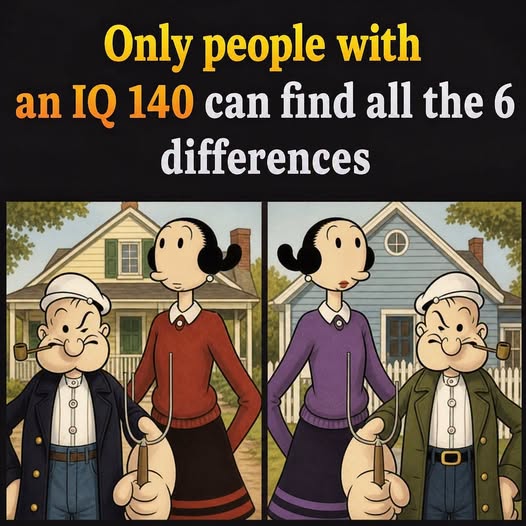
begin the process of unraveling the six distinct variations hidden within these festive scenes. While the premise of spotting differences might seem straightforward, the human brain often overlooks the minute changes that occur when we are presented with two nearly identical visual stimuli. This happens because our minds are wired to process the general gist of a scene rather than every individual pixel, which is precisely why these puzzles serve as such an effective workout for your cognitive faculties.
By forcing yourself to slow down and methodically scan every corner of the image, you are essentially training your brain to become more observant and detail-oriented in your everyday life. The sight of Santa enjoying his well-deserved milk and cookies provides a charming backdrop for this mental gymnastics, reminding us that even the most rigorous brain training can be wrapped in a layer of holiday-inspired fun. Whether you are competing against a friend or simply challenging your own personal best time, the act of comparing these two images requires a high level of focus.
You must look past the obvious elements—the bright red suit, the snowy beard, and the plate of treats—to identify the tiny, often inconspicuous adjustments that have been made to the composition. It is a test of visual acuity that rewards those who refuse to rush, encouraging a state of flow where the rest of the world fades into the background. As you continue your search, consider how your eyes track across the page; are you scanning in rows, or are you focusing on specific objects like the glass of milk or the texture of the cookies?
Each approach offers a different way to engage with the puzzle, and finding all six differences is a genuine badge of honor for any puzzle enthusiast who enjoys a good mental scrap. Beyond the immediate entertainment value, these puzzles are excellent for maintaining cognitive flexibility. They keep our neural pathways active and encourage us to approach problems from multiple angles. Even if you find yourself stumped by a particular difference, the frustration is merely a sign that your brain is working hard to reconcile the conflicting information.
Do not let the distractions of the delicious-looking cookies sway your concentration; stay locked on the goal and trust your instincts. If you find yourself struggling to locate the final few, take a step back, blink a few times, and return to the images with a fresh perspective. Often, the most hidden details reveal themselves the moment we stop trying so hard to force them into view. Once you have successfully identified all six discrepancies, take a moment to appreciate the effort you put into the task.
It is not just about getting the right answer; it is about the journey of discovery and the satisfaction of completing a challenging mental task. To make the most of these visual challenges in the future, try to practice regularly. Incorporating short, daily sessions of puzzle-solving can significantly enhance your observational skills over time. Start by setting a timer to add a layer of friendly pressure, but remember that accuracy is always more important than speed. If you are playing with family or friends, turn it into a collaborative effort where everyone contributes their unique perspective to the search. By sharing the experience, you turn a solitary mental exercise into a social event, which only adds to the enjoyment. Keep your eyes sharp, stay patient, and enjoy the process of uncovering the hidden secrets within these delightful, festive scenes, knowing that every puzzle you solve is a small victory for your mind.