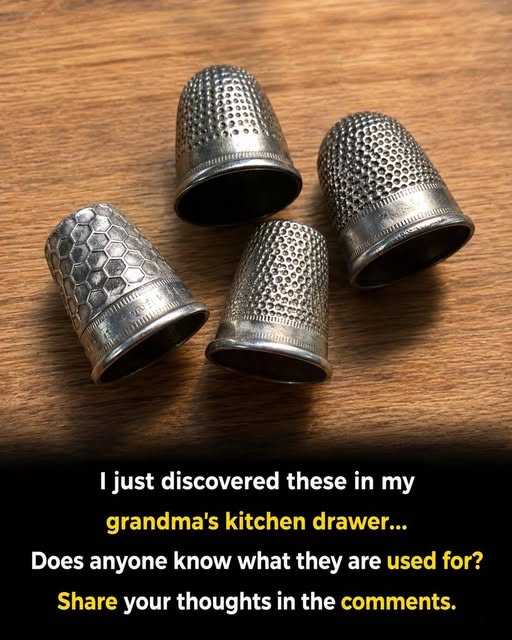
The narrative of the thimble begins in the prehistoric era, long before the advent of modern manufacturing. Early humans, tasked with the arduous work of stitching thick leather and animal hides, required a method to protect their fingertips from the sharp points of bone or stone needles. These primitive protectors were often fashioned from bone, stone, or wood, serving a purely utilitarian purpose. As civilizations advanced, so too did the materials and designs used to create these essential sewing implements.
By approximately 100 AD, the Romans had refined the concept significantly, utilizing bronze to create more durable and effective thimbles. Similar artifacts have been unearthed in ancient China, confirming that the need for finger protection was a universal challenge addressed by diverse cultures across the globe. During these early centuries, the thimble remained a strictly functional item, designed to withstand the rigors of manual labor rather than to serve as an aesthetic ornament. It was a tool of necessity, helping tailors and leatherworkers maintain their efficiency during long hours of repetitive, demanding labor.
The Middle Ages saw the thimble become a more ubiquitous fixture in European households. By the 14th century, as textile production grew, the demand for reliable sewing tools increased. Early European versions were typically cast or hammered from brass or bronze, reflecting the metallurgical capabilities of the time. These sturdy items were indispensable to the everyday lives of embroiderers and artisans, who relied on the thimble to push needles through increasingly complex fabrics and layered materials. The tool was a testament to the practical demands of a society that relied heavily on handmade garments and household linens.
A significant turning point in the history of the thimble occurred during the 15th and 16th centuries, with Nuremberg, Germany, emerging as the preeminent center for its production. Nuremberg’s craftsmen were renowned for their technical prowess, developing superior brass alloys and advanced manufacturing techniques that allowed for greater standardization. The thimbles produced in this region were stronger, smoother, and more uniform than their predecessors, marking a transition toward mass production. This era solidified the thimble as a staple household item, accessible to a wider segment of the population than ever before.
As production methods continued to evolve throughout the 17th century, the influence of the thimble spread across England and the Netherlands. Manufacturers began to experiment with new shapes and increased durability, ensuring that the tools could withstand even more intensive use. It was during this period that the thimble began to transcend its humble origins. As manufacturing efficiency improved, artisans began to explore the decorative potential of the object, introducing silver and other precious metals into the design process. The thimble was no longer just a tool; it was beginning to find its place as a symbol of personal style.
By the 18th and 19th centuries, the thimble had fully embraced its dual identity as both a practical implement and a cherished keepsake. During this time, they were frequently given as gifts, often engraved with intricate patterns or crafted from expensive materials to signify social standing. These decorative versions were highly prized, serving as small, tangible expressions of affection and status. They were collected, displayed, and carefully preserved, effectively transforming from mass-produced utility items into delicate works of art that captured the aesthetic sensibilities of the Victorian and Georgian eras.
In the modern age, the role of the thimble has shifted once again. While sewing enthusiasts and quilters still rely on them for their original purpose, the rise of machine production has reduced their daily necessity in many households. However, this shift has only served to heighten their appeal as collectibles. Today, the thimble is valued for its rich historical narrative, its variety of designs, and the cultural meaning it carries from one generation to the next. It remains a powerful symbol of the enduring importance of human craftsmanship and the tradition of making things by hand.
If you have discovered a thimble in your grandmother’s collection, you are holding a piece of history that bridges the gap between ancient survival and modern artistry. To determine if your find is a valuable antique or a sentimental memento, examine the material and any markings on the rim. Silver items often carry hallmarks indicating their origin and age, while brass or bronze pieces may reflect older, more utilitarian traditions. Regardless of their market value, these objects are best preserved by keeping them in a dry, dust-free environment, allowing them to remain as a lasting tribute to the hands that once used them.
{"post":112524,"page":2,"next":[{"id":112521,"title":"From Couch Surfing to Hollywood Stardom: The Resilient Path of Kevin Bacon","url":"https:\/\/new24.info\/112521"},{"id":112517,"title":"Entitled Neighbor Claims My Driveway Until Thirty Classic Cars Teach Respect","url":"https:\/\/new24.info\/112517"},{"id":112514,"title":"The Unraveling of a $200,000 Wedding Over a Profound Moral Divide","url":"https:\/\/new24.info\/112514"},{"id":112511,"title":"A Grandmother Reclaims Her Dignity After Being Charged for Her Own Family Visit","url":"https:\/\/new24.info\/112511"},{"id":112508,"title":"Remembering Craig Douglas: The Singing Milkman Who Defined a Golden Era of British Pop Music","url":"https:\/\/new24.info\/112508"},{"id":112505,"title":"Illinois Mother Charged With Murder Following Tragic Death of Two-Year-Old Son in Frankfort Home","url":"https:\/\/new24.info\/112505"},{"id":112502,"title":"Illinois Mother Faces First-Degree Murder Charges Following Tragic Death of Two-Year-Old Son in Frankfort Home","url":"https:\/\/new24.info\/112502"},{"id":112499,"title":"From Shadowed Beginnings to Stardom: The Resilient Path of Woody Harrelson","url":"https:\/\/new24.info\/112499"},{"id":112496,"title":"A Folding Chair Waited at the Far End of Thanksgiving","url":"https:\/\/new24.info\/112496"},{"id":112493,"title":"My sister smashed my glasses the morning of my thesis defense. \u2018I guess you\u2019ll have to fail,\u2019 she laughed.","url":"https:\/\/new24.info\/112493"},{"id":112490,"title":"A Woman Made Fun of My 83-Year-Old Mom at Checkout \u2013 Then the Cashier Locked Her Register and Said, \u0027Nobody Leaves\u0027","url":"https:\/\/new24.info\/112490"},{"id":112487,"title":"My Son\u0027s Fianc\u00e9e Asked Me Not to Wear Blue to Their Wedding \u2013 Then I Saw What Her Mother Was Wearing","url":"https:\/\/new24.info\/112487"},{"id":112485,"title":"For Eight Years He Left The House At The Same Hour, And I Never Once Asked Where The Road Went.","url":"https:\/\/new24.info\/112485"},{"id":112471,"title":"Kobe Bryant\u0027s Daughter Natalia Attends the US Open Blue Carpet in a Chic Look That Has Fans Comparing Her to Her Father and an Unexpected Celebrity \u2014 Photos","url":"https:\/\/new24.info\/112471"},{"id":112468,"title":"Which animal do you see first? Rabbit?\/ Fish??","url":"https:\/\/new24.info\/112468"},{"id":112466,"title":"A Sixth Grader\u2019s Quiet Persistence Transformed a Simple Gift Into a Lasting Lesson of True Heart","url":"https:\/\/new24.info\/112466"},{"id":112462,"title":"He Walked Away After the Pregnancy Test\u2014Then the Truth Changed Everything","url":"https:\/\/new24.info\/112462"},{"id":112459,"title":"My 8-Year-Old Granddaughter Pointed at the Boy in My Old Prom Photo and Said, \u0027Grandma, He Gives Me Extra Dessert at School\u0027 \u2013 He\u0027d Been Gone for 42 Years, and She Handed Me Something That Made Me Go Pale","url":"https:\/\/new24.info\/112459"},{"id":112456,"title":"My Wife Left Me with Our 6 Daughters for Her Rich Boss \u2013 15 Years Later, She Showed up at Our Oldest Daughter\u0027s Wedding, but What Our Daughter Did Next Left Everyone Speechless","url":"https:\/\/new24.info\/112456"},{"id":112448,"title":"Dad revealed heartbreaking last words before son, 10, was decapitated on \u2018world\u2019s tallest waterslide\u2019","url":"https:\/\/new24.info\/112448"}]}