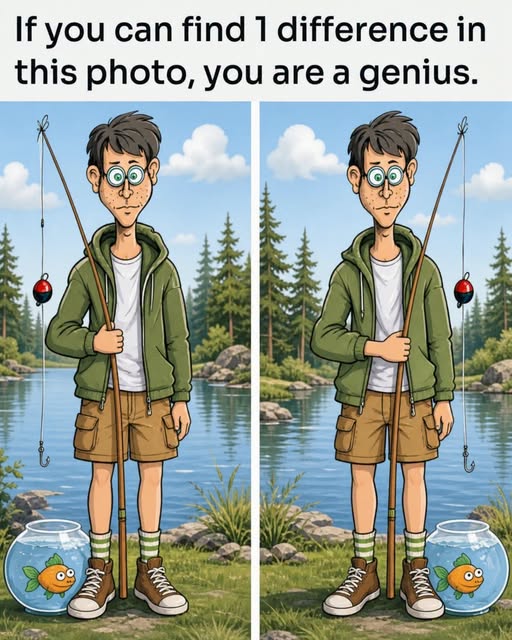
illusion finally shatters as the brain reconciles the conflicting visual data. This specific phenomenon is rooted in how our cognitive systems process imagery. When we look at two images intended to be identical, our brains employ a top-down processing strategy, essentially telling us that the images are the same before we have even completed a thorough scan. We see what we expect to see, which is precisely why the missing line or the shifted stripe remains invisible for so long.
The psychological appeal of this struggle is profound. When you are confronted with a task that appears simple but proves difficult, you enter a state of heightened engagement. The brain is not merely looking; it is actively filtering, comparing, and testing hypotheses about the physical reality of the drawing. This process is a form of mental exercise that forces the visual cortex to move beyond its default patterns of recognition, requiring a more granular level of attention to detail.
As you scan the fisherman’s glasses, his hair, and the surrounding environment, you are essentially performing a diagnostic check on your own perception. The frustration that often arises during this process is not a sign of failure but rather a natural byproduct of the brain working to overcome its own shortcuts. We are wired to ignore redundant information, which is a survival mechanism, but in the context of a puzzle, this efficiency becomes an obstacle that we must consciously work to dismantle.
The satisfaction derived from finally identifying the difference is a genuine neurological reward. It is a moment of cognitive closure, where the tension of uncertainty is replaced by the clarity of discovery. This feeling is not dependent on speed; it is not a race against a clock or a competition against others. Instead, it is an internal victory, a testament to the fact that you have successfully trained your focus to see past the surface-level assumptions that usually govern our daily visual intake.
In our modern, fast-paced world, we are constantly bombarded with information that demands quick, superficial processing. We skim headlines, glance at images, and move on to the next stimulus without ever truly observing the details. Engaging with a visual puzzle like the Funny Fisherman serves as a necessary counterpoint to this habit. It demands that we slow down, breathe, and commit to the act of observation. By giving your brain permission to pause, you are actively cultivating a more deliberate way of interacting with the world around you.
Beyond the immediate enjoyment, these challenges offer measurable benefits for mental stimulation. They encourage the development of patience and persistence, traits that are often eroded by the instant gratification of digital interfaces. By repeatedly pushing past the initial frustration of not finding the difference, you are strengthening your ability to remain calm and analytical in the face of complex problems. You are learning that the answer is rarely found in a frantic search, but rather in a methodical, steady examination of the facts as they are presented.
To incorporate this into your routine, treat visual puzzles as a form of mindfulness training rather than a test of intelligence. When you feel the urge to rush or give up, recognize that this is the moment where the real cognitive work begins. Take a step back, clear your mind, and approach the image with fresh eyes. Focus on one small section at a time, ignoring the rest of the composition until you have fully vetted that specific area. This systematic approach not only makes the puzzle more solvable but also reinforces the habit of deep, focused attention that is so valuable in every aspect of life. Ultimately, the goal is to enjoy the journey of observation, knowing that the act of looking deeply is its own reward.