My husband, Mark, had been thirty-seven.
Funny.
Stubborn.
The sort of man who joked about living to ninety and complained dramatically whenever he had a cold.
Cancer took him in nine months.
Nine months from the first appointment to a funeral I still could not think about without feeling as though someone had placed a hand around my throat.
Our daughter, Louise, was eight.
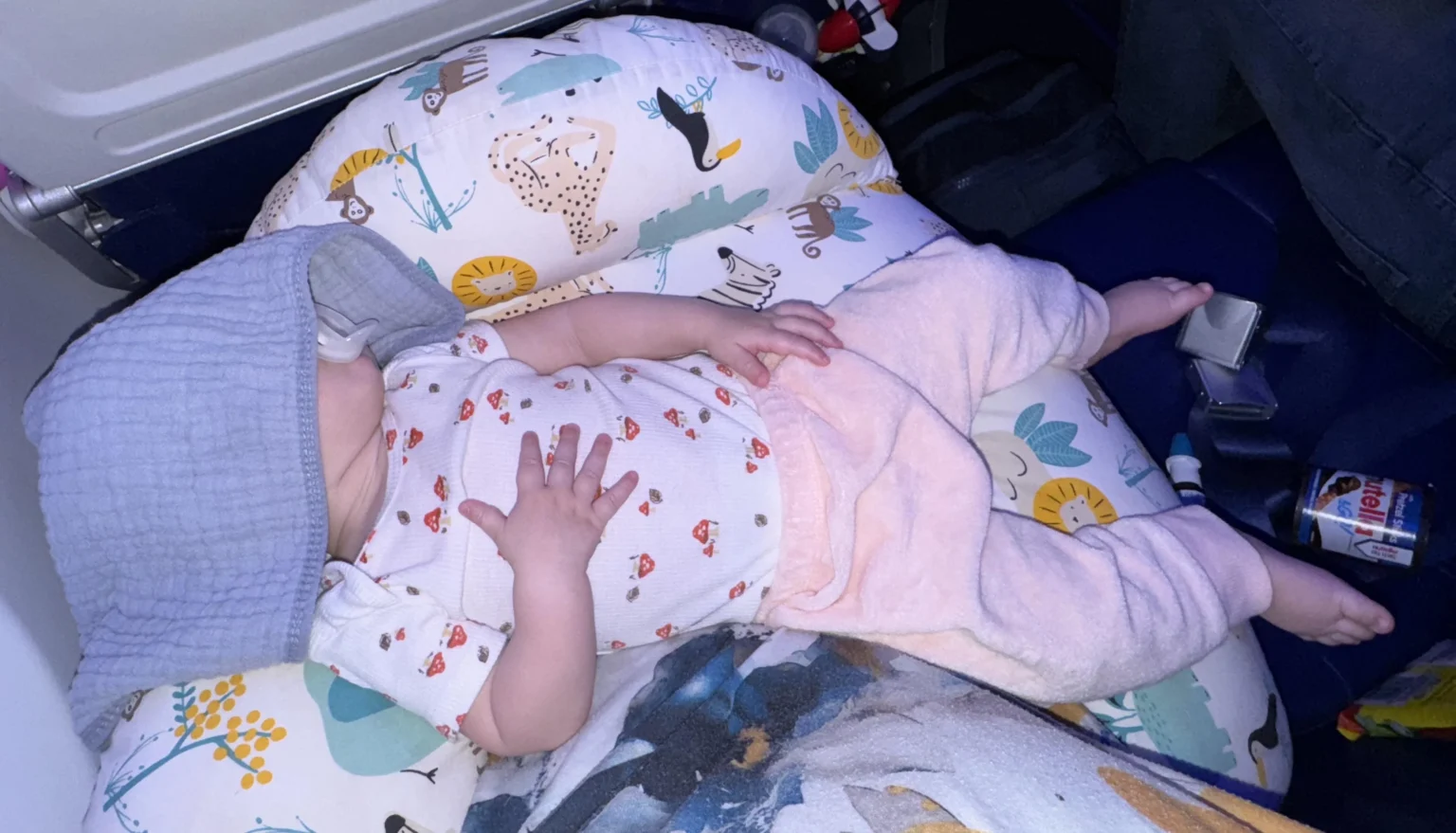
Our son, Noah, was five months old.
Noah was too young to understand death, but sometimes when he heard a man’s voice from another room, he turned toward it so quickly that I had to look away.
Louise understood too much.
At first, she asked constantly when Daddy was coming home.
Then one day she stopped asking.
That was worse.
At night, after both children were asleep, I still reached toward Mark’s side of the bed.
Every single time, the emptiness surprised me.
Grief had turned ordinary habits into traps.
His coffee mug was still in the cabinet.
His shoes were still by the back door.
His blue sweater still smelled faintly like him.
I packed that sweater in my carry-on before the trip.
I knew I would not wear it.
I packed it anyway.
My mother had been asking us to visit for weeks.
“Come stay with me.”
“You need help.”
“The children need a change.”
“You can’t keep sitting inside that house surrounded by memories.”
I resisted until I didn’t have the strength to resist anymore.
So I booked the tickets.
The morning of the flight, Louise held Noah’s bottle while I checked our documents three times.
Mark had always handled the passports.
He had been the one who knew which pocket held the boarding passes and which bag contained the snacks.
Now everything was mine.
Louise watched me shuffle the documents.
“Mom?”
“Yeah?”
“You already checked those.”
“I know.”
“You checked them twice.”
“Three times.”
She gave me a tiny smile.
“Dad would’ve checked once.”
I looked at her.
“He also would’ve left one passport on the kitchen counter.”
That made her laugh.
It was the first real laugh I’d heard from her that morning.
Then she noticed me folding Mark’s blue sweater into my carry-on.
She didn’t ask why.
She simply placed her stuffed rabbit beside it.
As though both belonged in the same emergency kit.
The airport was exhausting.
Security.
Bags.
Bottles.
Shoes.
Noah crying because I had to take him out of the stroller.
Louise asking every seven minutes whether our gate had changed.
By the time we boarded, I was already worn out.
Then I discovered our seats weren’t together.
The flight was full.
The best the gate agent had managed was an aisle seat for me with Noah and another seat directly behind us for Louise.
I hated it.
Louise shrugged.
“I’m right here.”
“I know.”
“I can see you.”
“I know.”
“And I know how to press the call button.”
“Only for emergencies.”
“What about bad snacks?”
“Especially not for bad snacks.”
She smiled and slipped into her seat.
I settled into mine with Noah against my chest.
That was when I noticed the woman beside me.
She looked to be somewhere in her late fifties or early sixties.
Gray suit.
Pearl earrings.
Perfectly arranged hair.
She had a magazine in her lap and the expression of someone who had already been inconvenienced by our existence.
She looked at Noah.
Then at me.
“If your baby starts screaming, I’m not going to sit here and listen to it.”
I blinked.
The cabin door hadn’t even closed.
“We haven’t taken off yet.”
“I’m warning you now.”
I thought she might be joking.
She wasn’t.
“I’ll do my best.”
“People always say that.”
Behind us, Louise leaned between the seats.
“My brother is usually quiet.”
The woman glanced back.
Louise continued.
“Except when he’s hungry.”
“Louise.”
She looked at me.
“What?”
“Sit back.”
She frowned but obeyed.
The woman beside me opened her magazine with a sharp snap.
Mark used to call that expression on Louise’s face her courtroom face.
Whenever she thought something was unfair, her eyes narrowed and her lips pressed together as if she were preparing an opening statement.
I gave her a warning look.
She lifted her tablet and pretended to ignore us.
The plane pushed away from the gate.
Noah startled at the vibration.
I waited for the screaming our seatmate clearly expected.
He blinked.
Grabbed my finger.
Then settled.
Louise waved through the gap between the seats.
I waved back.
The woman lifted her magazine higher between us like a wall.
For most of the first two hours, Noah slept.
I watched clouds drift beneath us.
And tried not to think about the hospital.
The last week.
Mark’s hand in mine.
The empty bed afterward.
Then Noah stirred.
His face tightened.
He started crying.
I rocked him.
Pacifier.
No.
Changed his position.
No.
Checked his diaper.
Fine.
Whispered the ridiculous little song Mark used to sing to him.
Nothing.
Then I knew.
He was hungry.
I reached into the diaper bag for the nursing cover.
The woman noticed immediately.
Her eyes widened.
“Oh, great.”
I froze.
“What?”
“I paid for this seat to hear someone else’s baby scream, and now I have to watch you feed him too?”
My cheeks burned.
“He needs to eat.”
“How completely shameless.”
For a moment, I genuinely thought I had misheard her.
“Excuse me?”
“You heard me.”
I arranged the cover carefully.
Noah latched.
His crying softened almost immediately.
My relief lasted three seconds.
“People with babies like that should stay home.”
I turned toward her.
“Babies like what?”
“Babies who disturb everyone.”
“He’s five months old.”
“Exactly.”
She sighed dramatically.
“What kind of mother brings a child on a six-hour flight and then can’t even calm him without doing that in public?”
Something inside me tightened.
“He is calm.”
“Because you’re feeding him.”
“Yes.”
“In public.”
I stared at her.
“He’s hungry.”
“Go to the bathroom.”
“No.”
Her eyebrows lifted.
“No?”
“A bathroom isn’t where babies eat.”
“You could show some consideration.”
“I am covered.”
“I can still tell what you’re doing.”
I almost laughed from disbelief.
Then she said:
“Honestly, mothers like you act as though everyone else should simply tolerate whatever you choose.”
That one landed differently.
Maybe because I was exhausted.
Maybe because I’d spent a month wondering whether I was capable of raising two children without Mark.
Maybe because grief had stripped away every protective layer I normally carried.
I looked down at Noah.
My eyes burned.
Behind me, a seat belt clicked.
Then Louise appeared beside us holding her tablet.
“Mom?”
I looked up.
“What are you doing out of your seat?”
“Why don’t you take mine?”
“What?”
“You can sit back there.”
I understood immediately.
“No.”
“It’s okay.”
She glanced at the woman.
“I can sit here so this lady feels more comfortable.”
The woman beside me gave the smallest satisfied smile.
That irritated me almost enough to refuse.
Then Noah shifted.
I needed room.
And I was too tired to keep fighting.
“Fine.”
I stood carefully.
Louise slid into my seat.
As I passed her, she whispered:
“She dropped something.”
I looked at her.
“What?”
“I’ll show you later.”
That should have worried me.
Instead, I moved into Louise’s seat and finished feeding Noah.
From there, I could see only the top of Louise’s head and the woman’s perfectly arranged hair.
I kept glancing forward.
Louise had already been carrying too much.
Since Mark died, she watched me constantly.
If I cried, she brought tissues.
If Noah fussed, she ran for a bottle.
If I forgot something, she remembered it for me.
I kept telling her:
“You are eight.”
She kept acting like she was thirty.
I wanted to call her back.
Tell her protecting me wasn’t her job.
Then I saw her bend toward the floor.
She straightened holding a small printed photograph.
The woman noticed.
Too late.
Louise placed it beside her tablet.
The woman made a sound so sharp that several passengers turned.
“What are you doing?”
Louise looked at her.
“You dropped this.”
“Give it to me.”
Louise’s tablet was open.
On the screen was a recent photograph of me holding Noah while Louise leaned against my shoulder.
Beside it lay the picture the woman had dropped.
I couldn’t see it clearly from where I sat.
But apparently she could.
She stood so quickly that her knee struck the tray table.
“Give me that!”
Louise held out the photograph.
“I was going to.”
A flight attendant hurried over.
“Ma’am, is everything all right?”
The woman snatched the photograph from Louise.
“I need another seat.”
The attendant looked around.
“I’m sorry, but we’re completely full.”
“Then let me stand.”
“You can’t remain standing for the duration of the flight.”
The woman looked almost panicked.
The attendant softened.
“You may step into the galley with me for a few minutes.”
The woman followed her without arguing.
That was the moment I knew something bigger had happened.
Louise turned around.
“What did you say?”
She locked her tablet.
“Something honest.”
That answer made me nervous.
“What?”
She glanced toward the back.
“I think she should hear me say it again.”
Mark would’ve been proud.
And terrified.
Several minutes later, the woman returned.
She stopped beside the row instead of sitting down.
Her face looked different.
Less angry.
More exposed.
She looked at Louise.
“Would you repeat what you asked me?”
Louise glanced at me.
I gave one small nod.
She reopened her tablet.
Then the woman placed the printed photograph beside it.
Now I could see.
The picture showed a younger woman holding a baby.
Louise pointed first to the photograph.
Then to the image on her tablet.
“I asked if you’d want someone talking to your daughter the way you talked to my mom.”
The woman stared at the two images.
Her mouth tightened.
“The woman in this photograph is my daughter.”
She touched the edge.
“Jenna.”
Her voice became quieter.
“The baby is my grandson.”
Louise waited.
The woman swallowed.
“No.”
Louise frowned.
“No what?”
“No.”
Her eyes filled.
“I would not want anyone speaking to Jenna that way.”
Louise closed the tablet.
“Then don’t.”
An older man across the aisle lowered his newspaper.
“The child asked you a fair question.”
The woman didn’t argue.
She sat down.
For several moments, nobody spoke.
She turned the photograph facedown on her lap.
Then folded it along an old crease.
Immediately seemed to regret doing so.
She smoothed it flat again with trembling fingers.
Louise suddenly looked eight again.
Not fearless.
Not sharp.
Just a child who had said something bold and was now wondering whether she’d gone too far.
I reached through the gap and touched her knee.
She looked back at me.
I nodded.
Her shoulders relaxed.
Mark used to tell her:
“Bravery isn’t being fearless.”
“It means deciding which fear deserves to be obeyed.”
She remembered.
After Noah finished eating, I switched seats with Louise again.
The woman beside me kept staring at the photograph.
Finally, I said:
“What’s your name?”
She looked at me.
“Evelyn.”
I waited.
She added:
“I’ve never met him.”
“Your grandson?”
She nodded.
“He’s five months old.”
The same age as Noah.
Something about that made me look at her differently.
“Why haven’t you met him?”
Evelyn stared at the photo.
“Jenna has invited me.”
“But?”
“I disapprove of nearly everything she does.”
I almost laughed.
At least she was honest now.
“Such as?”
“Where she lives.”
“Her partner’s work.”
“The hours she keeps.”
She hesitated.
“The way she feeds the baby during family gatherings instead of leaving the room.”
I looked at her.
She closed her eyes briefly.
“Yes.”
“That’s why you reacted to me.”
“Yes.”
I shifted Noah higher against my shoulder.
“So where are you going?”
“To see her.”
“For the first time?”
“Yes.”
“After five months?”
“Yes.”
“And you spent this flight criticizing a stranger for doing something your own daughter does.”
Evelyn gave a small, humorless laugh.
“Apparently.”
“Were you planning to criticize Jenna too?”
She looked down.
“I spent most of the flight rehearsing what I was going to tell her.”
I stared.
“About what she’s doing wrong?”
“Yes.”
I could not help myself.
“You haven’t even met the baby.”
“No.”
For the first time, she sounded ashamed.
I adjusted Noah’s blanket.
Then said:
“My husband died a month ago.”
Evelyn looked at me sharply.
I continued.
“His name was Mark.”
“He was thirty-seven.”
“I have spent the last month trying to figure out how to get out of bed, feed my children, fill out forms, explain death to an eight-year-old, and hold a baby who will never remember his father.”
Evelyn’s eyes filled.
“You looked at me for five minutes.”
My voice shook.
“And decided I was a bad mother.”
“I didn’t know.”
“That’s the point.”
She looked away.
“You didn’t know anything.”
“No.”
“Feeding Noah wasn’t a display.”
“I know.”
“He was hungry.”
“I understand that now.”
I looked at her.
“I believe you.”
She seemed surprised.
“But understanding now doesn’t erase what you said then.”
“No.”
Her eyes filled completely.
“I’m sorry.”
I thought about it.
Then said:
“Don’t apologize because my daughter embarrassed you.”
Evelyn flinched.
“Apologize because you understand what was wrong.”
“I do.”
She reached into her handbag and took out her phone.
“I need to write Jenna.”
She opened a message.
Then stared at the blank screen.
“What should I say?”
“I won’t write your apology for you.”
“I don’t know where to start.”
“Start with what you did.”
She looked at me.
“Don’t explain it away.”
I continued.
“Tell her how you’ve judged her.”
“Then tell her what you’re going to do differently.”
Evelyn looked at the screen.
Then began typing.
Slowly at first.
Then steadily.
She wrote that she had spent months criticizing Jenna from a distance.
That she had acted as though being older automatically made her wiser.
That she had confused judgment with concern.
That she had boarded the plane planning to arrive with a list of everything Jenna needed to change.
She wrote that she wanted to meet her grandson.
Not evaluate him.
Not inspect Jenna’s parenting.
Meet him.
And she asked what Jenna needed from her.
Then she pressed send.
Ten minutes later, her phone buzzed.
Evelyn read the reply.
Her face changed.
“What?”
She turned the phone toward me.
Jenna had written:
You may still come, but only if you mean every word you wrote.
Evelyn stared at me.
“Do you think she believes me?”
“She’s giving you a chance to prove it.”
She read the message again.
Then a third time.
The first reading brought relief.
The second made her notice the condition.
By the third, relief had been replaced by something heavier.
Responsibility.
She placed her phone beside the photograph.
Then turned toward Louise.
“Does Jenna look angry in this picture?”
Louise studied it seriously.
“No.”
“What does she look like?”
“Tired.”
Evelyn nodded.
Louise added:
“Those aren’t the same thing.”
I nearly smiled.
Evelyn accepted the correction without defending herself.
That mattered.
Because apologies are easy in comparison with change.
An apology can happen in sixty seconds.
Change has to survive after the plane lands.
When we finally arrived, I was exhausted.
Noah had slept through descent.
Louise looked out the window and whispered:
“Grandma’s here.”
My mother had texted that she was waiting near carousel six.
We followed the signs toward baggage claim.
Evelyn walked several feet beside us.
The closer we got to arrivals, the slower she walked.
Her confidence disappeared.
She kept the photograph in one hand.
Then stopped.
A woman stood near the carousel with a baby strapped against her chest in a green carrier.
Jenna.
I knew instantly.
Same eyes.
Same mouth.
But there was guardedness in her expression Evelyn did not have.
Evelyn stopped several feet away.
Jenna did not move.
Neither spoke.
Then Evelyn asked:
“May I hug you?”
Jenna studied her.
Finally nodded.
Evelyn approached carefully.
Their hug lasted only a few seconds.
Jenna kept one hand on the baby’s back.
Evelyn did not reach for him.
That detail mattered.
She waited.
When they separated, Evelyn said something too quietly for me to hear.
Jenna answered.
Then Evelyn nodded.
No argument.
No correction.
No justification.
They began walking toward the carousel together.
They didn’t look happy.
Not yet.
But they were walking in the same direction.
Sometimes that’s enough for a beginning.
My mother found us a minute later.
The moment she saw me, she wrapped her arms around me.
I held Noah between us.
Louise hugged both of us.
For a few seconds, I closed my eyes.
I could almost imagine Mark complaining that nobody had left room for him in the hug.
That thought hurt.
But it also made me smile.
Several weeks later, while we were still staying with my mother, a card arrived.
It was addressed to Louise.
Inside was a photograph.
Evelyn sat on a sofa beside Jenna.
Her grandson was in her arms.
Jenna’s hand rested protectively on the baby’s back.
Nobody looked completely relaxed.
But nobody looked like they wanted to leave either.
Beneath the photograph, Evelyn had written:
I am learning to ask before helping and listen before correcting.
Thank you for interrupting the person I was becoming.
Louise read it twice.
Then pinned the card to my mother’s kitchen notice board.
“Why are you keeping it there?”
She smoothed one corner against the cork.
“Because she listened.”
I looked at her.
“A lot of people don’t.”
“No.”
Louise stepped back and studied the photograph.
“Daddy always said you have to say something when silence helps the wrong person.”
My throat tightened.
“He did.”
She looked at me.
“Do you think he’d be proud?”
There are questions grief makes almost impossible to answer.
That one wasn’t.
“Very.”
Louise smiled.
Then glanced toward the card again.
“Speaking up didn’t just stop her from being mean to you.”
“No.”
“It changed what happened with her daughter.”
“Maybe.”
Louise frowned.
“Not maybe.”
I laughed.
Mark’s courtroom face.
Exactly.
She pointed at the photograph.
“She got a better next part.”
I looked at Evelyn holding her grandson.
Then at my daughter.
My eight-year-old had spent the worst month of her life learning that her father was gone.
She could not change that ending.
None of us could.
But on a plane thousands of feet above the ground, she’d learned something else too.
Not every painful moment has to decide what comes afterward.
Sometimes somebody interrupts.
Sometimes someone tells the truth.
Sometimes an adult is forced to see herself through a child’s eyes.
And sometimes, if we’re lucky, the next choice is better than the one before it.
That day, Louise hadn’t only defended me.
She had reminded a stranger that the people we love do not need our judgment nearly as much as they need our willingness to listen.
And in doing so, she changed what happened next.