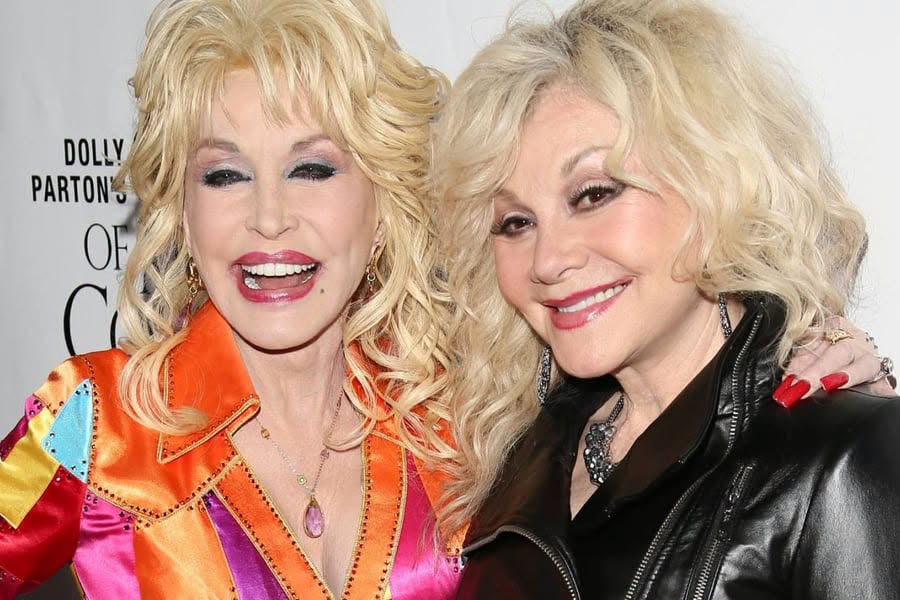
For a family already struggling with an enormous loss, Stella made clear that the added intrusion had become difficult to ignore.
“First let me say, thank you to the ones of you who have shown ‘genuine’ support and love during this time of our family bereavement,” she wrote.
Her gratitude was unmistakable.
But so was the pain.
Stella acknowledged that her family would eventually find a way forward, though each person would have to grieve in their own way.
“We will be okay in time but each of us will grieve in our own personal way,” she continued.
She also reminded followers that fame does not make loss any easier.
Behind the legendary Parton name is still a family trying to process the death of someone they loved not as a global icon, but as a sister, aunt, confidante and maternal figure.
“Every human being experiences pain and loss in life and my family is no different,” Stella wrote.
But unlike most grieving families, the Partons are dealing with that pain in full public view.
According to Stella, that has brought “incredible pressure and insensitivity” from people outside the family.
Then she addressed the issue that appeared to have pushed her to speak out.
“There is a tremendous amount of AI and endless garbage being posted every day and it’s been challenging to absorb and ignore,” she warned.
The message was a painful reminder of how modern celebrity grief can unfold.
While Dolly’s relatives were trying to mourn privately, fabricated claims and misleading posts about her death were reportedly continuing to spread online.
For Stella, those stories were not harmless internet noise.
They involved her sister.
And they were reaching the family during one of the most vulnerable periods of their lives.
She also had harsh words for people who profit from the tragedies of others.
“As time passes, those who are in the business of exploiting the loss and tragedies of others on a daily basis will move on to the next stampede of endless misinformation,” Stella wrote.
It was one of the strongest statements yet from Dolly’s family about the darker side of the attention surrounding her death.
But Stella did not allow anger to dominate her message.
Instead, she turned back toward the extraordinary outpouring of affection from people who had truly loved Dolly.
“My big sister Dolly would be surprised and delighted by the love her family and she has been shown during this time,” Stella shared.
That love mattered because Dolly had spent decades cultivating an unusually broad relationship with the public.
Stella explained that her sister cared deeply about her fans and intentionally avoided publicly weighing in on subjects that could divide them.
“She loved her fans and the public in general,” Stella wrote.
“That is the reason she chose not to express her opinions on a lot of things like politics, religion and individuals in the public eye.”
For Stella, that restraint reflected something fundamental about Dolly.
She understood that people from vastly different backgrounds loved her music.
Rather than force those relationships through the filter of every personal opinion she held, she often chose connection.
Now, as the family mourns, Stella appears to be asking for that same spirit of humanity in return.
Her message came nearly two weeks after her initial tribute to Dolly.
Other members of the Parton family have also spoken publicly in deeply personal ways, offering a picture of Dolly that extends far beyond the sequins, songs and stage lights.
Her great-niece Lainey Parton waited until after Dolly had been laid to rest before sharing her own tribute on August 29.
“This is a really hard post for me to make,” Lainey began.
“I wanted to wait until after my granny was laid to rest yesterday before I tried to put any of this into words.”
For Lainey, Dolly was not simply one of the most famous women in country music.
She was the person who made impossible dreams feel possible.
“She never made my dreams feel too big or made me feel like I couldn’t do something,” Lainey wrote.
“She believed in me before I even knew how to believe in myself.”
That encouragement followed Lainey into major life decisions.
When she decided she wanted to attend beauty school rather than college, Dolly did not question the choice.
Instead, according to Lainey, she supported her.
Dolly also invited her to sing on the Smoky Mountain DNA project while Lainey was still a freshman in high school.
Lainey admitted that she had been “SO nervous.”
But Dolly had a way of making her feel safe.
The family project explored the Parton and Owens family histories and featured numerous relatives.
Lainey performed Dolly’s song “Be Your Own Man” with her.
Those opportunities now carry an entirely different emotional weight.
“I’m so thankful I said yes to the opportunities and memories I got to share with her as my Aunt Dolly, including being in a movie with her,” Lainey wrote.
She said she was grateful to have things she could still watch, listen to and hold onto whenever she missed her.
But the most painful part of her tribute centered on the ordinary moments that were gone forever.
“It still doesn’t feel real that she’s gone,” Lainey wrote.
“I’m going to miss her voice, her laugh, her hugs, and just knowing she was there.”
Then came one especially heartbreaking memory.
“I’m even going to miss those 4 AM calls, and I’d give anything to see her name pop up on my phone again.”
Lainey ended her message with the name she used for Dolly within the family.
“I feel incredibly lucky that I got to call her my granny,” she wrote.
“Thank you for always believing in me, loving me, and making me feel like I could do anything.”
“I love you, Granny. Always. 🤍”
The nickname had deep roots.
Dolly previously explained that members of her extended family called her “Aunt Granny.”
Although she never had children of her own, she had long embraced a deeply maternal role with younger relatives.
Several of her younger siblings lived with her at different points, and she once explained that she came to love their children as though they were her own grandchildren.
“They call me ‘Aunt Granny,’” Dolly said.
She added, “I often think, it just wasn’t meant for me to have kids so everybody’s kids can be mine.”
That instinct extended far beyond her own family.
Through Dolly Parton’s Imagination Library, launched in 1995, she helped provide books to young children, creating another kind of bond with generations she would never personally meet.
“I think kids relate to me because they think of me like a Mother Goose or a Fairy Godmother,” Dolly once said.
For her family, however, that nurturing side was not symbolic.
It was real.
That became even clearer in the tribute shared by Dolly’s sister Freida.
Freida acknowledged that millions had lost a superstar.
But that was not how she experienced the loss.
“I know to the entire world, she was a superstar, but to me, she was my Dolly Momma,” Freida wrote.
She recalled childhood memories of Dolly climbing into bed with her because they were both afraid of the dark.
She also remembered Dolly trying to convince her to wear her wigs during performances at Dollywood — an idea Freida jokingly admitted she rejected.
Then came a revelation that showed just how profound their bond had been.
“She was the woman who stepped up and became my Momma, raising me from ages 13 to 18.”
To Freida, Dolly was not merely an older sister.
During a crucial period of her life, she became a parent.
Freida did not romanticize their relationship as perfect.
Like many sisters, they disagreed.
They argued.
They went through highs and lows.
But she said none of it altered the love between them.
“Like all sisters, we definitely had our share of arguments and disagreements throughout the years,” Freida wrote.
“But even through all the highs and lows, and all the laughter and tears, I never stopped loving her.”
Now she is trying to comprehend what she called an “insurmountable loss.”
Freida asked those who had once prayed for Dolly to continue praying for the family.
“There will never be anyone who can replace her in our hearts,” she wrote.
“And I know she holds a special place in many of yours as well.”
She also revealed that she was working on something special in Dolly’s honor — something that would allow her to keep “a little piece of my Dolly Momma” close while sharing that love with others.
Stella’s earlier tribute had been equally personal.
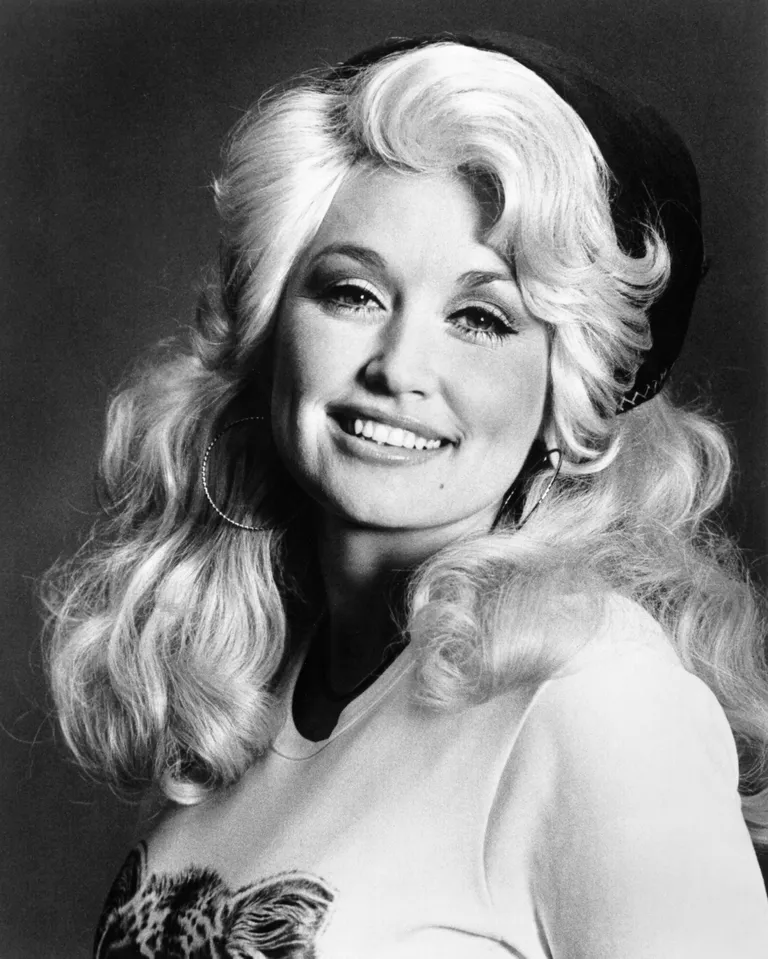
Rather than focusing on awards, records or legendary performances, she remembered Tuesday mornings.
The sisters had a ritual of speaking over coffee before sunrise.
They talked about family.
They shared gossip.
They made plans.
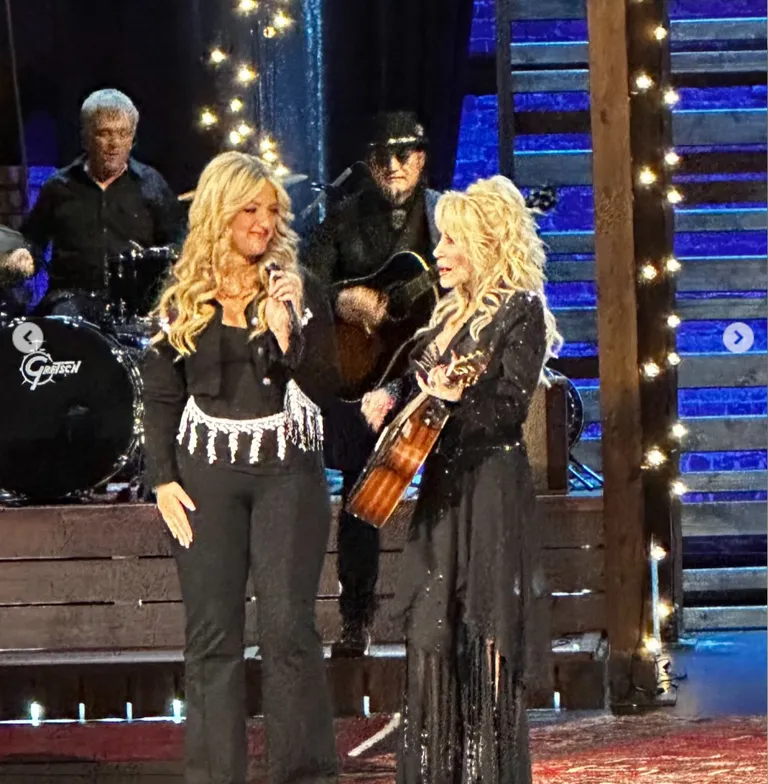
And, as Stella remembered Dolly joking, they often accomplished more before most people had even started their day.
“Shoot Tedda we get more work done before the sun comes up than most folks do all day long!” Dolly would tell her.
Stella remembered her sister as “one of the most generous, thoughtful and kind people” she had ever known.
“My Tuesday morning coffee time will never be the same,” she wrote, “but her love, respect and goodness will remain.”
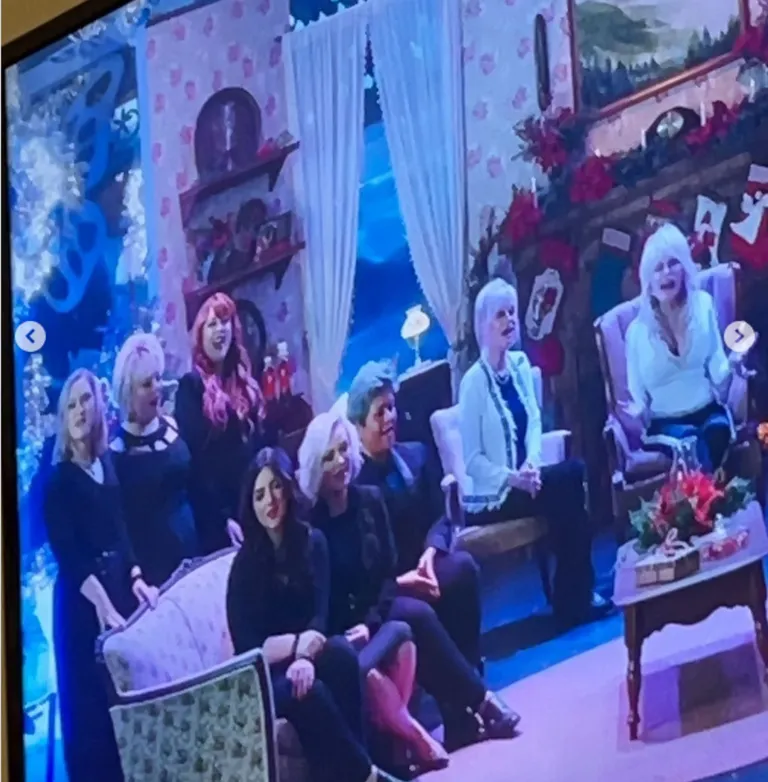
Those family memories tell a very different story from the public mythology surrounding Dolly Parton.
To fans, she was rhinestones, towering wigs, unmistakable songs and one of the most recognizable voices in country music history.
To her relatives, she was the person who called at 4 a.m.
The sister who climbed into bed when someone was afraid.
The woman who raised a younger sibling through her teenage years.
The aunt who encouraged a nervous teenager to sing.
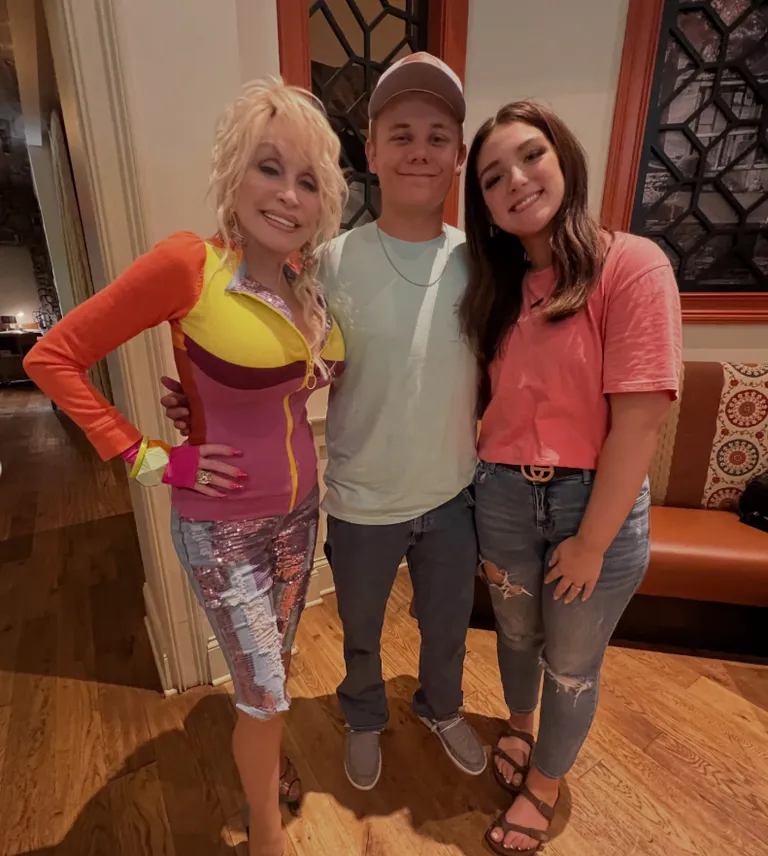
The person whose name appearing on a phone could instantly make an ordinary day feel different.
Another niece, Rebecca Seaver, described Dolly in an August 26 tribute as her “most trusted confidant,” “best friend,” “favorite adventurer,” “name-giver,” “godmother” and “precious Aunt Granny.”
“Today, the grief we feel is insurmountable because of the enormous amount of love we all have for Dolly Rebecca Parton,” Rebecca wrote.
She added that Dolly made the people around her want to become better versions of themselves.
“We all wanted to be better versions of ourselves for her sake, and I hope we all continue to do just that.”
Taken together, the family’s messages explain why Stella’s latest warning carries so much weight.
The public lost Dolly Parton the entertainer.
Her family lost the woman behind all of it.
And while millions are trying to honor her memory, the people closest to her are also being forced to navigate fabricated stories, AI-generated material and speculation at precisely the moment they are most vulnerable.
Stella’s request was not complicated.
She thanked the people offering real compassion.
She acknowledged that her family would eventually find its way through the grief.
But she also drew a clear line between genuine remembrance and exploitation.
The most respectful way to honor Dolly now may be exactly what Stella’s message suggested: hold onto the music and the memories, reject manufactured claims, and allow the family who knew her best the space to grieve the woman they loved.
{"post":112128,"page":2,"next":[{"id":112126,"title":"The Strained Relationship Between Kate and Oliver Hudson and Their Biological Father Bill Hudson","url":"https:\/\/new24.info\/112126"},{"id":112121,"title":"The Life and Tragic End of Dorothy Stratten: A Hollywood Promise Cut Short","url":"https:\/\/new24.info\/112121"},{"id":112116,"title":"Why Unplugging Your Idle Chargers Is a Simple Step Toward Better Home Electrical Safety","url":"https:\/\/new24.info\/112116"},{"id":112113,"title":"A Hidden Perspective: Rediscovering Long-Lost 9\/11 Footage Captured from a New York City Rooftop","url":"https:\/\/new24.info\/112113"},{"id":112099,"title":"Gwen Stefani, 56, Shares Emotional Statement About Blake Shelton\u0027s Dog That Has Fans Talking About His Ex \u2014 Video","url":"https:\/\/new24.info\/112099"},{"id":112097,"title":"The Digital Mirage: How Fabricated Headlines Exploit Our Collective Hunger for Celebrity Drama and Scandal","url":"https:\/\/new24.info\/112097"},{"id":112094,"title":"Paris Jackson: Defining Her Own Path Through Music, Resilience, and Personal Growth","url":"https:\/\/new24.info\/112094"},{"id":112090,"title":"My Daughter Left Home After Marriage, and What Happened Next Surprised Our Entire Family","url":"https:\/\/new24.info\/112090"},{"id":112087,"title":"My 7-Year-Old Son Started Sleeping Under His Newborn Sister\u0027s Crib \u2013 When I Heard What He Was Whispering to Her at 2 AM, I Went Pale","url":"https:\/\/new24.info\/112087"},{"id":112085,"title":"Separating Fact From Fiction: The Truth Behind Viral Claims of Extreme Juvenile Sentencing","url":"https:\/\/new24.info\/112085"},{"id":112079,"title":"Why One Woman Served Fast Food At A Milestone Family Birthday","url":"https:\/\/new24.info\/112079"},{"id":112075,"title":"Finding A Mysterious Note Inside My New Husbands Wedding Tuxedo Changed Everything","url":"https:\/\/new24.info\/112075"},{"id":112071,"title":"Hidden Route In My Late Husbands Truck Revealed Decades Of Family Secrets","url":"https:\/\/new24.info\/112071"},{"id":112067,"title":"Selfish Husband Leaves Family For Vacation Until Blocked Cards Change Everything Completely","url":"https:\/\/new24.info\/112067"},{"id":112064,"title":"Cruel Valentine Dinner Test Reveals Why A Seven Year Romance Failed","url":"https:\/\/new24.info\/112064"},{"id":112061,"title":"A Practical Guide to Identifying and Managing Common Household Insects and Preventing Future Infestations","url":"https:\/\/new24.info\/112061"},{"id":112058,"title":"Understanding Acanthosis Nigricans: Why Darkened Skin Patches Require Professional Medical Attention and Lifestyle Evaluation","url":"https:\/\/new24.info\/112058"},{"id":112055,"title":"The Mirror of Desire: How Unexpected Affairs Lead Women Back to Themselves","url":"https:\/\/new24.info\/112055"},{"id":112052,"title":"Beyond the Prairie Sunset: Uncovering the Imperfect Reality of a Beloved Television Classic","url":"https:\/\/new24.info\/112052"},{"id":112049,"title":"Cemetery Board and Grieving Family Clash Over Hidden Profanity Carved Into a Father\u2019s Final Memorial Stone","url":"https:\/\/new24.info\/112049"}]}