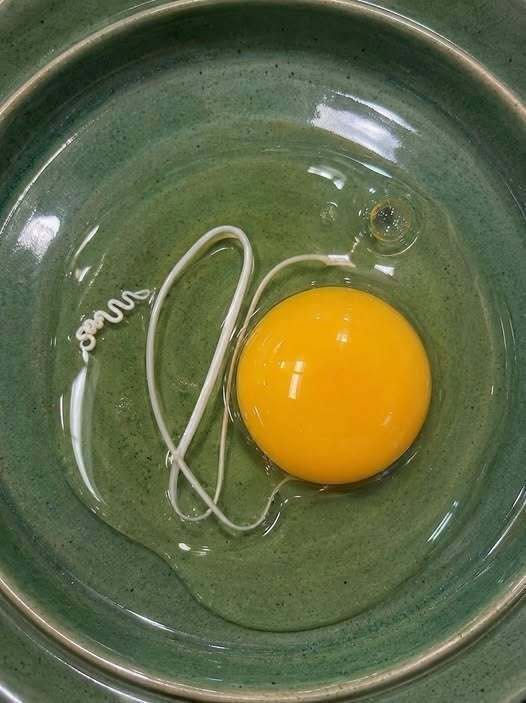
that had somehow bypassed quality control. This anxiety is a common response to the unfamiliar, especially when it involves the food we consume daily. However, after conducting thorough research, I discovered that this structure is not only completely harmless but also a fundamental component of egg anatomy. Known as the chalaza, this white, twisted ribbon is a natural protein structure that serves a vital biological function within the egg. Its primary purpose is to act as an anchor, securing the yolk firmly in the center of the egg white.
By keeping the yolk suspended and stable, the chalaza ensures that it does not drift to the sides or make contact with the shell, which is essential for the healthy development of a potential embryo. Because these strands are composed of dense, twisted proteins, they are perfectly edible and pose no health risk whatsoever. You do not need to remove them, as they will cook down completely and become indistinguishable from the rest of the egg white when heat is applied. The texture is so similar to the surrounding albumen that you will likely never notice it once your meal is prepared.
In fact, the presence of a prominent, well-defined chalaza is widely considered by culinary experts and food scientists to be a reliable indicator of freshness. As an egg ages, the proteins that make up these strands gradually begin to break down and dissolve into the surrounding albumen. Therefore, if you crack an egg and see a distinct, thick chalaza, it is a positive sign that the egg is very fresh. Conversely, if you notice that these strands are absent or barely visible, it may suggest that the egg has been stored for a significant period of time.
My initial fear, which had been fueled by a lack of knowledge, was replaced by a sense of relief and a newfound appreciation for the intricate design of nature. It is easy to misinterpret the mundane details of our food as warning signs when we are conditioned to be hyper-vigilant about safety. By understanding the biology behind the chalaza, we can move past unnecessary apprehension and focus on the quality of the ingredients we use in our daily meals. This knowledge serves as a bridge between the confusion of the moment and a deeper understanding of the biological processes that occur before our food even reaches the grocery shelf.
There is no need to remove these strands before cooking, as they will disappear completely once the egg is heated. They do not affect the flavor, texture, or nutritional value of your meal in any way. The next time you find this white ribbon in your bowl, you can proceed with your cooking confidently, knowing that it is simply a testament to the egg’s structural integrity and freshness. Embracing this knowledge allows for a more relaxed and informed approach to preparing your favorite breakfast dishes, turning a moment of confusion into a practical lesson in food science that benefits every home cook.
In summary, the chalaza is a completely natural and harmless protein structure that should be viewed as a quality marker rather than a cause for concern. For the best culinary results, simply leave the strand in the pan; it will cook perfectly alongside the white and yolk. Understanding this simple biological fact ensures you can continue to enjoy your eggs without worry, confident in your ability to distinguish between normal, healthy food components and actual signs of spoilage. Always trust in these natural indicators, as they are part of the egg’s inherent design for protection and stability, ensuring that what you serve on your plate is fresh, safe, and ready to be enjoyed.