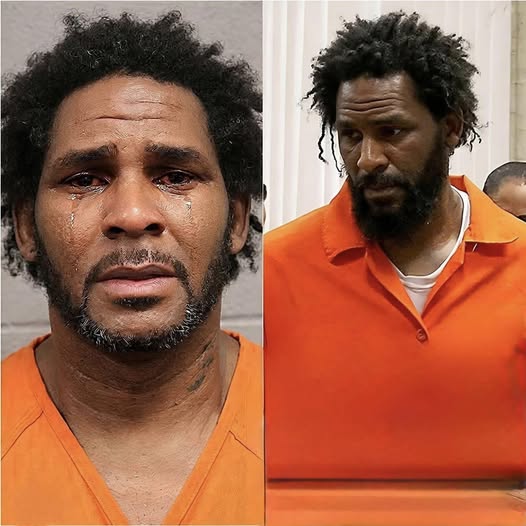
This absence of personal connection extends to his immediate family, with the singer claiming that his daughters have not visited him during his incarceration. Beyond his family, Kelly has expressed disappointment regarding his former associates and friends. He alleges that individuals he previously supported financially, including one instance where he claims to have provided a significant sum of one million dollars to assist with a business venture, have failed to reach out or check on his well-being since he was taken into custody. These claims reflect his perspective on the shifting nature of his personal relationships in the wake of his legal convictions and subsequent imprisonment.
Despite these feelings of abandonment, Kelly has stated that he is focused on maintaining his internal resolve. He has described his daily routine as one centered on prayer and a conscious effort to remain mentally strong. His stated goal is to preserve his psychological health throughout the duration of his confinement. The singer’s remarks highlight the stark contrast between his previous public life and the current reality of his restricted environment, where he finds himself navigating the challenges of long-term separation from his former support network.
The legal proceedings that led to his current status have been extensive. R. Kelly was convicted in multiple high-profile federal cases, resulting in consecutive prison sentences. These legal outcomes have kept him in federal custody for several years, with his daily life now governed by the regulations and limitations of the prison system. The lack of visits he describes is a common experience for many long-term inmates, though his public comments bring renewed attention to the personal impact of his incarceration on his family dynamics and his perception of loyalty among his former peers.
Observers of his case have noted that his current situation is a direct consequence of the judicial process, which concluded with significant prison time following his convictions on serious charges. While the public discourse surrounding his case often focuses on the legal and moral implications of his actions, his recent statements provide a window into his personal experience of life behind bars. He continues to serve his sentence in federal custody, with no indication of a change in his status or the conditions of his imprisonment.
The claims regarding his estrangement remain his own perspective, offered from within the confines of the facility where he is held. There has been no public response from his family members or former associates regarding his assertions of abandonment or the specific financial claims he has raised. As he remains incarcerated, his situation serves as a reminder of the isolation that often characterizes the lives of high-profile individuals following a fall from public grace. The transition from a life of immense public attention to the quiet, rigid structure of federal prison has clearly impacted his outlook on his past associations.
Furthermore, the psychological toll of such isolation is a documented aspect of the carceral experience. For someone accustomed to constant engagement and the trappings of fame, the sudden shift to a state of total seclusion can be jarring. Kelly’s focus on his mental fortitude suggests he is attempting to cope with the reality that his former life is entirely inaccessible. The absence of visitors, whether by choice of his family or the logistical constraints of his incarceration, has left him in a position where he feels entirely disconnected from the world he once dominated as a global performer.
The financial grievances he has aired add another layer to his narrative of abandonment. By highlighting specific instances of generosity, such as the million-dollar business loan he claims to have provided, he is attempting to contrast his past benevolence with his current lack of support. This narrative of betrayal is a common psychological defense mechanism for those facing significant life changes, allowing them to frame their current suffering as a result of external ingratitude rather than their own actions. However, the reality of his situation remains governed by the court mandates that placed him in federal custody in the first place.
As the months continue to pass, the silence from his inner circle appears to be the most painful aspect of his daily existence. He remains in the custody of the federal government, continuing to serve the remainder of his court-ordered sentence while navigating the realities of his ongoing imprisonment.