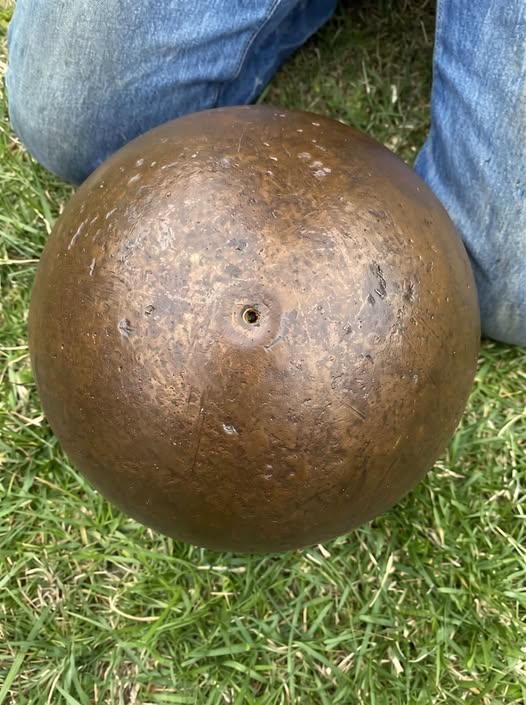
our modern infrastructure. This sphere is, in fact, an industrial grinding ball, a critical component once utilized within the massive rotating chambers of a ball mill. These machines are designed specifically to reduce hard minerals, ores, and various raw materials into fine, usable powders. The sphere was never intended to be a static monument; rather, it was a high-performance tool crafted to endure the punishing, repetitive environment of an industrial crushing facility for months or even years.
Inside a ball mill, the grinding process relies on a combination of impact and abrasion. As the mill rotates, the heavy steel balls are lifted along the interior walls before cascading downward, colliding with the raw material trapped between them. This constant, high-energy cycle of falling and tumbling pulverizes the contents into a consistent, fine state. The engineering required to create these balls is significant, as they must possess high structural integrity to withstand thousands of impacts without fracturing under the immense pressure.
The presence of tiny boreholes or surface irregularities, which might seem mysterious to a casual observer, is actually a common byproduct of the manufacturing process or the result of extreme wear and tear. During the forging of these spheres, small voids or air pockets can occasionally form within the metal. Furthermore, the black liquid sometimes found leaking from these spheres is typically a mixture of residual industrial lubricants, moisture, and fine metallic dust that has infiltrated the internal structure over time. These features are entirely consistent with the expected degradation of a tool subjected to such harsh mechanical stress.
Ball mills are foundational to a wide array of industries, including mining, cement production, ceramics, and chemical manufacturing. In these facilities, the noise is often deafening, with the sound of thousands of steel balls tumbling against ore creating a constant, rhythmic roar. For the workers who operated these machines, these spheres were simply consumables—essential parts that were replaced once they wore down to a size that no longer provided the necessary grinding force. They were the silent, heavy workhorses of the industrial age, operating in environments where dust and heat were constant companions to the labor force.
The transition of such an object from a factory floor to a creek bed is usually a matter of logistics or disposal. Over decades, industrial waste was sometimes repurposed as fill, used for erosion control along embankments, or simply discarded in areas that were once industrial zones but have since been reclaimed by nature. Seeing one in the wild is a stark reminder of how much heavy industry has shaped our landscape, often leaving behind remnants that outlast the facilities themselves. These spheres are not merely scrap; they are artifacts of a time when mechanical force was the primary driver of production.
Understanding the function of these spheres removes the air of mystery but replaces it with a deeper appreciation for the mechanics of production. These objects were designed to be durable, dense, and effective, representing the pinnacle of mechanical efficiency in their time. They were not designed for longevity in the sense of a monument, but for the brutal, short-term efficiency required to process the raw materials that built our roads, homes, and cities. Their presence in nature is a testament to the scale of human industry and the sheer weight of the components required to refine the earth’s natural resources.
If you encounter such a sphere, it is helpful to recognize it as a piece of industrial heritage rather than a strange anomaly. While they are fascinating to examine, they are incredibly heavy and can pose a safety risk if handled improperly. Because they are made of hardened steel, they are prone to rolling and can easily crush fingers or toes. The most practical conclusion is to treat them as historical artifacts of the manufacturing sector. They serve as a physical bridge to an era of heavy production, reminding us that the modern world is built upon the labor of machines that operated out of sight, grinding away to turn raw earth into the materials of our daily lives. If you find one, leave it where it lies as a silent, heavy witness to the industrial processes that once defined the surrounding region, as they are essentially inert pieces of metal that have completed their long, arduous service to the manufacturing industry.
{"post":111777,"page":2,"next":[{"id":111774,"title":"The Enduring Legacy and Quiet Life of Television Icon Bob Eubanks","url":"https:\/\/new24.info\/111774"},{"id":111770,"title":"Remembering Anthony Head: A Distinguished Career of Mentorship and Iconic Television Performances","url":"https:\/\/new24.info\/111770"},{"id":111766,"title":"My Mother-in-Law Threw Away Ninety Dollars of Dinner While I Was Sick Until My Husband Exposed the Family Secret","url":"https:\/\/new24.info\/111766"},{"id":111746,"title":"Jane Fonda Reflects on the Enduring Professional Bond and Personal Connection Shared with Robert Redford","url":"https:\/\/new24.info\/111746"},{"id":111743,"title":"The Hidden Weight of Childhood Sacrifice and the Lesson I Learned at Summer Camp","url":"https:\/\/new24.info\/111743"},{"id":111740,"title":"Remembering Carla Jeffery: A Talented Actress Who Brought Joy to Audiences Everywhere","url":"https:\/\/new24.info\/111740"},{"id":111737,"title":"A Veteran Carpenter Shows Why Professionalism and Legal Leverage Are the Ultimate Tools for Justice","url":"https:\/\/new24.info\/111737"},{"id":111734,"title":"The Silent Guardian of the Forest: Lidia\u2019s Secret Mission to Save the Forgotten","url":"https:\/\/new24.info\/111734"},{"id":111729,"title":"After Three Sons, My Husband Put a Baby Girl in My Arms \u2013 I Cried with Joy Until the Doctor Asked to Speak to Me Alone","url":"https:\/\/new24.info\/111729"},{"id":111727,"title":"My Daughter Cut Into Her Gender Reveal Cake and Started Crying \u2013 Then the Baker Pulled Me Aside","url":"https:\/\/new24.info\/111727"},{"id":111724,"title":"After a Brutal 14-Hour Labor, I Was Holding Our Newborn Son \u2013 But What My Husband Whispered Before Walking Out Made My Blood Run Cold","url":"https:\/\/new24.info\/111724"},{"id":111720,"title":"My High School Sweetheart Proposed with a Wire Ring Days Before He Disappeared \u2013 I Wore It for 55 Years Until a Mysterious Box Appeared in My Mailbox on My Birthday","url":"https:\/\/new24.info\/111720"},{"id":111717,"title":"My MIL Saw My Newborn Daughter for the First Time, Looked Horrified, and Told Us to Give Her Up \u2013 When I Found Out Why, I Nearly Fainted","url":"https:\/\/new24.info\/111717"},{"id":111714,"title":"My Neighbor Tried to Drive Me Out of Our Neighborhood \u2014 In the End, Karma Hit Her Hard","url":"https:\/\/new24.info\/111714"},{"id":111707,"title":"A Gentle, Science-Backed Guide to Egg Carton Codes","url":"https:\/\/new24.info\/111707"},{"id":111706,"title":"Entitled Neighbor Claims My Driveway Until Thirty Classic Cars Teach Respect","url":"https:\/\/new24.info\/111706"},{"id":111702,"title":"Husband Summons Unexpected Guest After His Mother Throws Away My Delivery Dinner","url":"https:\/\/new24.info\/111702"},{"id":111698,"title":"My Parents Gave My Brother Everything Until My Hidden Lien Surfaced","url":"https:\/\/new24.info\/111698"},{"id":111693,"title":"A Rich Couple Refused to Pay My Grandpa $6,200 for Their Renovation \u2013 He Looked Around, Smiled, and Said, \u0027Okay\u0027","url":"https:\/\/new24.info\/111693"},{"id":111690,"title":"Why One Tiny Silver Key Destroyed My Husband And Saved My Life","url":"https:\/\/new24.info\/111690"}]}