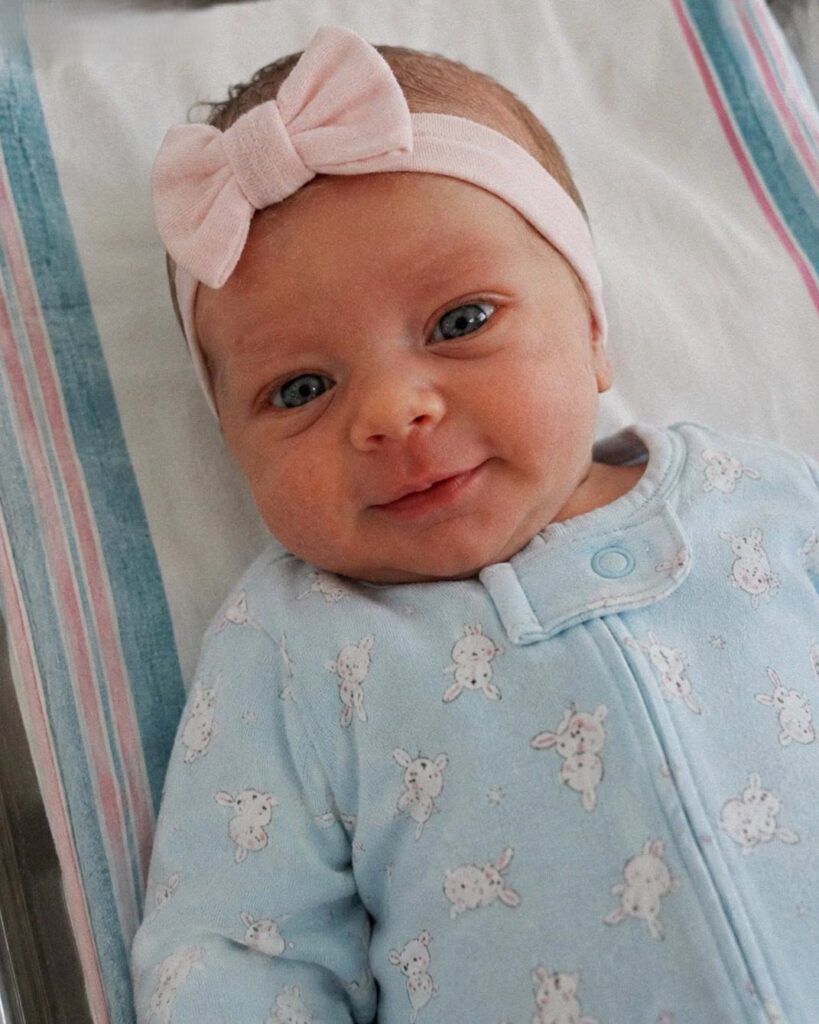
And when we found out we were having a girl, she showed up at our house the following weekend in old sweatpants with paint rollers, drop cloths, and three different shades of pink.
“You’re not painting the entire room bubblegum,” Darren warned.
Carol looked at him.
“You married Claire willingly. You lost your decorating vote years ago.”
“I can hear you.”
“That was the intention.”
I laughed so hard I had to sit down.
That was Carol.
Warm.
Funny.
Loud.
Completely invested in our lives without making herself the center of them.
During the final two months of my pregnancy, she brought casseroles twice a week.
She washed baby clothes.
Helped organize the nursery.
Once, she cleaned our entire kitchen while yelling at Darren because he had put a cast-iron skillet in the dishwasher.
“What kind of man did I raise?”
“A tired one.”
“A criminal one.”
“Mom.”
“You don’t deserve cookware.”
I loved her.
Not tolerated her.
Loved her.
So when our daughter was born, Carol was one of the first people I wanted to see.
My labor lasted almost twenty hours.
By the end, I was shaking from exhaustion.
Then I heard the cry.
That first tiny, furious sound.
The nurse placed our daughter on my chest, and everything inside me seemed to collapse at once.
I started sobbing.
Darren leaned over us and kissed my forehead.
“She’s perfect.”
We named her Lily.
Visitors weren’t allowed in immediately, so the first night passed in a blur of nurses, feedings, pain medication, and me staring at Lily because I couldn’t quite believe she was real.
The next morning, Darren arrived carrying flowers even though I had specifically told him not to waste money on hospital flowers.
“You bought flowers.”
“I panicked.”
“You had one instruction.”
“They were next to the coffee.”
“That doesn’t explain anything.”
He picked Lily up and grinned.
“I’m a father now. I’m allowed to make irresponsible financial decisions.”
An hour later, Carol called.
“I’m leaving now.”
“You don’t need to bring anything.”
“I’m not bringing anything.”
She arrived carrying two shopping bags and a stuffed rabbit nearly the size of the baby.
I stared at it.
“What exactly would you call that?”
“Emotional support.”
“For whom?”
“Me.”
She put everything down and walked toward the bassinet.
The second she saw Lily, her whole face changed.
“Oh.”
Her voice softened.
“Oh, sweetheart.”
She moved closer.
Then stopped.
At first, I thought she was overwhelmed.
She had been waiting months for this moment.
But then I noticed her expression.
The smile disappeared.
Not slowly.
Instantly.
The color drained from her face.
“Carol?”
She didn’t answer.
She was staring at Lily’s upper arm.
There was a small oval birthmark there.
Nothing dramatic.
Just a slightly darker patch of skin, maybe the size of a grape.
Carol leaned closer.
Her hand went to the side of the bassinet.
“Did anyone mention that?”
I frowned.
“Mention what?”
She pointed.
“That mark.”
Darren stepped closer.
“What about it?”
Carol looked at him.
Then at me.
Then back at Lily.
She took one step backward.
“Carol, are you okay?”
She covered her mouth.
For several seconds, she said nothing.
Then:
“This is going to sound terrible.”
My stomach tightened.
“What is?”
Her eyes filled with tears.
“You can’t take this little girl home.”
I stared at her.
“What?”
Darren immediately stepped between his mother and the bassinet.
“Mom.”
“You can’t.”
“What are you talking about?”
Carol’s breathing had become shallow.
“You can’t just take her home without having that checked.”
Darren’s voice hardened.
“This is your granddaughter.”
“I know.”
“Then why would you say something like that?”
Carol pointed toward Lily’s arm.
“Look at the mark.”
“It’s a birthmark.”
“I know what it is.”
“How?”
Carol went completely still.
Then she whispered:
“Because I’ve seen it before.”
The room seemed to change.
Darren looked at her.
“Where?”
She closed her eyes.
“I should have told you years ago.”
“Told me what?”
She looked at me first.
Almost apologetically.
Then she looked directly at her son.
“Darren, I didn’t give birth to you.”
Silence.
Absolute silence.
Darren blinked.
“What?”
Carol’s eyes filled.
“You were born to another woman.”
He stared at her as if she had suddenly started speaking another language.
“Mom, stop.”
“I’m not confused.”
“You’re upset.”
“No.”
“Sit down.”
“Darren—”
“Sit down.”
She reached for his wrist.
“You came to your father and me when you were an infant.”
Darren pulled his hand away.
His face had gone pale.
“You’re saying I’m adopted?”
Carol nodded.
“Yes.”
I looked at Darren.
He looked at me.
Neither of us spoke.
Finally he turned back to her.
“How?”
“It began as a private arrangement.”
“What does that mean?”
“Your father and I knew people who knew your biological mother. After you were born, we took you in and completed the legal adoption.”
Darren stared at her.
“You’ve known this my entire life.”
“Yes.”
“And never told me.”
Carol started crying.
“I always meant to.”
His voice sharpened.
“When?”
“When you were old enough.”
“I’m thirty-four.”
“I know.”
“So when exactly was I going to become old enough?”
She had no answer.
Darren turned toward Lily.
His jaw tightened.
“What does any of that have to do with my daughter’s arm?”
Carol wiped her face.
“The woman who gave birth to you had the same mark.”
He froze.
“What woman?”
“Her name was Ruth.”
“Who is Ruth?”
“She lived in another state. Your father and I knew of her through mutual friends.”
“Is she alive?”
“I don’t know.”
Darren stared at her.
“You don’t know?”
“I haven’t spoken to her in more than thirty years.”
He pointed toward Lily.
“Then why are you acting like this mark means something terrible?”
Carol hesitated.
That hesitation terrified me more than anything she had said.
“Because Ruth wasn’t the only person in her family who had it.”
I felt my chest tighten.
“What does that mean?”
Carol lowered herself into the chair near the window.
“There was a medical condition in her family.”
Darren’s face changed.
“What condition?”
“I don’t remember the name.”
“You don’t remember?”
“It involved blood vessels.”
My mouth went dry.
Carol continued.
“Some members of Ruth’s family had marks like that and were completely healthy. But there were others who had similar marks and also had an inherited vascular disorder.”
Darren stared at her.
“You knew there was a hereditary condition in my biological family?”
Carol nodded.
“And you never told me?”
“I convinced myself it didn’t matter.”
“Why?”
“Because you never had the birthmark.”
Darren laughed once.
There was no humor in it.
“You convinced yourself.”
“I was afraid.”
“Of what?”
Carol looked at him.
“Losing you.”
I grabbed the bed rail.
“So you’re telling me Lily might have inherited some medical condition from a family Darren didn’t even know existed?”
The room suddenly felt too hot.
Darren noticed immediately.
“Claire?”
“I’m fine.”
I wasn’t.
A nurse entered a few seconds later and saw my face.
She lowered the head of the bed and checked my blood pressure.
“What happened?”
Darren gestured toward his mother.
“We just found out I’m adopted and apparently my biological family has some hereditary vascular condition.”
The nurse paused.
“All right.”
She looked at Lily.
“I’m going to get the pediatrician.”
A doctor arrived soon afterward.
He examined Lily carefully.
Listened to her heart.
Checked her breathing.
Looked at the mark.
Then he asked Carol everything she remembered.
She repeated what she had told us.
When she finished, the doctor looked at Darren and me.
“A birthmark by itself does not mean your daughter has a disorder.”
I exhaled.
“She appears stable, and I’m not seeing anything right now that suggests an emergency.”
Darren nodded.
“But?”
“With a possible hereditary history, it’s worth documenting and following up appropriately.”
That should have reassured me.
Instead, Darren turned toward Carol.
“You knew I had biological relatives with medical history I might need someday.”
Carol looked down.
“Yes.”
“And you decided I didn’t deserve to know.”
“I thought I was protecting you.”
“From what?”
She didn’t answer.
Then Darren asked:
“What proof do you have?”
Carol looked up.
“What?”
“Proof.”
His voice was flat.
“You just blew up thirty-four years of my life. What proof do you have that any of this is true?”
“There was a photograph.”
He stared at her.
“A photograph?”
“Ruth holding you after you were born.”
Carol swallowed.
“Her sleeve was rolled up. You could see the mark.”
Darren laughed bitterly.
“Convenient.”
“It’s real.”
“You still have it?”
Carol nodded.
That seemed to hurt him almost as much as the adoption itself.
“You kept a picture of my biological mother for thirty-four years.”
“Yes.”
“And never thought I should see it?”
“I was afraid.”
“Of losing me?”
She nodded.
Darren looked away.
“Go get it.”
Carol left.
The room felt strangely empty after she was gone.
Darren stood beside the window.
For several minutes, he said nothing.
Then:
“Do you believe her?”
“I don’t know.”
He rubbed both hands over his face.
“I feel like I’m losing my mind.”
“I know.”
He turned toward me.
“Did you know?”
The question hurt, but I understood why he had to ask.
“No.”
He nodded.
“I had to ask.”
“I know.”
Carol returned almost an hour later carrying a worn envelope.
She placed it on the table.
Darren didn’t touch it immediately.
Then he opened it.
Inside was a faded photograph.
A young woman stood outside a small house holding a newborn wrapped in a blanket.
She had dark hair.
Tired eyes.
And on her exposed upper arm was a small oval mark.
Same place as Lily’s.
Almost the same shape.
Darren sat down.
For a long time, he just stared at the photograph.
Carol stood near the door.
“I didn’t come here planning to tell you.”
He didn’t look up.
“I saw Lily’s arm and suddenly I was back there.”
Her voice cracked.
“I panicked.”
Darren finally looked at her.
“You told us we couldn’t keep our own daughter.”
Carol started crying.
“I know how it sounded.”
“It sounded like you thought something was wrong with her.”
“I didn’t.”
“Then what were you trying to say?”
“That I recognized it.”
She wiped her face.
“That there might be medical history you needed to know.”
“And telling me why meant admitting everything else.”
Carol nodded.
Darren stared at the photograph again.
“You had decades.”
“I know.”
“Stop saying that.”
She flinched.
“You keep saying ‘I know’ like it makes this smaller.”
“It doesn’t.”
“No.”
His voice lowered.
“It doesn’t.”
Carol sat down.
For the first time since she arrived, she seemed to stop defending herself.
“I kept telling myself I was protecting you.”
Darren didn’t respond.
“But really, I was protecting myself.”
That made him look at her.
She continued.
“I was afraid if you knew you were adopted, you would wonder about your biological mother.”
“You think?”
“I was afraid you would find her.”
“So?”
“And I was afraid you would decide she mattered more.”
Darren stared at her.
“I was your son.”
“I know.”
“You raised me.”
“Yes.”
“You were my mother.”
Her face crumpled.
“I still am.”
“Then you should’ve trusted that.”
She started crying harder.
Darren didn’t comfort her.
And I think he needed not to.
Two days later, Lily and I went home.
She was still our healthy newborn.
Still waking every few hours.
Still making ridiculous little squeaking noises when she stretched.
Still perfect.
But now her doctors had a family-history question to investigate that we never would have known existed if Carol hadn’t panicked.
Darren could not let the rest go.
Neither could I.
Carol remembered Ruth’s first and last name.
The town where she had lived.
Her parents’ names.
An old address.
Darren began searching.
At first, we found almost nothing.
Then Carol remembered there were boxes in her attic that had belonged to Darren’s father.
We went through them one Saturday.
Near the bottom of one box was an old Christmas card.
The return address belonged to a relative of Ruth’s.
That led to another name.
Then another.
Eventually, we found her.
Ruth was alive.
She lived about four hours away.
When Darren found a phone number, he stared at it for three days.
He carried it around written on a piece of paper.
Didn’t call.
On the fourth night, he sat beside me on the couch.
“Maybe I shouldn’t.”
“Why?”
“Because I’m angry.”
“At Ruth?”
“No.”
He looked down.
“At Mom.”
“Then don’t make the decision because you’re angry at Carol.”
He looked at me.
“What if meeting Ruth makes everything worse?”
“It might.”
“Helpful.”
“I’m serious.”
I took his hand.
“You don’t owe anyone a reunion. But if you want to know where you came from, who your relatives were, what medical history belongs to you—that’s yours to decide.”
He stayed quiet.
“No one gets to make that decision for you anymore.”
The next morning, he called.
A woman answered.
Darren barely managed:
“Is this Ruth?”
There was a pause.
“Yes.”
“My name is Darren.”
Another pause.
Longer.
Then we heard her breathe in sharply.
“Oh my God.”
A week later, we drove to meet her.
Darren asked Carol to come.
That surprised me.
It surprised Carol even more.
“Are you sure?”
“No.”
He looked at her.
“But if I’m going to hear what happened, I want both of you in the same room.”
He paused.
“No more separate versions.”
Ruth opened the door.
The moment she saw Darren, she started crying.
She didn’t rush toward him.
Didn’t hug him.
Nobody moved.
She simply stood in the doorway looking at him as though thirty-four years had suddenly become visible.
Finally she said:
“You look like my father.”
Darren swallowed.
“I don’t know what I’m supposed to say to that.”
“You don’t have to say anything.”
The meeting was nothing like a movie.
Nobody instantly became family.
Nobody forgave everyone over coffee.
We sat around Ruth’s kitchen table.
The silence was uncomfortable.
Then Ruth brought out a box.
Photographs.
Old documents.
Family records.
Letters.
Darren picked one up.
His name was written on the front.
“You wrote to me?”
Ruth nodded.
“Every birthday for a while.”
“Why didn’t you send them?”
She glanced toward Carol.
Then back at Darren.
“Because Carol and your father were your parents.”
“That was the agreement?”
“Yes.”
Carol looked down.
Ruth continued.
“I thought about you constantly.”
Her voice trembled.
“But I didn’t want to appear years later because I needed something from you and destroy your life.”
Darren looked between the two women.
“You both kept deciding what I could handle.”
Neither answered.
“I could’ve decided for myself.”
Carol nodded.
“You’re right.”
Ruth nodded too.
“Yes.”
Darren leaned back.
Then looked at Carol.
“You loved me.”
Her face crumpled.
“I did.”
“No.”
He shook his head.
“You love me. I know that.”
“I do.”
“But loving me didn’t give you the right to decide forever what I was allowed to know about myself.”
Carol cried silently.
This time she didn’t argue.
Darren opened the medical documents.
“What exactly runs in the family?”
Ruth explained what she knew.
Several relatives had been monitored for an inherited vascular disorder.
Some had the oval birthmark.
Some did not.
Some people with the mark were completely healthy.
The mark itself was not a diagnosis.
But it had been one reason certain relatives underwent additional evaluation.
Darren asked question after question.
Names.
Ages.
Symptoms.
Which relatives had been affected.
Who had been tested.
For the first time in his life, he was learning his own medical history.
Then Lily made a little noise from her carrier.
Ruth looked over.
“Can I see her?”
I lifted Lily carefully.
Ruth smiled.
Then she saw the birthmark.
Her expression froze.
For half a second, I felt the same fear I had seen on Carol’s face in the hospital.
Then Ruth laughed through tears.
“Of course.”
She rolled up her sleeve.
There it was.
The same oval mark.
Same arm.
Same place.
Darren stared from Ruth’s arm to Lily’s.
For the first time since Carol’s confession, something in his face softened.
“So that’s what Mom saw.”
Ruth nodded.
“That’s what she saw.”
Carol was crying.
“I should’ve told you.”
Darren didn’t say it was okay.
Because it wasn’t.
Not yet.
Maybe not for a long time.
But he reached down and touched Lily’s tiny hand.
“She got something from them.”
I smiled.
“Apparently.”
Later testing gave us the answer we desperately wanted.
Lily showed no signs of the inherited disorder.
Her doctors documented the family history and explained what, if anything, should be monitored as she grew.
The birthmark itself was simply a birthmark.
That should have ended everything.
It didn’t.
Because by then, the mark was almost the least important part of the story.
Carol and Darren had thirty-four years of silence between them.
That couldn’t be repaired with one apology.
There were arguments.
Long conversations.
Weeks when Darren didn’t call her.
Then calls that lasted two hours.
Sometimes Carol defended herself.
Eventually, she learned not to.
“I was afraid” became:
“I was wrong.”
That mattered.
Ruth didn’t suddenly become Darren’s second mother either.
He didn’t call her Mom.
She never asked him to.
They started slowly.
Phone calls.
Photographs.
Family stories.
Medical information.
Occasional visits.
Darren learned that he hated olives because apparently Ruth did too.
That several men in her family had his exact laugh.
That his biological grandfather had been a mechanic.
That Ruth kept the hospital bracelet from the day he was born.
None of those facts replaced Carol.
They simply filled in pieces that had always belonged to Darren.
A few months later, we had a small gathering at our house.
Carol came.
Ruth came too.
You could feel both women trying not to stand in the wrong place.
Trying not to claim too much.
Trying not to disappear either.
Lily was on a blanket in the living room.
She started fussing.
Carol bent down from one side.
Ruth bent down from the other.
Lily reached up.
One tiny hand wrapped around Carol’s finger.
The other grabbed Ruth’s.
Everyone froze.
Then Darren laughed.
So did I.
Carol wiped her eyes.
Ruth looked away.
Lily had no idea what she had done.
She just wanted someone to pick her up.
I looked at the little oval mark on her arm.
For days after she was born, I had been afraid of it.
Carol had looked at it and seen danger.
Darren had looked at it and seen betrayal.
Ruth had looked at it and seen family.
In the end, the mark itself meant none of those things.
There was nothing wrong with Lily.
But that tiny patch of skin had exposed something much bigger.
A medical history we needed.
A biological family Darren had a right to know.
And a truth Carol should never have hidden simply because she was afraid of what honesty might change.
Carol was still Darren’s mother.
Ruth was still the woman who gave birth to him.
Neither truth erased the other.
The difference now was that nobody else was deciding which parts of his life he was allowed to know.
For thirty-four years, that choice had been taken from him.
Now it was finally his.
And this time, Darren got to decide what came next.
{"post":111717,"page":2,"next":[{"id":111714,"title":"My Neighbor Tried to Drive Me Out of Our Neighborhood \u2014 In the End, Karma Hit Her Hard","url":"https:\/\/new24.info\/111714"},{"id":111707,"title":"A Gentle, Science-Backed Guide to Egg Carton Codes","url":"https:\/\/new24.info\/111707"},{"id":111706,"title":"Entitled Neighbor Claims My Driveway Until Thirty Classic Cars Teach Respect","url":"https:\/\/new24.info\/111706"},{"id":111702,"title":"Husband Summons Unexpected Guest After His Mother Throws Away My Delivery Dinner","url":"https:\/\/new24.info\/111702"},{"id":111698,"title":"My Parents Gave My Brother Everything Until My Hidden Lien Surfaced","url":"https:\/\/new24.info\/111698"},{"id":111693,"title":"A Rich Couple Refused to Pay My Grandpa $6,200 for Their Renovation \u2013 He Looked Around, Smiled, and Said, \u0027Okay\u0027","url":"https:\/\/new24.info\/111693"},{"id":111690,"title":"Why One Tiny Silver Key Destroyed My Husband And Saved My Life","url":"https:\/\/new24.info\/111690"},{"id":111686,"title":"Cruel Family Dinner Ambush Unintentionally Exposes Decades Of Massive Corporate Financial..","url":"https:\/\/new24.info\/111686"},{"id":111672,"title":"She was \u0027madly\u0027 in love with her co-star Robert Redford until his death \u2013 who is this legendary actress, now brokenhearted?","url":"https:\/\/new24.info\/111672"},{"id":111669,"title":"A Mother Cancels the Grocery Fund After a Cruel Remark About Her Starving Child","url":"https:\/\/new24.info\/111669"},{"id":111666,"title":"A Granddaughter Drives Nine Hours and Uncovers a Cruel Secret Hidden Inside a Nursing Home","url":"https:\/\/new24.info\/111666"},{"id":111663,"title":"I Broke My Arm and Asked My Husband to Help with Our 5-Month-Old Twins, but He Said, \u0027Moms Don\u0027t Get Sick Days\u0027 \u2013 So I Taught Him a Lesson He\u0027d Never Forget","url":"https:\/\/new24.info\/111663"},{"id":111660,"title":"My MIL Ordered Me a Dress Four Sizes Too Small for Her Party, Saying, \u0027It\u0027s Time for You to Lose Weight\u0027 \u2013 Karma Didn\u0027t Take Long to Catch up with Her","url":"https:\/\/new24.info\/111660"},{"id":111656,"title":"My Son Came Home Acting Strange Until I Realized Something Was Wrong","url":"https:\/\/new24.info\/111656"},{"id":111654,"title":"Dolly Parton Is Alive and Well as Her Hollywood Walk of Fame Star Undergoes Professional Restoration","url":"https:\/\/new24.info\/111654"},{"id":111651,"title":"A Childhood Vow Kept: The Deep Bond Between Two Friends on a Night to Remember","url":"https:\/\/new24.info\/111651"},{"id":111648,"title":"Bunny Levine, the Librarian Who Became a Late-Blooming Actress, Dies at 97","url":"https:\/\/new24.info\/111648"},{"id":111642,"title":"\u2018Grey\u2019s Anatomy\u2019 Star Eric Dane Dies at 53 After Courageous Battle With ALS","url":"https:\/\/new24.info\/111642"},{"id":111638,"title":"Most Folks Don\u2019t Recognize This Item Anymore","url":"https:\/\/new24.info\/111638"},{"id":111634,"title":"A Legendary Hollywood Career Comes to an End\u2014Fans Remember an Icon","url":"https:\/\/new24.info\/111634"}]}