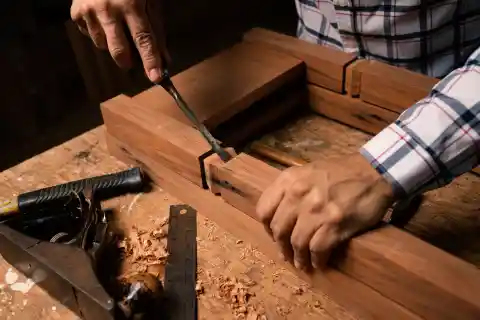
He once drove twenty-three miles back to a customer’s house because, while eating dinner, he suddenly remembered that one cabinet door might have been sitting an eighth of an inch too low.
“Would anyone have noticed?” I asked him.
“I noticed.”
That was Grandpa.
He barely advertised anymore.
He didn’t need to.
People recommended him.
Neighbors called because another neighbor had used him.
Children hired him because their parents had.
Contractors saved his number because when Frank said something would be finished Friday, it was finished Friday.
His reputation had taken almost half a century to build.
So when Grant and Melissa Henderson hired him to build custom cabinetry for the downstairs of their newly renovated home, Grandpa treated the job exactly like every other one.
Carefully.
The Hendersons lived in one of those enormous houses where the front entrance looked like it belonged to a hotel.
Their renovation had apparently already cost more than most people’s homes.
Granite.
Imported tile.
Huge windows.
Custom lighting.
And now they wanted built-ins surrounding the fireplace, cabinets beneath the windows, floating shelves, and a long window bench with drawers underneath.
It was a substantial job.
It was also supposed to take three weeks.
It took almost five.
Not because Grandpa was slow.
Because Grant and Melissa changed their minds constantly.
First, Melissa chose brass cabinet handles.
Two days later, she decided brass looked “too trendy.”
So she switched to black.
Then Grant decided black looked cheap.
Back to brass.
One shelf had already been installed when Melissa stood across the room staring at it.
“It feels low.”
Grandpa checked his plans.
“It’s exactly where you approved it.”
“I know.”
She tilted her head.
“But now that I see it, I think it needs to be three inches higher.”
Grandpa sighed when he told me the story later.
“What did you do?”
“Moved it three inches.”
“You should’ve charged them.”
“I did.”
Of course he did.
Every change was documented.
That was the thing about Grandpa.
He was kind.
He was patient.
But after fifty years in construction, he had learned to put everything on paper.
Change order.
Cost.
Date.
Signature.
Receipt.
Material invoice.
Delivery confirmation.
He kept folders for everything.
My grandmother used to joke that he had better records for cabinet hinges than most people had for their taxes.
Then came the stain.
Melissa chose walnut.
Grandpa ordered it.
She changed her mind.
Wanted something lighter.
He reordered.
Then Grant said the lighter stain didn’t match the flooring.
Back to walnut.
Grandpa complained about them over dinner, but he never once suggested cutting corners.
“They’re paying for custom work,” he said. “They’ll get custom work.”
By the final week, the room looked incredible.
I stopped by one afternoon while he was installing the last pieces of trim.
The built-in shelves rose all the way to the ceiling on both sides of the fireplace.
The cabinets fit so tightly against the walls that they looked original to the house.
The window bench ran nearly the entire back wall.
Drawers underneath.
Custom cushion on top.
Even I could tell it was beautiful.
Melissa walked through the room taking photographs with her phone.
“This is exactly what I wanted.”
Grandpa looked up from his toolbox.
“Good.”
Grant came downstairs a few minutes later.
He looked around.
Opened two cabinet doors.
Ran his hand over the window bench.
“Looks great, Frank.”
Grandpa smiled.
That should have been the end of the job.
It wasn’t.
The next afternoon, my phone rang while I was at work.
Grandpa.
“You’re not going to believe what these people just tried.”
His voice was strangely calm.
That worried me.
“What happened?”
“They’re not paying the final balance.”
I assumed there was some argument over one of the changes.
“How much?”
“Six thousand two hundred.”
I nearly dropped my phone.
“What?”
“Six thousand two hundred dollars.”
“They’re disputing the work?”
“Nope.”
“The materials?”
“Nope.”
“What are they saying?”
“They spent too much on the renovation.”
I stared at my desk.
“That’s not your problem.”
“Apparently Grant thinks it is.”
Grandpa explained what had happened.
He had arrived that morning expecting the final walkthrough and payment.
Melissa walked through the entire room again.
Opened drawers.
Checked shelves.
Took more photographs.
She complimented the bench.
Grant said everything looked great.
Then he asked Grandpa to step into the kitchen.
“We’ve gone over budget,” he said.
Grandpa nodded.
“Okay.”
“So we’re not going to be able to pay the last invoice.”
Grandpa thought he misunderstood.
“What do you mean?”
Grant shrugged.
“The $6,200.”
“That’s the remaining balance.”
“I know.”
“And you’re saying you’re not paying it?”
“Correct.”
Grandpa stared at him.
“The work is completed.”
“I know.”
“You approved every change.”
“I know.”
“You just walked through it and told me it looks great.”
Grant shrugged again.
“We’re tapped out.”
Grandpa pulled out the contract.
“The balance is due upon completion.”
Grant barely looked at it.
Then he said something I still cannot believe.
“Frank, come on.”
Grandpa waited.
“You’re one old carpenter working by yourself.”
Silence.
“What are you really going to do about it?”
I felt heat rush into my face when Grandpa repeated that part.
“He actually called you an old carpenter?”
“Yep.”
“And then asked what you were going to do?”
“Pretty much.”
“Grandpa, I swear—”
“Relax.”
“I am not relaxing.”
He laughed.
“That’s why I called you after I left.”
Then he told me what Melissa had said.
She had been leaning against the kitchen island drinking coffee.
Grandpa reminded Grant that all of the work was already installed.
Melissa smiled.
“Exactly.”
Grandpa looked at her.
“What does that mean?”
She gestured toward the room.
“Everything’s already in the house.”
Then she laughed.
“It’s not like you can take it back.”
Grandpa went quiet.
He looked toward the cabinets.
Then the shelves.
Then the window bench.
And apparently, he smiled.
That smile should have worried them.
Instead, Grant seemed pleased.
Like Grandpa had finally accepted defeat.
“Okay,” Grandpa said.
Grant actually laughed.
“See? No reason to make this complicated.”
Grandpa packed his tools.
Swept the floor.
Put everything in his truck.
Then before leaving, he reached into his folder.
“I just need one last signature.”
Grant looked irritated.
“For what?”
“A completion acknowledgment.”
“What’s that?”
“Just documentation showing the work has been completed and inspected.”
Grant took the paper.
Grandpa pointed toward the signature line.
Melissa walked over.
“Does signing this mean we’re done?”
“It documents your position.”
She smiled.
“Fine.”
Neither of them read it carefully.
Grant signed.
Melissa signed.
Grandpa gave them a copy.
Then he left.
“What exactly did they sign?” I asked.
Grandpa chuckled.
“A statement confirming that the work was completed, inspected, and accepted with no workmanship complaints.”
I sat up straighter.
“And?”
“And that they were declining to pay the remaining balance.”
I stared at my phone.
“You already had that prepared?”
“I keep templates.”
Of course he did.
“Why?”
“Because people become very forgetful once money is involved.”
He sounded almost cheerful.
That evening, I went to his house.
I expected him to be furious.
Instead, he opened his refrigerator, took out a beer, and sat at the kitchen table.
“You’re smiling.”
“Yes.”
“Why?”
“Because tomorrow morning they’re going to understand why I wanted that paper signed.”
I stared at him.
“What are you doing?”
He took a sip.
“Nothing illegal.”
“That sentence does not make me feel better.”
Grandpa laughed.
“Go home.”
“No.”
“Go home.”
“Grandpa.”
He pointed at me.
“Keep your phone on tomorrow morning.”
“What time?”
“Seven forty-five.”
That was all I got.
At 7:46 the next morning, my phone rang.
“Where are you?” I asked immediately.
“The Hendersons’ driveway.”
I sat up in bed.
“Why?”
“I brought David.”
David was Grandpa’s attorney.
I was already throwing off the blankets.
“You brought a lawyer?”
“And Tommy.”
I stopped.
“Tommy who?”
“My old apprentice.”
“What are you doing?”
“Come see.”
By the time I reached the Henderson house, there were four vehicles in the driveway.
Grandpa’s pickup.
A black sedan.
Tommy’s work van.
And a white SUV I didn’t recognize.
Grandpa stood near the front steps in his normal work clothes.
David was beside him holding a leather folder.
Tommy leaned against his van drinking coffee.
I got out.
“What is happening?”
Grandpa smiled.
“You made good time.”
“That is not an answer.”
Tommy laughed.
“You’re going to enjoy this.”
Tommy had worked for Grandpa almost twenty years earlier.
He had been nineteen then.
Skinny.
Impatient.
Apparently incapable of cutting crown molding without swearing.
Now he owned one of the largest residential carpentry companies in the county.
“What are you doing here?” I asked.
Tommy pointed toward the Henderson house.
“They called my company yesterday.”
“For what?”
“Upstairs renovation.”
I blinked.
“They refused to pay Grandpa and then called his former apprentice?”
“They didn’t know.”
Grandpa grinned.
“I taught him everything except humility.”
Tommy ignored him.
“I recognized the address when the office sent me the lead.”
That explained Tommy.
It didn’t explain David.
I turned toward the lawyer.
“Why are you here?”
David raised the folder.
“Paperwork.”
Grandpa had apparently called him the moment he drove away from the Henderson house.
Not because he planned to sue immediately.
Because he had already been preparing.
A week earlier, Grant had started making comments about going over budget.
Grandpa noticed.
So he had called David and asked a simple question.
“If they decide not to pay me, what do I need?”
David reviewed the contract.
Written scope.
Payment schedule.
Change orders.
Signed approvals.
Material receipts.
Invoices.
Completion documentation.
Everything was in order.
Grandpa had also complied with the contractor notice requirements that applied to his work.
He wasn’t figuring things out after the fact.
He already knew his options.
“So what happens now?” I asked.
David looked toward the house.
“That depends on Grant and Melissa.”
Before I could ask what that meant, another vehicle pulled up behind the white SUV.
A man stepped out carrying camera equipment.
Then the woman from the SUV walked toward the front door carrying a tablet.
Grandpa looked at me.
“Now you’ll understand.”
Grant opened the door.
He was wearing expensive slacks and a polo shirt.
Melissa appeared behind him.
Then they saw Grandpa.
Grant froze.
“What are you doing here?”
Grandpa looked toward the woman with the tablet.
“Morning.”
She smiled when she saw him.
“You must be Frank.”
Grant looked confused.
“You know him?”
“Of course.”
She pointed toward the windows.
“I’ve seen the built-ins. They’re beautiful.”
Grandpa nodded politely.
“Thank you.”
Melissa’s expression changed.
Then I understood.
The woman was their real estate agent.
The man with the camera was the property photographer.
They were selling the house.
Grant stepped outside.
“Frank, I thought we were done.”
Grandpa nodded.
“So did I.”
Grant looked at David.
“Who’s he?”
“My attorney.”
That wiped the confidence from Grant’s face.
Melissa stepped closer.
“Why do you have an attorney?”
David opened the folder.
“Because Mr. Wilson has an outstanding balance of $6,200 for completed improvements to this property.”
Grant crossed his arms.
“We have a dispute.”
Grandpa looked genuinely confused.
“What are we disputing?”
“The bill.”
“No.”
Grant frowned.
“No?”
“You signed yesterday that the work was completed.”
Grandpa paused.
“You signed that you inspected it.”
Another pause.
“And you signed that you had no complaints regarding workmanship.”
Melissa looked at Grant.
“What?”
Grandpa continued.
“You also signed that you were refusing to pay the outstanding balance.”
Her face changed.
“That is not what that paper said.”
David calmly pulled out a copy.
“It is exactly what it said.”
Melissa grabbed it.
Her eyes moved down the page.
Then widened.
She shoved it toward Grant.
“You signed this?”
“You signed it too.”
“You told me it was completion paperwork!”
Grandpa nodded.
“It was.”
Grant looked furious.
“You tricked us.”
“No.”
Grandpa’s voice remained calm.
“I handed you a piece of paper and gave you time to read it.”
“You didn’t explain all this.”
“I shouldn’t have to explain your own signature to you.”
For several seconds, nobody spoke.
Then David explained why they were there.
Grandpa intended to use the legal remedies available to him to secure payment for completed work on the property.
Depending on the exact legal process and deadlines, that could include pursuing a mechanic’s lien or another contractor claim against the house.
David was careful not to overstate anything.
Grandpa wasn’t threatening to seize their home.
He wasn’t claiming he could simply walk away with the property.
But there was one thing Grant understood immediately.
An unresolved contractor claim connected to a property someone was trying to sell could create a serious problem.
Grant’s face lost color.
“What lien?”
Grandpa looked toward the house.
Then back at him.
“The claim involving the $6,200 you decided not to pay.”
The real estate agent slowly lowered her tablet.
“Grant?”
He turned toward her.
“This is nothing.”
David looked at her.
“It is an unpaid balance for completed renovation work.”
She stared at Grant.
“You told me every contractor had been paid.”
“They have.”
Grandpa raised one eyebrow.
Grant snapped:
“Except him.”
The silence afterward was almost painful.
The agent’s expression hardened.
“You cannot leave something like this unresolved while we’re preparing to market the property.”
“It’s being handled.”
Grandpa nodded.
“Yes.”
“That’s why we’re here.”
Then Grant saw Tommy.
“What is he doing here?”
Tommy pushed away from his van.
“You called my office.”
Grant frowned.
“For the upstairs work.”
“Correct.”
“Our appointment is at ten.”
“Was.”
Grant stared at him.
“What does that mean?”
“It means I’m not bidding on the job.”
Melissa crossed her arms.
“Why?”
Tommy glanced at Grandpa.
“Because Frank trained me.”
Grant looked between them.
“So?”
Tommy took another sip of coffee.
“So I know his work.”
“That has nothing to do with our project.”
Tommy shrugged.
“I also know I like getting paid.”
I had to look away so they wouldn’t see me laugh.
Grandpa shot him a sideways glance.
“What?” Tommy said.
“It’s accurate.”
Grant’s voice rose.
“This is ridiculous.”
“No,” Grandpa said calmly.
“What’s ridiculous?”
“You think refusing to pay someone for work you accepted should have no consequences.”
Melissa looked at him.
“You’re doing all this over $6,200?”
Grandpa’s expression didn’t change.
“No.”
He paused.
“You did all this over $6,200.”
That was the moment the entire situation shifted.
Yesterday, $6,200 had apparently been such a small amount that stealing it from an elderly carpenter seemed harmless.
Now that the same unpaid balance might interfere with the sale of a property worth well over a million dollars, suddenly $6,200 mattered very much.
Grant walked closer to Grandpa and lowered his voice.
“Frank, come on.”
Grandpa waited.
“We can work this out.”
“We could have worked it out yesterday.”
“I’ll pay you the $6,200.”
“That is what you already owed me.”
Grant looked at David.
“What else does he want?”
David opened another page.
“Nothing beyond what has actually been incurred.”
Grandpa’s contract contained provisions for certain collection expenses where legally recoverable.
There was also attorney time.
Preparation.
Administrative costs.
No ridiculous penalties.
No revenge fee.
Just the amount their decision had already cost.
David showed him the total.
Grant’s eyes widened.
“Six thousand eight hundred fourteen dollars?”
“Yes.”
“That’s more than six hundred dollars extra.”
Grandpa shrugged.
“Yesterday it was $6,200.”
Melissa turned toward the real estate agent.
“Can they actually do this?”
The agent didn’t answer immediately.
She looked at David.
“You have documentation?”
“Everything.”
She turned back to Melissa.
“Then my professional recommendation is that you resolve this before we move forward.”
Melissa’s face tightened.
Grant disappeared into the house.
He returned several minutes later.
“Fine.”
Grandpa held up one hand.
“Payment needs to clear.”
Grant stared at him.
“You don’t trust us?”
Grandpa smiled.
“No.”
That might have been my favorite part of the morning.
A wire transfer was arranged.
David handled the details.
The photographer stood near his vehicle pretending to be intensely interested in his camera settings.
The real estate agent made several phone calls.
Tommy finished his coffee.
Grandpa simply waited.
No victory speech.
No insults.
No gloating.
Once the payment was confirmed, David explained how the documentation would be finalized and what steps would follow regarding any claim or filing that had been initiated or prepared.
Grant looked at Grandpa.
“So we’re done?”
“When everything is finalized.”
Melissa stood on the porch with her arms crossed.
“You could have told us yesterday that you planned to do all this.”
Grandpa stared at her.
“I did tell you something yesterday.”
“What?”
“That you owed me $6,200.”
“That isn’t what I mean.”
“I know.”
Then Grandpa turned toward his truck.
Grant called after him.
“You really would have caused problems with our sale over six thousand dollars?”
Grandpa stopped.
Turned around.
And said:
“No.”
Grant frowned.
“You caused problems with your sale over six thousand dollars.”
Then he got into his truck.
I rode with him to breakfast.
For several minutes, I just stared out the window.
Finally, I asked:
“When Melissa said you couldn’t take the cabinets back, why did you smile?”
Grandpa laughed.
“Because she was right.”
“What?”
“I wasn’t taking them back.”
“Then what were you thinking?”
“I didn’t need the cabinets.”
He took a sip of coffee.
“I needed the house.”
I nearly choked.
“Grandpa.”
“What?”
“That sounds incredibly sinister.”
He laughed.
“I don’t mean I was taking their house.”
“Good clarification.”
“The improvements are attached to the property. They’re selling the property. That gave the unpaid bill importance they couldn’t ignore.”
“So you needed leverage.”
“I needed paperwork.”
I smiled.
“That sounds much more like you.”
Grandpa had learned that lesson when he was young.
Back then, he trusted handshakes too much.
Let customers pay late.
Accepted promises.
Once, a homeowner owed him thousands and disappeared without paying.
Grandpa never recovered all of it.
Grandma had been furious.
Not because Grandpa was generous.
Because people mistook his generosity for weakness.
She told him something he never forgot.
“Frank, being kind doesn’t mean letting people steal from you.”
After she died, Grandpa became almost religious about documentation.
Every agreement written down.
Every change signed.
Every payment recorded.
Not because he stopped trusting people.
Because he finally learned that trust and protection could exist at the same time.
Grant and Melissa had seen an elderly man with a tool belt.
One truck.
No big company.
No receptionist.
No collections department.
No corporate office.
Just Frank.
And they thought that meant he was powerless.
“What are you really going to do about it?”
The answer turned out to be exactly what Grandpa had spent almost fifty years learning to do.
Finish the job correctly.
Keep every receipt.
Document every change.
Get every signature.
Know his rights.
And stay calm long enough for arrogant people to underestimate him.
A few months later, Grandpa called me from another job.
“You’ll appreciate this.”
“What happened?”
“New client.”
“Good.”
“Guess who recommended me.”
I couldn’t imagine.
“Who?”
“The Hendersons’ real estate agent.”
I laughed.
“No way.”
“Yep.”
“What did she tell them?”
Grandpa lowered his voice dramatically.
“Apparently, I’m ‘the carpenter who doesn’t leave until everything is done properly.’”
“That’s actually accurate.”
“I know.”
“Did she mention the payment dispute?”
“Apparently that wasn’t part of the sales pitch.”
I laughed.
Then I heard tools moving in the background.
“What are you doing?”
“Fixing a cabinet.”
“Was something wrong?”
“Door’s off.”
“How much?”
He paused.
“Maybe an eighth of an inch.”
Of course it was.
The new homeowners probably had no idea how lucky they were.
Not because Grandpa had some ruthless side waiting to emerge when somebody crossed him.
He didn’t.
He was still the man who apologized when someone else bumped into him.
Still the carpenter who stayed thirty extra minutes fixing details nobody would notice.
Still the man who charged exactly what he had agreed to charge.
Grant and Melissa’s biggest mistake wasn’t failing to recognize some hidden toughness.
It was assuming kindness meant helplessness.
They saw an old man working alone and decided there would be no consequences for taking advantage of him.
They were wrong.
Because quiet people do not need to shout to defend themselves.
Good people do not have to become cruel to stop being exploited.
And sometimes the person who seems least interested in fighting is simply the one who already knows exactly which piece of paper will win the argument.