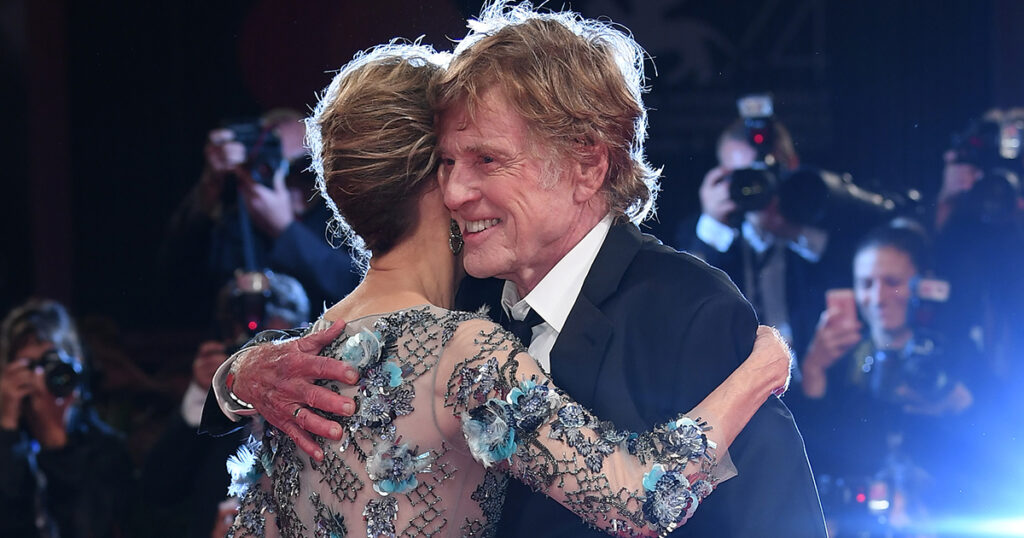
Now, after decades of friendship and five films together, Fonda has revealed the regret she is carrying following his death.
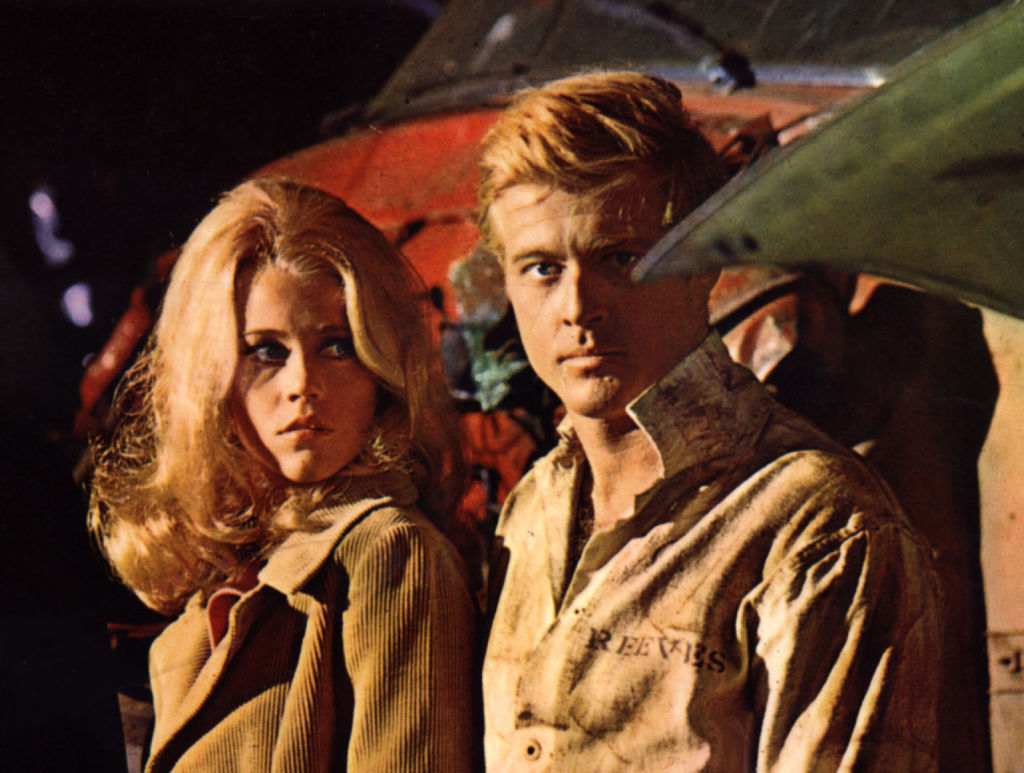
“It hit me hard this morning when I read that Bob was gone,” Fonda said in a statement released through her representative. “I can’t stop crying.”
“He meant a lot to me and was a beautiful person in every way,” she continued. “He stood for an America we have to keep fighting for.”
For generations of moviegoers, Redford represented a particular kind of Hollywood stardom that seemed almost effortless.
With his blond hair, striking blue eyes and understated charisma, he became one of the defining leading men of his generation.
His appeal was apparent long before he became an international star.
Fonda herself remembered the extraordinary reaction Redford could inspire simply by walking through a building.
She recalled seeing him coming down the corridor of an administration building and watching secretaries emerge from their offices just to get a look at him.
“There was nobody more gorgeous than him,” she later remembered.
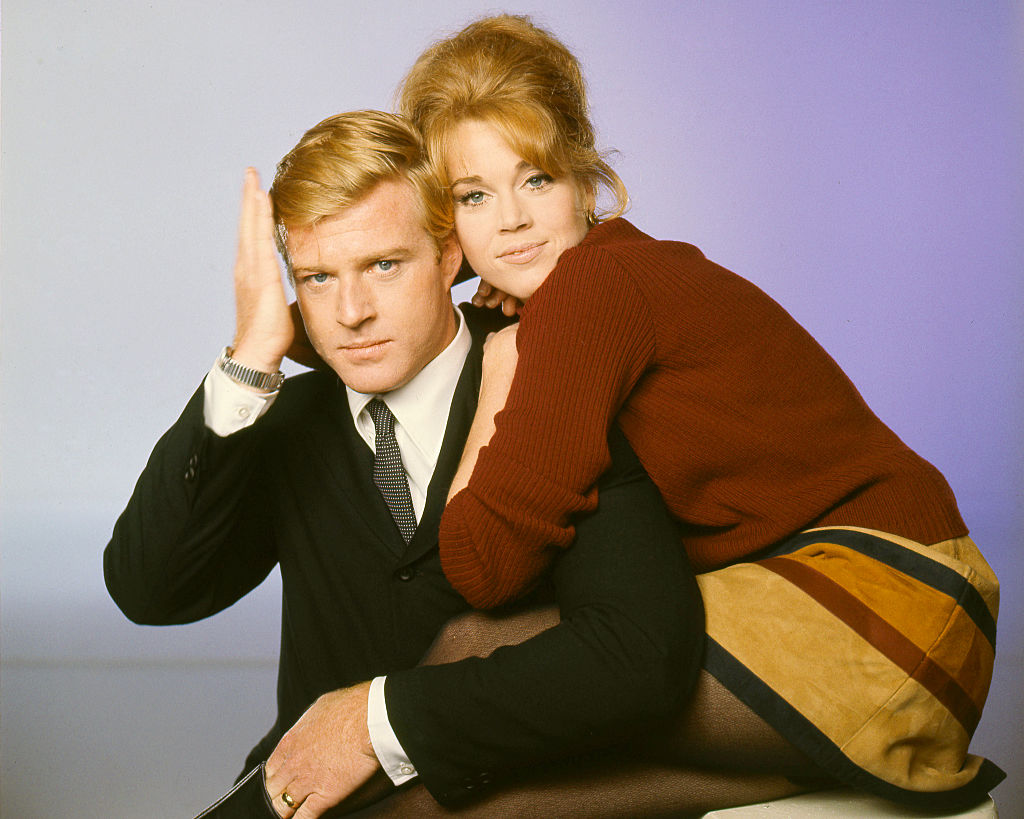
Fonda would eventually discover that working opposite Redford made resisting that charm even harder.
Their screen history stretched across more than half a century, beginning with Tall Story in 1960 and continuing through some of the most memorable films of their careers.
But it was Barefoot in the Park, released in 1967, that cemented them as one of Hollywood’s most magnetic screen pairings.
Fonda played Corie Bratter opposite Redford’s Paul, portraying young newlyweds attempting to navigate marriage in a tiny New York apartment.
The chemistry audiences saw on screen was not entirely imagined.
Years later, Fonda admitted what had been happening behind the scenes.
“I fell madly in love with him on that one,” she wrote while reflecting on their time making the movie.
And Barefoot in the Park was not the only time it happened.
Fonda has said that working with Redford had a predictable effect on her.
“He is so handsome and just such a wonderful human being,” she once said while looking back at a publicity photograph of the pair. “Every movie I made with him, I developed a crush on him.”
Their relationship, however, remained a friendship.
In a 2017 interview with The Guardian, Fonda explained that despite her feelings, nothing romantic happened between them.
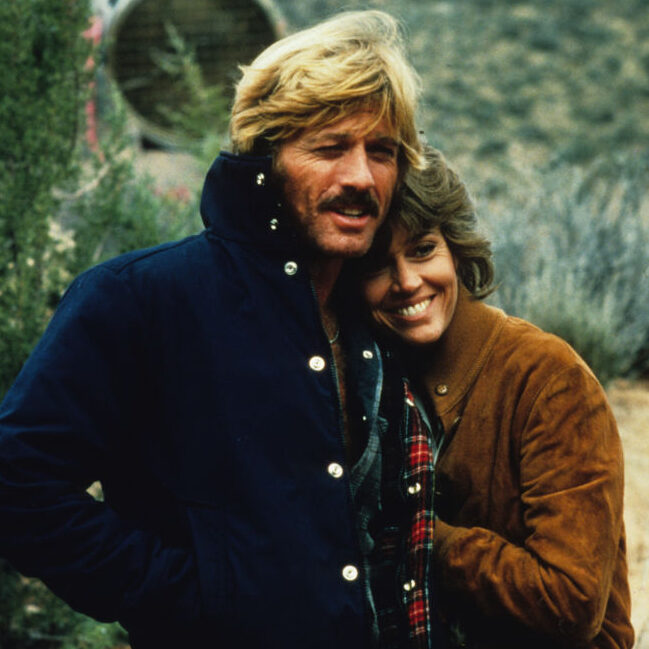
“I was always in love with Robert Redford,” she said, adding that they were both married during the years they worked together.
Their professional partnership continued long after Barefoot in the Park.
They reunited for The Electric Horseman in 1979, once again bringing their natural chemistry to the screen.
Decades later, they returned to each other for what would become an especially poignant final collaboration.
In 2017, Redford and Fonda starred together in Netflix’s Our Souls at Night.
The film followed two widowed neighbors who form an intimate companionship later in life, confronting loneliness, family expectations and the possibility that love can arrive at any age.
For Fonda and Redford, the story carried additional emotional weight because audiences had already watched them grow older across decades of cinema.
The young couple from Barefoot in the Park had become two Hollywood legends portraying people discovering companionship in the later chapters of life.
Fonda joked openly about how much she enjoyed having another opportunity to play Redford’s romantic partner.
“There is eventually a love scene,” she said while promoting the movie. “I’m happy with the love scene. I’m unhappy because it was so short!”
She also laughed about their long history of playing couples.
“I’ve been in bed with him a lot,” she joked, before adding that she “lived” for romantic scenes with Redford.
Even after decades of friendship, apparently one thing had not changed: those famous blue eyes could still make Fonda lose her concentration.
“The only problem with working with Bob is I kind of look into his eyes and I kind of fall into his eyes and forget my dialogue,” she told Ellen DeGeneres in 2017.
She then reflected on how long that attraction had followed her.
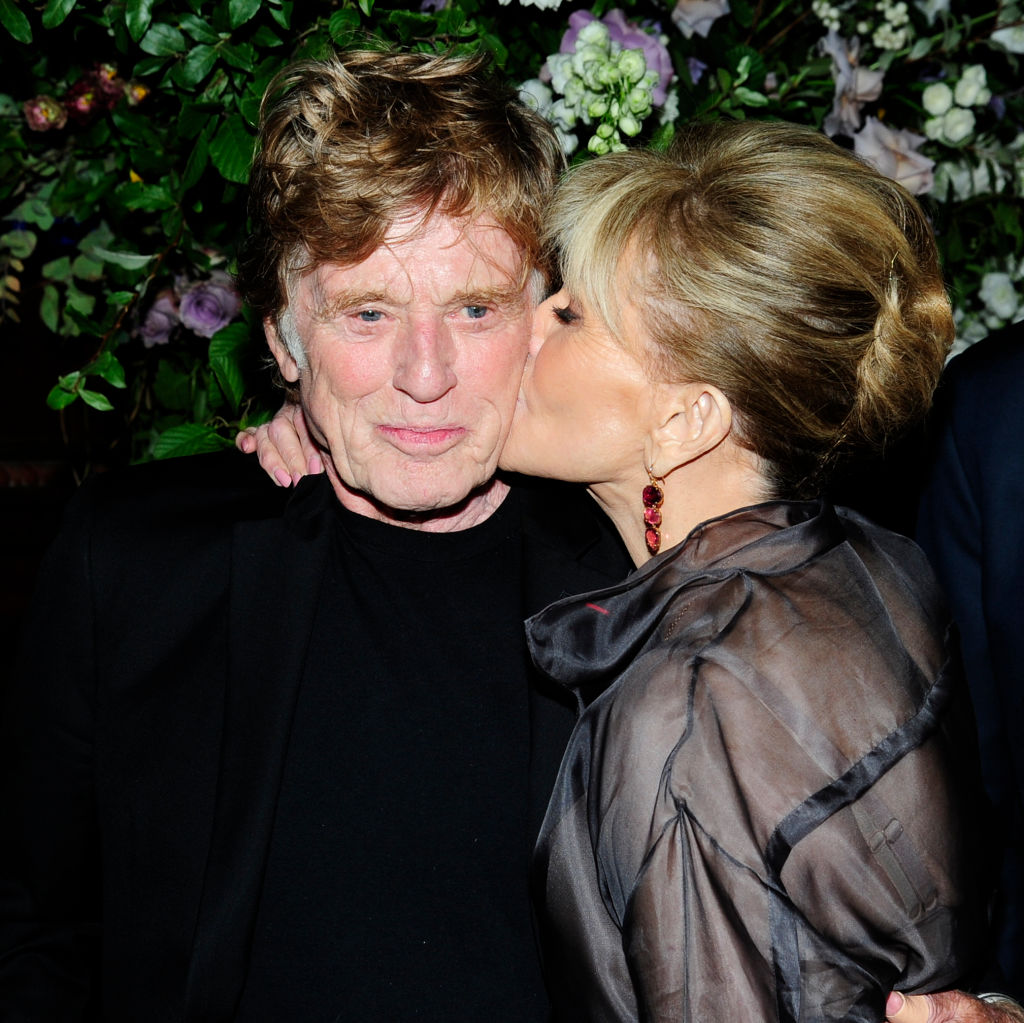
“I realize that I’ve grown up because in the three previous movies, I was always in love with him,” Fonda said. “I fell in love with him every time.”
Redford’s admiration for Fonda was equally clear.
While promoting Our Souls at Night, he described his longtime co-star as “a force.”
“It is an admirable quality,” he said, adding that very few people possessed it in quite the way Fonda did.
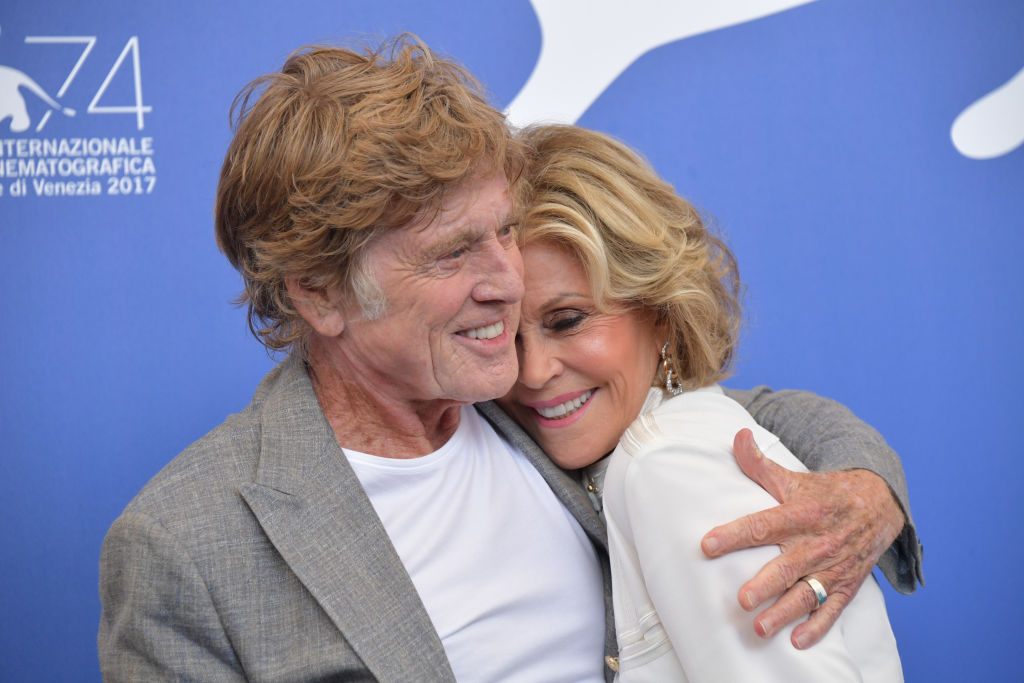
Their reunion became one of the most touching moments of the 2017 Venice Film Festival, where they appeared together to promote the movie.
For longtime fans, seeing Redford and Fonda side by side again felt like watching Hollywood history come full circle.
But Fonda’s tribute following his death has now given those old photographs and interviews an entirely different emotional weight.
In an Instagram post, she shared a photograph of herself with Redford and actor Iain Armitage during the making of Our Souls at Night.
“I am very sad today,” she wrote. “Cried all morning.”
Yet her memories were not solely about grief.
Fonda remembered Redford as someone who could make her laugh, recalling his practical jokes and the many joyful moments they shared.
“I feel so lucky to have made one of his first big movies with him, Barefoot in the Park (I fell madly in love with him on that one) and his last (the aforementioned Souls at Night),” she wrote.
Then her tribute became far more painful.
Fonda revealed that she had been thinking about visiting Redford during the final months of his life.
She wanted to see him.
More importantly, she wanted to make sure everything between them was okay.
But she waited.
And now that opportunity is gone.
“I was wanting to go see him these last few months to make sure we were all right between us but I didn’t act on it soon enough,” she admitted.
Then she shared the lesson his death had left her with.
“When people are our age, late 80s, don’t wait.”
It was a strikingly vulnerable admission from a woman who had known Redford for most of her adult life.
Their relationship had survived fame, marriages, changing careers, political activism, decades apart between projects and the enormous transformations Hollywood experienced during their lifetimes.
Yet Fonda’s final regret was remarkably ordinary.
She wished she had gone to see her friend one more time.
Her farewell was simple.
“Thank you, dearest Bob, for all the pleasure you brought over the years. RIP.”
The words carry even more weight when looking back at their history.
They met when both were still building careers.
They became romantic leads together.
They grew into major Hollywood stars.
They went separate ways and reunited repeatedly.
And more than 50 years after Barefoot in the Park, they found themselves playing lovers once again.
Fonda never tried to hide the fact that Redford had a special place in her heart.
She joked about his looks, admitted to her crushes and openly described falling into his eyes while trying to remember her lines.
But underneath the playful comments was something deeper: affection and admiration that survived for decades.
Redford, meanwhile, became far more than the handsome leading man who first made office workers rush into hallways for a glimpse.
His career grew to encompass acting, directing, producing and a lasting influence on independent filmmaking.
Yet for Fonda, the public legacy and the private memories now seem inseparable.
The world lost Robert Redford the movie star.
Jane Fonda lost Bob.
And perhaps the most heartbreaking part of her tribute is the lesson she says she learned too late.
When someone matters, don’t assume there will always be another visit, another conversation or another chance to make sure everything between you is all right.
After more than five decades of movies, laughter, friendship and unforgettable chemistry, Fonda was left with one final message for the man she once admitted she fell for again and again:
“Thank you, dearest Bob.”
{"post":111672,"page":2,"next":[{"id":111669,"title":"A Mother Cancels the Grocery Fund After a Cruel Remark About Her Starving Child","url":"https:\/\/new24.info\/111669"},{"id":111666,"title":"A Granddaughter Drives Nine Hours and Uncovers a Cruel Secret Hidden Inside a Nursing Home","url":"https:\/\/new24.info\/111666"},{"id":111663,"title":"I Broke My Arm and Asked My Husband to Help with Our 5-Month-Old Twins, but He Said, \u0027Moms Don\u0027t Get Sick Days\u0027 \u2013 So I Taught Him a Lesson He\u0027d Never Forget","url":"https:\/\/new24.info\/111663"},{"id":111660,"title":"My MIL Ordered Me a Dress Four Sizes Too Small for Her Party, Saying, \u0027It\u0027s Time for You to Lose Weight\u0027 \u2013 Karma Didn\u0027t Take Long to Catch up with Her","url":"https:\/\/new24.info\/111660"},{"id":111656,"title":"My Son Came Home Acting Strange Until I Realized Something Was Wrong","url":"https:\/\/new24.info\/111656"},{"id":111654,"title":"Dolly Parton Is Alive and Well as Her Hollywood Walk of Fame Star Undergoes Professional Restoration","url":"https:\/\/new24.info\/111654"},{"id":111651,"title":"A Childhood Vow Kept: The Deep Bond Between Two Friends on a Night to Remember","url":"https:\/\/new24.info\/111651"},{"id":111648,"title":"Bunny Levine, the Librarian Who Became a Late-Blooming Actress, Dies at 97","url":"https:\/\/new24.info\/111648"},{"id":111642,"title":"\u2018Grey\u2019s Anatomy\u2019 Star Eric Dane Dies at 53 After Courageous Battle With ALS","url":"https:\/\/new24.info\/111642"},{"id":111638,"title":"Most Folks Don\u2019t Recognize This Item Anymore","url":"https:\/\/new24.info\/111638"},{"id":111634,"title":"A Legendary Hollywood Career Comes to an End\u2014Fans Remember an Icon","url":"https:\/\/new24.info\/111634"},{"id":111630,"title":"Dolly Parton Dies at 80: Doctor Shares Cancer Warning Signs You Shouldn\u2019t Ignore","url":"https:\/\/new24.info\/111630"},{"id":111626,"title":"My 13-Year-Old Son Took a Dishwashing Job Without Telling Me \u2013 Then His Boss Called and Asked, \u0027Do You Know What He Does with Every Paycheck?\u0027","url":"https:\/\/new24.info\/111626"},{"id":111624,"title":"A Humiliated Artist Abandoned With an Impossible Restaurant Bill Discovers Her Work\u2019s True Worth","url":"https:\/\/new24.info\/111624"},{"id":111621,"title":"Only Young Eyes Can See the Man in This Picture!","url":"https:\/\/new24.info\/111621"},{"id":111616,"title":"Husband Abandoned My Son To Take His Own Children On Vacation","url":"https:\/\/new24.info\/111616"},{"id":111609,"title":"Clever Wife Secures Eight Million Dollars Before Deceitful Husband Lands Abroad","url":"https:\/\/new24.info\/111609"},{"id":111610,"title":"I Went Into Labor Early, so My MIL Rushed Me to the Hospital \u2013 But What the Nurse Quietly Handed Her Made My Stomach Drop","url":"https:\/\/new24.info\/111610"},{"id":111605,"title":"Quiet Suburban Mother Uses Hidden Fighter Pilot Past To Save Hijacked Flight","url":"https:\/\/new24.info\/111605"},{"id":111596,"title":"Fans of Happy Days will love these little-known stories from the beloved series","url":"https:\/\/new24.info\/111596"}]}