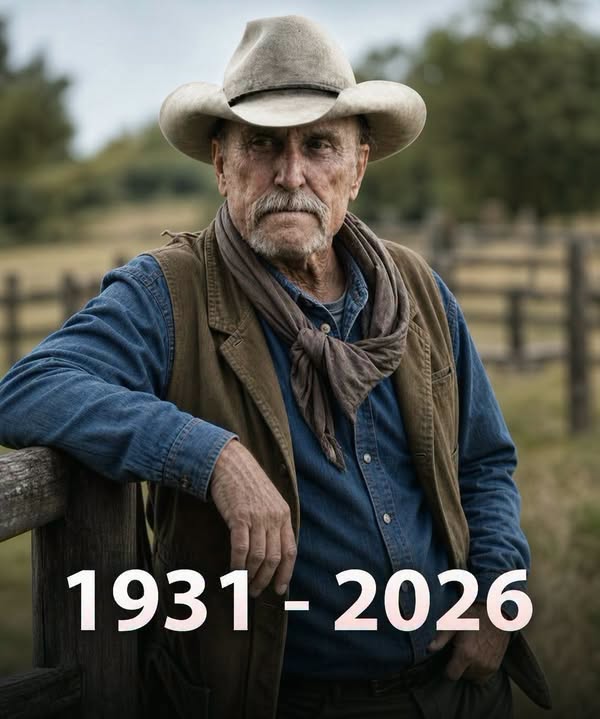
His gift was often quieter than that—a pause, a look, a slight change in expression that suggested an entire history behind the character.
That quality was unmistakable in *The Godfather*, where he played Tom Hagen, the calm and calculating consigliere of the Corleone family. Surrounded by explosive personalities, Duvall gave Hagen authority through restraint. The performance earned him his first Academy Award nomination and helped establish him as one of Hollywood’s finest character actors.
Many remarkable roles followed.
In *Apocalypse Now*, he became the fearless and eccentric Lt. Col. Bill Kilgore. In *The Great Santini*, he portrayed the intimidating military father Bull Meechum. And in *Tender Mercies*, Duvall played Mac Sledge, a troubled country singer quietly attempting to rebuild his life.
That performance earned him the Academy Award for Best Actor.
Despite the enormous differences between those characters, Duvall brought the same quality to each of them: authenticity.
His characters rarely felt like performances. They seemed to arrive on screen carrying lives that had begun long before the camera started rolling.
Across his career, Duvall worked extensively in film, television, and theater, earning seven Academy Award nominations and winning once. He remained active well into old age, continuing a career that had begun with his memorable film debut as Boo Radley in *To Kill a Mockingbird*.
His wife, Luciana Duvall, remembered the commitment he brought to his work, saying that he gave himself fully to his characters and to the human truth behind them.
Following his death, fellow actors and filmmakers including Al Pacino and Francis Ford Coppola paid tribute to his extraordinary talent and the authenticity that defined his performances.
Awards tell only part of Robert Duvall’s story.
Tom Hagen. Mac Sledge. Bill Kilgore. Bull Meechum. Gus McCrae.
Decades after those performances were filmed, the people he portrayed still seem remarkably alive.
Perhaps that is the clearest measure of his talent.
Robert Duvall didn’t simply play memorable characters.
He made audiences believe those people had existed before we met them—and would somehow continue existing after the screen went dark.