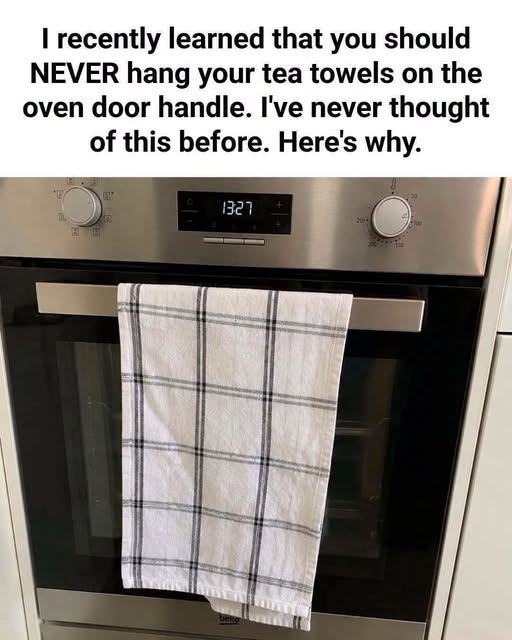
that can lead to serious accidents. When a towel is left hanging against an oven door, it is positioned in a high-traffic zone that is susceptible to extreme heat fluctuations. As the oven warms up during the cooking process, the fabric can gradually absorb that heat, creating a potential fire hazard. Furthermore, the loose, dangling nature of the fabric makes it a prime candidate for snagging on clothing, cookware, or the hands of someone moving quickly through the kitchen.
If a person is carrying a heavy, hot pan and the towel catches on their sleeve or the handle, the resulting jolt can cause a dangerous spill, severe burns, or the accidental dropping of hot dishes. The risk is compounded if the towel is positioned near active stovetop burners, where stray flames or intense radiant heat can ignite synthetic or cotton fibers in an instant. Maintaining a clear, safe distance between flammable materials and heating elements is a fundamental rule of fire prevention.
Beyond the immediate risk of ignition, there is the persistent issue of physical clutter in a workspace that requires precision. When you reach for a pot or a baking sheet, your movements are often rapid and focused on the task at hand. A towel hanging from an oven handle can easily become an obstruction, catching on the edge of a pan or getting tangled in the oven door mechanism. This creates a scenario where a simple kitchen task becomes a potential trip or burn hazard.
Instead of relying on the oven handle, consider installing sturdy hooks on the side of your cabinetry or on a nearby wall. These designated spots ensure that your towels remain easily accessible while staying completely clear of heat sources. Another practical solution is to keep a clean, folded towel on a safe, cool countertop away from the range. For those who prefer to have a cloth on their person, wearing an apron with a dedicated pocket provides a convenient way to carry a towel without exposing it to the oven.
It is also wise to regularly inspect your kitchen textiles for signs of wear, as frayed edges are even more prone to catching on objects or drifting toward heat. Small, intentional changes to your kitchen layout can foster a much safer environment for everyone. While the habit of hanging a towel on the oven door may feel like a natural part of your routine, the potential consequences of a fire or a kitchen spill are far too great to overlook. By choosing to store your linens in cool, secure locations, you eliminate a common source of clutter and danger.
Taking these few seconds to organize your space properly is a simple yet effective way to protect your home and ensure that your cooking experience remains focused on the meal rather than the risks. Ultimately, safety in the kitchen is built upon these small, consistent habits that prioritize caution and awareness over fleeting convenience. By keeping your towels tucked away from heat, you create a more functional and secure environment for your daily culinary tasks, ensuring that your kitchen remains a place of comfort rather than a site of preventable accidents. The cumulative effect of these minor adjustments is a significantly reduced risk profile for your household. Every time you choose to hang a towel on a designated wall hook rather than the oven handle, you are making a conscious decision to value safety over momentary ease. This level of mindfulness is what separates a chaotic, hazardous kitchen from one that is well-managed and secure. Practical conclusion: Always prioritize safety by keeping all flammable kitchen textiles stored on wall hooks or in cool, designated areas well away from the oven, stovetop, and any hot cookware to prevent accidental fires and physical injuries.