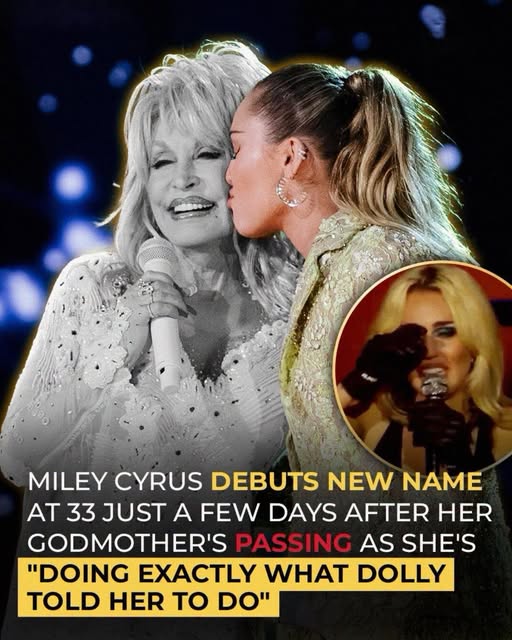
The speculation began shortly after Cyrus posted a tribute to the late icon, in which she emphasized that while some aspects of their bond would remain private, she intended to follow Parton’s guidance to feel the weight of the loss, express it through music, and remain strong. On August 30, just days after the announcement of Parton’s death, observers noticed that the singer’s official website had been updated to feature a striking, red-toned photograph accompanied by the solitary word, “MILEY.” This minimalist aesthetic, combined with a similarly stylized image shared on social media, has fueled widespread conjecture that the artist is moving toward a mononymous professional identity.
For those familiar with the singer’s history, the potential shift is particularly resonant. Born Destiny Hope Cyrus in 1992, the performer legally changed her name to Miley Cyrus in 2008. The nickname “Miley” originated from her childhood, when family members began calling her “Smiley Miley” due to her constant, cheerful disposition. Throughout her career, she has been known for her ability to reinvent her sound and visual style, moving from the pop-centric world of Hannah Montana to country, rock, and experimental projects. Fans are now debating whether this latest update is merely a temporary marketing choice for an upcoming creative project or a permanent evolution of her artistic brand.
The timing of the website update has invited deep emotional analysis from her audience. Many followers have suggested that if a name change is indeed underway, it could serve as a symbolic tribute to the mentorship and influence of Parton, who encouraged her goddaughter to embrace constant growth. The two shared a long, well-documented history that transcended their celebrity status, beginning when Parton befriended the Cyrus family during Billy Ray Cyrus’s early career success. Over the decades, their relationship evolved from a playful, on-screen dynamic during the Hannah Montana era into a profound, trusted partnership between two artists who valued the necessity of personal and professional evolution. This evolution was marked by mutual respect and a shared understanding of the pressures inherent in the entertainment industry.
Public reaction has been varied, with many fans viewing the potential move as a bold, fitting step for an artist whose career has been defined by transformation. Some have pointed to the singer’s recent public appearances as further evidence of a new chapter; she was photographed arriving at a recording studio in Los Angeles shortly after the news of Parton’s death, appearing subdued and wearing a lavalier microphone, which led to further theories about upcoming content. Additionally, eagle-eyed fans have scrutinized photographs for potential tattoos or other physical tributes to her godmother, though no such details have been confirmed by the singer or her representatives. The curiosity surrounding these images highlights the intense scrutiny that follows high-profile figures during their most vulnerable moments.
Despite the intense speculation circulating across social media platforms, there has been no official confirmation from Miley Cyrus’s team regarding a name change or the nature of any upcoming projects. The simplicity of the “MILEY” branding remains open to interpretation, and it is common for major artists to adopt temporary, minimalist aesthetics to build anticipation for new music or creative endeavors. Whether this represents a permanent departure from her established professional name or a transient phase in her artistic journey remains to be seen. The artistic community often utilizes such shifts to signal a departure from previous eras, and the “metamorphosis” mentioned by Cyrus in her tribute provides a thematic framework that fans are eager to explore further as she processes her loss.
As of now, the situation remains a subject of intense fan discussion rather than a confirmed professional pivot. The singer has maintained a relatively quiet public profile since the loss of her godmother, focusing on her creative output while navigating the complexities of public mourning. For an artist who has consistently challenged expectations and redefined her public persona, the current uncertainty serves as a testament to her enduring influence and the deep, personal connection her audience feels toward her journey. The latest known status of her professional identity remains unchanged in any legal capacity, leaving the public to wait for further clarity from the artist herself regarding the next phase of her career.