Parton was laid to rest on August 28, 2026, three days after her death at 80 following what her representatives described as a brief battle with cancer.
Her funeral in Nashville was reportedly small and private, attended primarily by immediate family members and those closest to her.
For someone whose career had touched millions of people, that intimacy surprised some fans.
But perhaps the most revealing detail concerned the music.
Parton possessed one of the most recognizable catalogs in American popular music. She could easily have filled an entire memorial service with songs she had written herself.
There was “Jolene.”
“Coat of Many Colors.”
“9 to 5.”
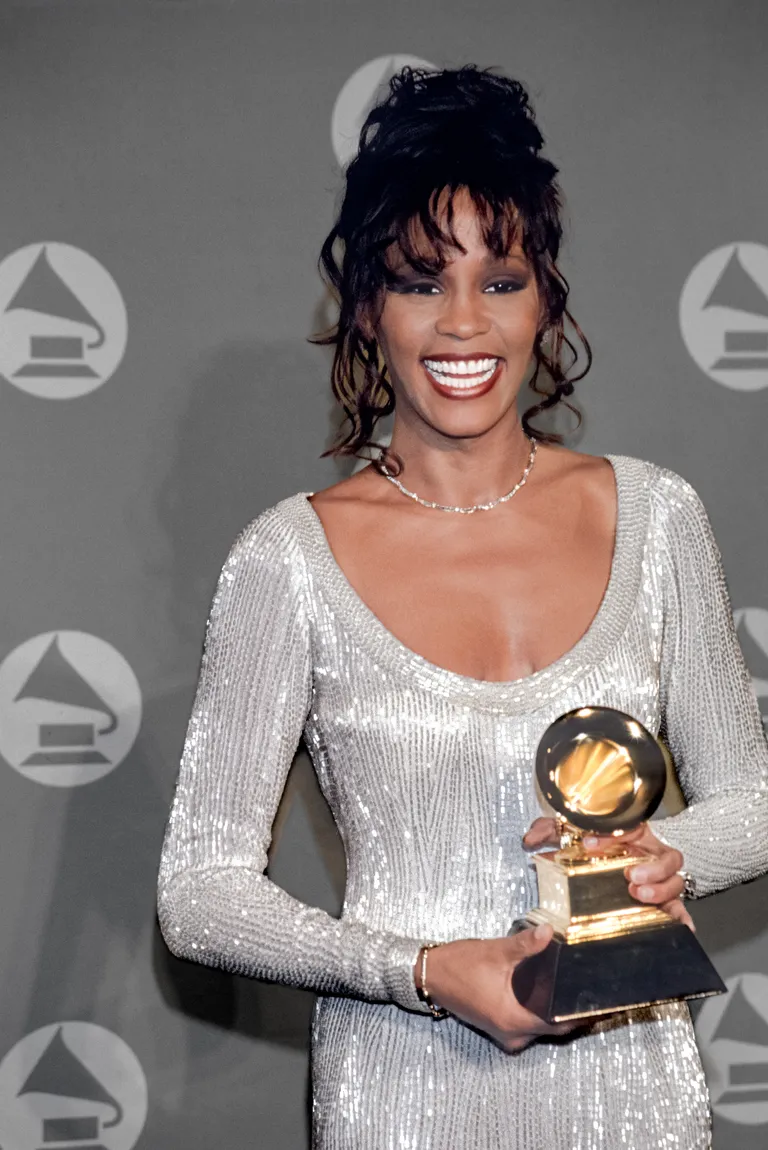
And, of course, “I Will Always Love You,” a song so enduring that it became an international phenomenon twice — first through Parton and later through Whitney Houston.
Yet the song reportedly associated with Parton’s own funeral wasn’t one of hers.
Instead, she looked toward the gospel tradition that had been part of her life long before Nashville, Hollywood or international superstardom entered the picture.
Parton was reportedly laid to rest at Woodlawn Memorial Park and Mausoleum in Nashville, where her husband of nearly six decades, Carl Dean, had been interred following his death in March 2025.
The cemetery reportedly prepared the area with visitors in mind, including velvet ropes and a guest book where admirers could leave messages.
It allowed fans to participate in mourning Parton while still protecting the private ceremony her family had chosen.
That balance seemed particularly appropriate for someone who had spent most of her adult life negotiating the boundary between Dolly Parton the superstar and Dolly the private person.
Her final resting place also contained deeply personal reminders of the life she had built with Dean.
A memorial plaque bearing both of their names had already been installed following his death.
Rather than simply listing names and dates, the marker reportedly included details connected to their story.
Among them were engravings depicting two houses, including Parton’s childhood home in Sevier County, Tennessee.
There was also the couple’s wedding date and an image of intertwined wedding rings.
For a woman who could have chosen almost any symbol to represent her life, those details were remarkably intimate.
Home.
Marriage.
The mountains where everything began.
Parton married Dean in 1966, before her transformation into one of the most recognizable entertainers in the world was complete.
As her fame grew, Dean largely moved in the opposite direction.
He avoided red carpets and celebrity events, preferring a quiet life away from his wife’s enormous public career.
That difference became one of the defining features of their marriage.
Parton belonged to the world when she stepped onto a stage.
Dean largely remained hers alone.
Their marriage lasted nearly 60 years.
So when Parton was ultimately laid to rest beside him, there was a sense of the story returning to where it had always been anchored.
Photographs reportedly taken around the private funeral added another layer to that feeling.
Rather than showing a massive celebrity gathering, the images appeared to capture relatives and mourners arriving, embracing one another and quietly sharing their grief.
The apparent simplicity surprised some people online.
“This feels so wrong. Bless her soul,” one commenter wrote.
Another admitted expecting “a Big service with Celebrities and Leaders paying their last respects.”
Others wondered whether famous people particularly close to Parton had attended.
But those reactions also demonstrated something important.
The public knew Dolly Parton as an institution.

Her family had lost a person.
Behind the platinum hair, elaborate costumes and decades of performances was someone’s wife, sister, aunt and loved one.
And for a few hours, the people closest to her apparently chose to mourn that woman privately.
Then came the reported detail about the music.
According to the New York Post, the gospel song connected with Parton’s funeral was “If We Never Meet Again (This Side of Heaven),” written by prolific gospel songwriter Albert E. Brumley.
The song’s message is centered on earthly separation and the Christian hope that loved ones who say goodbye in this life will eventually be reunited in heaven.
It was a remarkably fitting choice for Parton.
Her Christian faith had remained an important part of her identity throughout her career, even as her music and celebrity reached audiences far beyond the religious community in which she had been raised.
The song also carried obvious personal resonance.
By the time of her death, Parton had experienced profound losses within her own family, most significantly the death of Dean.
Her parents had been gone for years.
Other relatives and friends had also passed.
Against that background, choosing a gospel song about meeting loved ones again doesn’t sound like the decision of a superstar constructing one final public moment.
It sounds considerably more personal.
Brumley himself occupies an important place in American gospel history.
He wrote numerous songs that became standards, including “I’ll Fly Away,” “Turn Your Radio On” and “I’ll Meet You in the Morning.”
Although those songs emerged from a particular religious and musical tradition, they eventually traveled far beyond it.
“I’ll Fly Away,” especially, became one of America’s most widely recognized gospel songs and has been performed by musicians from dramatically different backgrounds and genres.
Black gospel performers embraced it.
Country singers recorded it.
Church choirs performed it.
Artists including Aretha Franklin brought their own interpretations to Brumley’s work.
Parton herself had performed “I’ll Fly Away,” making the reported selection of another Brumley composition at her farewell even more fitting.
That ability of a song to cross cultural and musical boundaries also mirrored something remarkable about Parton’s own career.
She was unquestionably a country songwriter.
But her songs refused to remain inside country music.
Nothing illustrates that better than “I Will Always Love You.”
Parton originally wrote the song as a deeply personal farewell to Porter Wagoner when she decided to leave their professional partnership.
She recorded it herself and turned it into a country classic.
Years later, Whitney Houston transformed the same composition into a soaring pop and R&B ballad for The Bodyguard.
Houston’s version became one of the most recognizable recordings in modern music history.
When Houston won a Grammy for the performance in 1994, Parton was there to present the award.
It was an extraordinary example of a song moving between two artists, two genres and two audiences while retaining its emotional core.
Perhaps that helps explain why Parton’s reported funeral selection feels so appropriate.
For her, a great song didn’t have to belong exclusively to the person who wrote it.
It simply had to say something true.
Funeral music can often reveal something surprisingly intimate about a famous person.
When the awards, career achievements and public image disappear, the song chosen for a final goodbye can communicate what mattered underneath all of it.
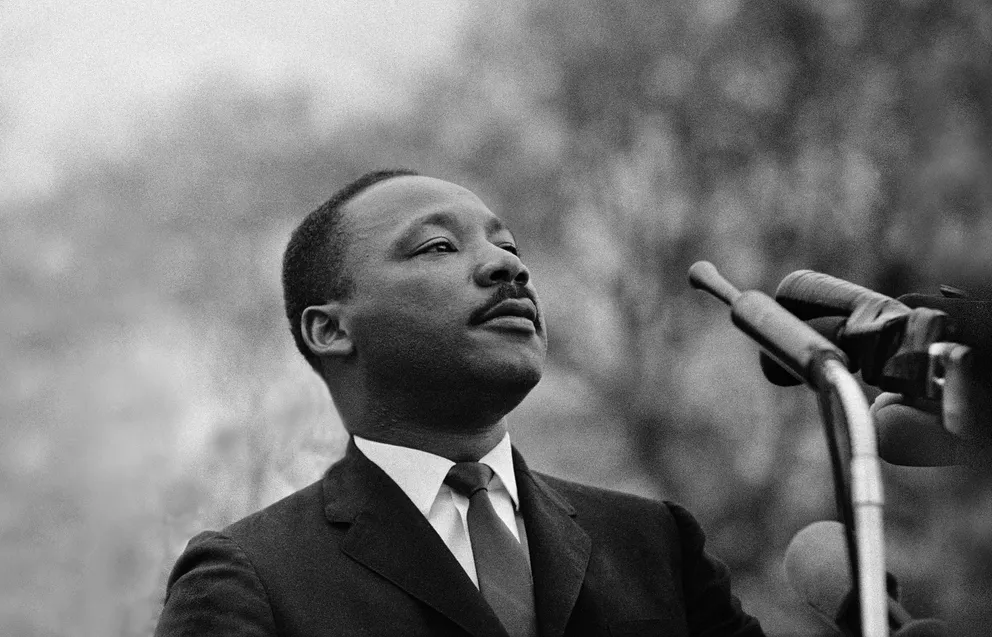
Martin Luther King Jr. famously wanted “Take My Hand, Precious Lord” associated with his funeral, with Mahalia Jackson performing the gospel favorite at his service.
Decades later, Aretha Franklin’s own funeral brought together gospel, soul and popular music as artists honored a woman whose career had crossed many of the same musical boundaries.
For Parton, the reported choice of an old gospel song feels equally revealing.
She had spent her entire career writing songs.
Yet apparently she didn’t need one of her own compositions to speak for her at the end.
The message mattered more than authorship.
That fits with the story Parton told about herself throughout her life.
She never attempted to hide where she came from.
Born into a large family in rural East Tennessee, Parton grew up in circumstances dramatically removed from the wealth she would eventually accumulate.
Her Smoky Mountain childhood became part of her songwriting mythology because, for Parton, it wasn’t simply mythology.
Those mountains remained home.
Her family remained central to her identity.
And the faith she encountered as a child never entirely disappeared beneath the glamour she later constructed around herself.
Even after becoming wealthy, Parton maintained a powerful connection to the childhood home that had inspired so many of her stories and songs.
She eventually reacquired the property and restored the cabin to resemble the home she remembered.
That makes the image reportedly engraved on her memorial marker especially meaningful.
The journey had taken Dolly Parton almost unimaginably far.
From a small mountain home to Nashville.
From Nashville to television.
From country radio to Hollywood.
From Hollywood to international fame.
From poverty to enormous financial success.
Yet when symbols were chosen to represent her alongside the husband with whom she had shared nearly six decades, one of them pointed right back toward that little house.
The same is true of the music reportedly connected with her funeral.
She could have selected a song synonymous with fame.
Instead, the choice pointed backward toward church, gospel music and a belief in seeing loved ones again.
That doesn’t diminish the enormous career Parton built.
If anything, it places that career into perspective.
Her public life was filled with extraordinary achievements.
She wrote songs heard around the world.
She starred in movies.
She built businesses.
She created Dollywood.
She became a philanthropist whose Imagination Library put books into the hands of millions of children.
She influenced generations of singers who grew up regarding her as both an artist and an example of how to survive fame without surrendering one’s identity.
But none of those achievements could make the loss of Carl Dean less personal.
None could replace family.
And none apparently became the central focus when the time came for her own goodbye.
That is why the intimate nature of the funeral photographs shouldn’t necessarily seem surprising.
The absence of a giant Hollywood spectacle didn’t make the farewell smaller.
It made it private.
The public had spent decades celebrating Dolly Parton the entertainer.
Her family needed an opportunity to say goodbye to Dolly.
And perhaps that distinction is the most revealing part of all.
The woman who built one of the biggest personalities in entertainment reportedly left behind a farewell that was remarkably quiet.
A husband waiting beside her final resting place.
A memorial marker containing their wedding rings and an image of home.
A small circle of grieving relatives.
And an old gospel song carrying the hope that goodbye isn’t necessarily forever.
After all the rhinestones, platinum records, flashing cameras and standing ovations, Dolly Parton’s final chapter appears to have returned to where her story began.
Faith. Family. Music. Love. And home.
{"post":111388,"page":2,"next":[{"id":111383,"title":"Dolly Parton\u0027s Statement Just Four Days Before Her Passing at 80 \u2013 Details","url":"https:\/\/new24.info\/111383"},{"id":111378,"title":"Why Refusing To Pay For Groceries Saved My Golden Retirement Years","url":"https:\/\/new24.info\/111378"},{"id":111374,"title":"Unexpected Funeral Announcement Reveals Secret Trust Designed To Save Our Family","url":"https:\/\/new24.info\/111374"},{"id":111372,"title":"Remembering the Private Devotion of Dolly Parton, the Beloved Matriarch Known to Her Family as Granny","url":"https:\/\/new24.info\/111372"},{"id":111369,"title":"A Morning Discovery on the Shore Leaves a Walker Searching for Answers","url":"https:\/\/new24.info\/111369"},{"id":111366,"title":"The Heavy Inheritance: Uncovering the Silent Relics of a Forgotten Family Home","url":"https:\/\/new24.info\/111366"},{"id":111363,"title":"Public Reaction Divides Over Allie Colleen\u2019s Personal Tribute Featuring Her Father","url":"https:\/\/new24.info\/111363"},{"id":111360,"title":"Uncovering the Mystery of Everyday Objects Found Tucked Away in Your Home","url":"https:\/\/new24.info\/111360"},{"id":111357,"title":"The Unstoppable Grace of Cyd Charisse: From Polio Survivor to Hollywood Legend","url":"https:\/\/new24.info\/111357"},{"id":111354,"title":"Ten Years of Building a Life Together Ended When I Finally Asked for the Truth","url":"https:\/\/new24.info\/111354"},{"id":111348,"title":"Hidden Phone Notes Exposed My Mothers Cruel Treatment Of My Pregnant Wife","url":"https:\/\/new24.info\/111348"},{"id":111345,"title":"My 16-Year-Old Daughter Saved $4,000 All Summer for Her First Car \u2013 Then She Told Me Who She\u2019d Given It All To, and I Couldn\u2019t Say a Word","url":"https:\/\/new24.info\/111345"},{"id":111342,"title":"I Married the Man of My Dreams \u2013 But the Morning After Our Wedding, I Found Something in His Tuxedo Pocket That Made Me Scream","url":"https:\/\/new24.info\/111342"},{"id":111340,"title":"Miley Cyrus Updates Official Website Branding Amidst Speculation of a New Musical Era","url":"https:\/\/new24.info\/111340"},{"id":111333,"title":"My Daughter Was the Only Kid Not Invited to Her Best Friend\u0027s Sweet 16 \u2013 When I Called to Ask Why, She Whispered, \u0027You\u0027d Better Ask Your Husband\u0027","url":"https:\/\/new24.info\/111333"},{"id":111331,"title":"A Mother\u2019s Quiet Reclamation: Why I Locked the Gates to My Life and My Legacy","url":"https:\/\/new24.info\/111331"},{"id":111328,"title":"Understanding Connective Tissue in Ground Beef to Avoid Unnecessary Kitchen Anxiety and Food Waste","url":"https:\/\/new24.info\/111328"},{"id":111325,"title":"The Unseen Architect: Discovering a Hidden Life Form Within the Quiet Confines of a Shared Home","url":"https:\/\/new24.info\/111325"},{"id":111321,"title":"My Daughter Asked Me to Organize Her Gender Reveal for 50 Guests \u2013 10 Minutes Before It Started, the Bakery Told Me Not to Serve the Cake","url":"https:\/\/new24.info\/111321"},{"id":111318,"title":"Miley Cyrus debuts new name following a difficult week","url":"https:\/\/new24.info\/111318"}]}