That is what makes those final comments so difficult to revisit now.
Those closest to Parton reportedly knew she had been dealing with health problems, but according to TMZ, her family and friends believed she would recover. Her death at 80 therefore came as a shock even to people within her inner circle.
Parton died on Tuesday, August 25, 2026, at Vanderbilt-Ingram Cancer Center in Nashville. Her representatives said she had experienced a “brief battle with cancer,” although the specific type was not publicly disclosed.
The news immediately triggered an enormous wave of grief across the entertainment world.
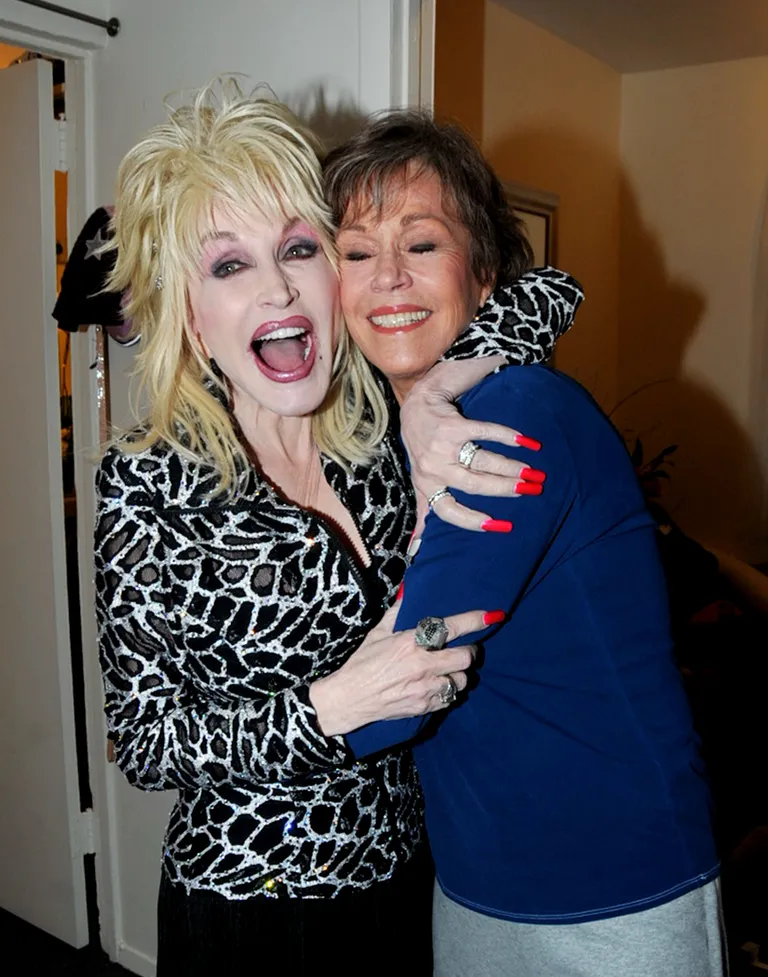
Jane Fonda, who starred alongside Parton in the beloved 1980 comedy 9 to 5, said she was “devastated” by the loss of her longtime friend. Fonda remembered Parton as extraordinarily generous, funny, playful and loyal, writing that her presence would remain woven into the lives and hearts of those who loved her.
Reba McEntire offered another emotional farewell, reflecting on their friendship and declaring that there would “never ever be another” Dolly Parton.
But the announcement itself came from someone much closer to home.
Parton’s nephew Bryan Seaver shared the news in an emotional Instagram video, identifying himself as the singer’s head of security for more than two decades.
According to Seaver, the video was something Parton herself had asked him years earlier to prepare, long before he was ready to think seriously about the day it might actually be needed.
He described delivering the announcement with both enormous pride and deep sadness.
The sadness, he suggested, belonged to those Parton had left behind.
Only four days before her death, however, Parton herself had been speaking very differently.
She was looking forward.
In what would become her final interview, Parton spoke candidly with People about the health problems she had been experiencing.
She explained that some of her own medical concerns had gone unattended while she concentrated on caring for her longtime husband, Carl Dean.
“As I’ve shared in video messages throughout the past year, I am dealing with some health issues that I just didn’t pay attention to when I was watching over Carl,” she said.
Dean, whom Parton married in 1966 and famously protected from the glare of celebrity life, died in March 2025.
Parton acknowledged that serious health challenges weren’t entirely unfamiliar to her.
“Back in the early ’80s, I was down for several months with female issues, and I was struggling with my weight at the time too, so it’s not like I haven’t been through hard times with my health,” she explained.
Even while discussing something as serious as her physical condition, Parton couldn’t resist making a joke.
She reflected on how dramatically celebrity culture had changed since the beginning of her career, particularly because social media allows rumors and health updates to spread almost instantly.
“I used to joke that I was the Queen of the Tabloids,” she said, “but now I guess I can say I’m the Queen of Social Media AI!”
Then the conversation became more revealing.
“Seriously, though, even though I’m still healin’, I’m still workin’!” Parton said.
Those words alone demonstrated the determination that had characterized her career.
But what she said next has taken on considerably greater emotional weight.
“You know me — as I’ve often said — I’ve dreamed myself into a corner,” Parton explained. “I still have so many things I want to achieve, so I’m gonna keep on working as long as I can to see everything come to life.”
Four days later, she was gone.
There was nothing about those words that sounded like someone preparing to say goodbye.
Parton was still imagining projects.
Still working.
Still expecting to recover.
Still thinking about ideas she wanted to turn into reality.
That determination had also been visible just two months earlier, when Parton unexpectedly appeared before fans in Tennessee.
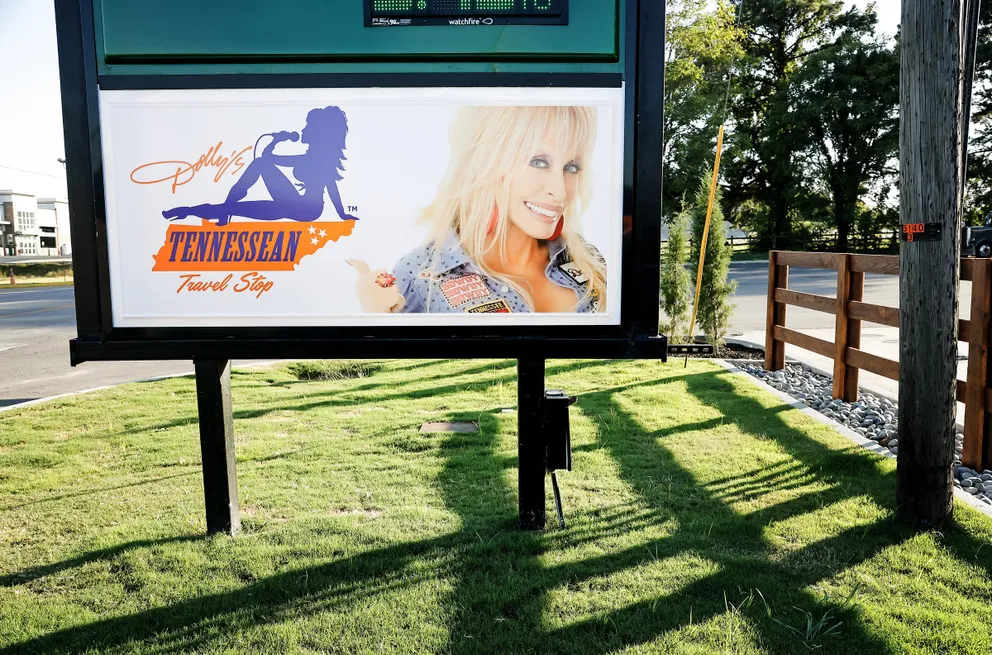
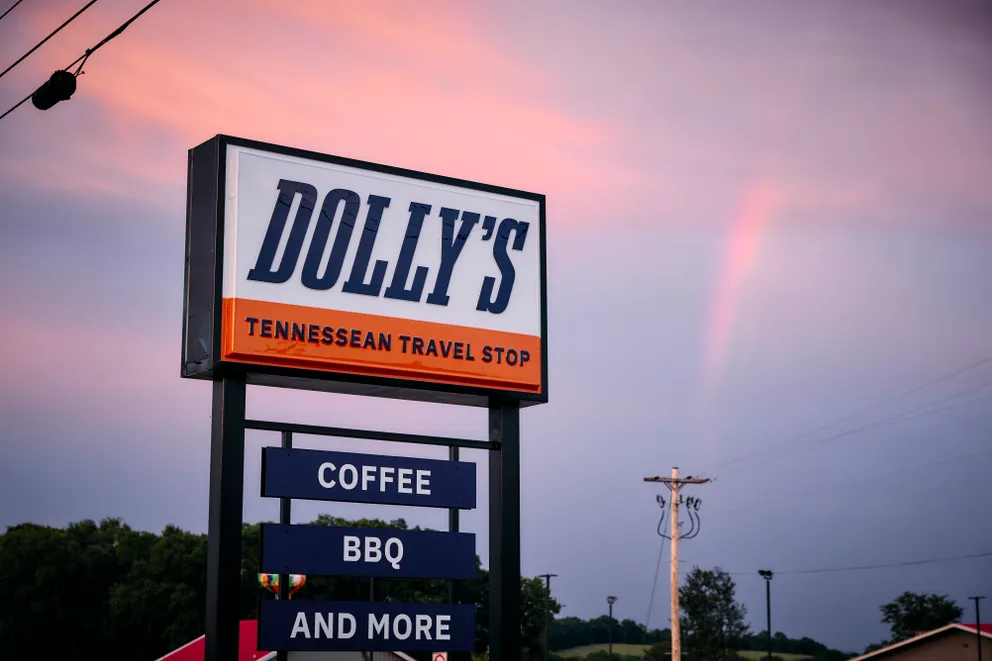
On June 24, she attended the ribbon-cutting ceremony for Dolly’s Tennessean Travel Stop outside Cornersville.
Her appearance apparently surprised many of the people gathered there because she had not been publicly announced as an attendee.
Amanda Bell, Miss Grand Tennessee 2026, later recalled the excitement when Parton suddenly appeared.
Other witnesses remembered something even more significant in hindsight.
Stacy Best, a Nashville concert reviewer and content creator, said Parton seemed “very happy” and remained her usual funny self.
Best also recalled that Parton appeared to be “not in pain at all.”
And visually, there was no mistaking who had arrived.
Parton was dressed in one of her characteristically polished outfits and, remarkably, was still wearing her signature high heels.
Bell noticed that Parton wasn’t moving particularly quickly, but the stilettos stood out.
Even at 80 and while experiencing health problems, Dolly apparently had no intention of abandoning one of the most recognizable elements of her style.
Bell remembered Parton as her familiar “happy, spunky self,” joking with the crowd during her brief remarks.
The appearance didn’t last particularly long, and the Tennessee weather was extremely hot that day, but Bell later expressed gratitude that she had unexpectedly been given the opportunity to see Parton in person.
Brooks Ramsey of Smoky Mountain Faith, Food and Fun offered a similar account.
Parton, he said, “seemed fine.”
“She talked just like she normally did,” Ramsey recalled. “She was very ‘Dolly’ that day.”
Parton wasn’t simply making a ceremonial appearance either.
According to Ramsey, she filmed promotional material inside the store, suggesting she remained actively involved with the project.
There was, however, one detail he noticed.
Her handlers were being careful with her.
Once Parton stepped before the crowd, though, the personality everyone recognized immediately returned.
“I wanted to welcome all of you and say thank you for coming,” she told those gathered. “We’re very excited about our truck stop, The Tennessean Travel Stop.”
Parton explained that she had spent much of her life traveling on the road, making a travel stop an appropriate addition to her growing collection of business ventures.
Then came the joke.
“I’m sure some of you want to know why I wanted a truck stop,” she told the crowd. “Well, I couldn’t leave it to beavers. I had to throw my spurs in there myself!”
It was a playful reference to Buc-ee’s and its famous beaver mascot.
Parton quickly clarified that she wasn’t interested in competing with anyone.
Instead, she simply wanted the Tennessean Travel Stop to offer visitors everything they might need.
At the time, it appeared to be another ordinary Dolly Parton moment: a business launch transformed into entertainment because Dolly happened to be holding the microphone.
Within weeks, however, her health began interfering more visibly with her schedule.
Parton canceled a planned August 14 appearance at Dollywood, explaining in a video message that she was experiencing “a few little health issues.”
She said she could sometimes become dizzy and dehydrated.
Her doctors had given her clear instructions.
She “ain’t traveling this week,” Parton joked.
Even that message sounded reassuring because she delivered it with the same humor that had carried her through difficult moments throughout her life.
Five days later, on August 19, Parton appeared virtually while accepting the Academy of Country Music Poet’s Award at the ACM Honors.
Again, her message wasn’t about illness.
It was about songwriting.
“Every dream I ever had and all the dreams that I’ve been able to see come true in life, well, they all started with a song,” Parton said.
She described songwriting as her therapy, her release and her joy.
“Songwriting has been a gift from God that has allowed me to touch people with words and music,” she added.
It would become one of her final public messages.
Another video, released only weeks before her death, has also acquired an unintended poignancy.
On August 11, the official Instagram account for the Dolly musical shared Parton’s answer to a fan who wanted to know whether she intended to attend performances of the Broadway production beyond opening night.
Parton said she planned to spend as much time in New York as possible while work on the show continued.
She couldn’t promise to be there as frequently as she had been during its Nashville development, when she said she had been involved almost every day.
But she intended to participate.
“I will be there as much as I can be,” Parton said.
Then she used an old Southern expression that sounded completely ordinary coming from her.
“Of course, good Lord willing and the creek don’t rise, I will definitely be there on the opening night.”
There was no reason at the time to interpret those words as anything other than classic Dolly.
Two weeks later, they sounded entirely different.
Parton was reportedly admitted to Vanderbilt University Medical Center in Nashville on August 21, just four days before her death.
TMZ reported that she had been dealing with kidney and autoimmune problems as part of the complicated health picture surrounding her final months.
Her representatives subsequently said she had experienced a brief battle with cancer.
Looking back, there had been signs that Parton was physically struggling.
She was moving more slowly.
Her handlers were being careful.
Doctors had restricted her travel.
She had acknowledged dizziness and dehydration.
And eventually she required hospitalization.
Yet virtually everything Parton herself said publicly pointed in the opposite emotional direction.
She still expected tomorrow.
Perhaps one of the most extraordinary examples of Parton’s habit of thinking far into the future actually began more than a decade before her death.
In 2015, Parton participated in burying a chestnut box beneath the Dollywood DreamMore Resort and Spa.
Inside was something remarkable: an unreleased Dolly Parton song.
The recording, titled “My Place In History,” was reportedly preserved on both cassette and CD, with equipment included so that future listeners would have a way to play the formats.
The box came with very specific instructions.
It was not supposed to be opened until January 19, 2046.
That date would have marked Parton’s 100th birthday.
Parton discussed the mysterious recording years later during a 2022 appearance on The Kelly Clarkson Show.
She understood perfectly well that she might not be alive when the chest was eventually opened.
What seemed to bother her more was the possibility that something could happen to the recording itself before anyone heard it.
After all, she knew what was inside.
“It’s a really good song,” Parton said.
It was a wonderfully Dolly-like concern.
Not whether she would personally receive the applause.
Whether the song would survive.
Now “My Place In History” has acquired a meaning nobody could fully appreciate when that box disappeared beneath the ground in 2015.
Unless those plans change, an unheard Dolly Parton recording remains waiting for an audience that won’t hear it until 2046.
There is something remarkably fitting about that.
Dolly Parton spent her career creating things intended to outlive the moment in which they were made — songs, stories, businesses, charitable programs and dreams that could continue without her.
And in her final days, she apparently remained exactly the same.
She wasn’t delivering farewell speeches.
She was talking about Broadway.
She was accepting songwriting honors.
She was worrying about unfinished projects.
She was joking about artificial intelligence.
She was telling people she was healing.
And just four days before her death, she was still insisting that she had “so many things” left that she wanted to achieve.
Perhaps that is what makes her final interview particularly heartbreaking.
Dolly Parton’s last public chapter wasn’t about preparing for the end.
She was still dreaming about what came next.
{"post":111383,"page":2,"next":[{"id":111378,"title":"Why Refusing To Pay For Groceries Saved My Golden Retirement Years","url":"https:\/\/new24.info\/111378"},{"id":111374,"title":"Unexpected Funeral Announcement Reveals Secret Trust Designed To Save Our Family","url":"https:\/\/new24.info\/111374"},{"id":111372,"title":"Remembering the Private Devotion of Dolly Parton, the Beloved Matriarch Known to Her Family as Granny","url":"https:\/\/new24.info\/111372"},{"id":111369,"title":"A Morning Discovery on the Shore Leaves a Walker Searching for Answers","url":"https:\/\/new24.info\/111369"},{"id":111366,"title":"The Heavy Inheritance: Uncovering the Silent Relics of a Forgotten Family Home","url":"https:\/\/new24.info\/111366"},{"id":111363,"title":"Public Reaction Divides Over Allie Colleen\u2019s Personal Tribute Featuring Her Father","url":"https:\/\/new24.info\/111363"},{"id":111360,"title":"Uncovering the Mystery of Everyday Objects Found Tucked Away in Your Home","url":"https:\/\/new24.info\/111360"},{"id":111357,"title":"The Unstoppable Grace of Cyd Charisse: From Polio Survivor to Hollywood Legend","url":"https:\/\/new24.info\/111357"},{"id":111354,"title":"Ten Years of Building a Life Together Ended When I Finally Asked for the Truth","url":"https:\/\/new24.info\/111354"},{"id":111348,"title":"Hidden Phone Notes Exposed My Mothers Cruel Treatment Of My Pregnant Wife","url":"https:\/\/new24.info\/111348"},{"id":111345,"title":"My 16-Year-Old Daughter Saved $4,000 All Summer for Her First Car \u2013 Then She Told Me Who She\u2019d Given It All To, and I Couldn\u2019t Say a Word","url":"https:\/\/new24.info\/111345"},{"id":111342,"title":"I Married the Man of My Dreams \u2013 But the Morning After Our Wedding, I Found Something in His Tuxedo Pocket That Made Me Scream","url":"https:\/\/new24.info\/111342"},{"id":111340,"title":"Miley Cyrus Updates Official Website Branding Amidst Speculation of a New Musical Era","url":"https:\/\/new24.info\/111340"},{"id":111333,"title":"My Daughter Was the Only Kid Not Invited to Her Best Friend\u0027s Sweet 16 \u2013 When I Called to Ask Why, She Whispered, \u0027You\u0027d Better Ask Your Husband\u0027","url":"https:\/\/new24.info\/111333"},{"id":111331,"title":"A Mother\u2019s Quiet Reclamation: Why I Locked the Gates to My Life and My Legacy","url":"https:\/\/new24.info\/111331"},{"id":111328,"title":"Understanding Connective Tissue in Ground Beef to Avoid Unnecessary Kitchen Anxiety and Food Waste","url":"https:\/\/new24.info\/111328"},{"id":111325,"title":"The Unseen Architect: Discovering a Hidden Life Form Within the Quiet Confines of a Shared Home","url":"https:\/\/new24.info\/111325"},{"id":111321,"title":"My Daughter Asked Me to Organize Her Gender Reveal for 50 Guests \u2013 10 Minutes Before It Started, the Bakery Told Me Not to Serve the Cake","url":"https:\/\/new24.info\/111321"},{"id":111318,"title":"Miley Cyrus debuts new name following a difficult week","url":"https:\/\/new24.info\/111318"},{"id":111315,"title":"Cruel Valentine Dinner Test Reveals Why A Seven Year Romance Failed","url":"https:\/\/new24.info\/111315"}]}