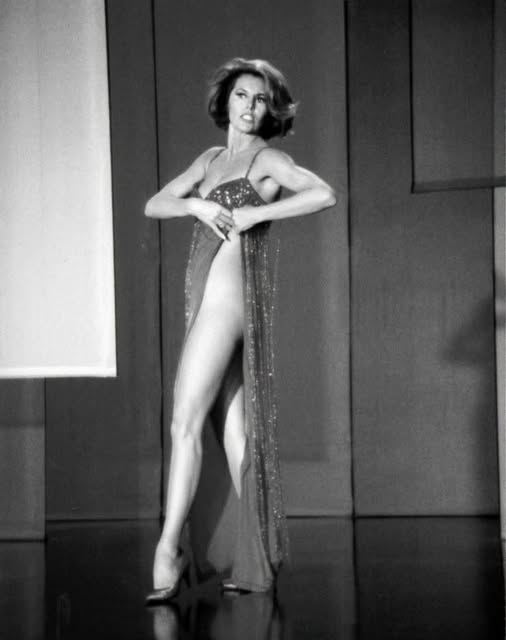
movement. This therapeutic necessity blossomed into a profound, lifelong devotion to dance. As she matured, the young Tula refined her craft in Los Angeles, London, and Paris, eventually adopting the stage name Cyd Charisse—a nod to a childhood nickname and her first marriage. Her journey from a sickly child to a statuesque, mesmerizing performer was marked by a relentless work ethic that transformed her into one of the most technically gifted dancers of the twentieth century. She learned early that every muscle had to be disciplined, every movement intentional, and every breath controlled to hide the lingering effects of her illness.
By the time she arrived at MGM, her presence was undeniable. She possessed a rare, magnetic quality that allowed her to hold the screen with little more than a glance or a fluid gesture. Her breakout moments in the 1950s solidified her status as a titan of the musical genre. In the iconic “Broadway Melody” sequence of Singin’ in the Rain, she became the visual embodiment of elegance, her long, sculpted legs and dark, flowing hair capturing the imagination of audiences worldwide. She did not need dialogue to command the screen; her body spoke a language of sophisticated grace that transcended the limitations of the script. The camera loved her, but it was her own internal fire that made the celluloid shimmer.
Her professional partnerships were legendary, defined by a mutual respect that elevated the art of the film musical. When paired with Gene Kelly or Fred Astaire, she brought a unique fusion of classical ballet precision and modern, expressive drama to every frame. Astaire, famously discerning, regarded her as “beautiful dynamite,” a testament to the fire she brought to their romantic, intricate routines. She navigated the demands of her craft with a quiet professionalism that earned her the admiration of colleagues, choosing to remain grounded even as her fame soared to international heights. She was a bridge between the rigid structure of classical ballet and the fluid, improvisational spirit of jazz-age Hollywood. When asked to compare her two most famous partners, she spoke of them with the balanced perspective of an artist, noting that their distinct styles were both equally wonderful in their own right.
Off-screen, her life was anchored by a steadfast, decades-long marriage to singer Tony Martin. They met in 1948 through a shared agent, and their union became a rare example of stability in the often-tumultuous landscape of Hollywood. Together, they built a life that prioritized family and discretion, shielding their private world from the glare of the public eye. They were a team, supporting one another through the changing tides of the entertainment industry, proving that love could endure even when the industry itself began to shift away from the grand musicals that had defined their early careers. Yet, even the most carefully guarded lives can be touched by the sudden, indiscriminate reach of tragedy, as the family discovered in the spring of 1979, a moment of profound darkness that tested the resilience of the entire household.
On May 25, 1979, the nation was stunned by the crash of American Airlines Flight 191 in Chicago. The disaster, which claimed the lives of everyone on board, brought an unimaginable sorrow to the Charisse family. Among the victims was Sheila Charisse, the beloved wife of Cyd’s son, Nico. The loss was a devastating blow, a stark reminder that the glamour of the silver screen offered no insulation against the profound, shattering realities of human grief. The tragedy left an indelible mark on the family, forever altering their perspective on the fragility of life. For Cyd, who had spent her life cultivating beauty and order, the chaos of the crash was a cruel, incomprehensible intrusion of reality into a world that had always been choreographed to perfection.
Despite the weight of such sorrow, Cyd Charisse continued to carry herself with the poise that had defined her entire career. She transitioned gracefully from the golden age of musicals into television, stage work, and even nightclub acts, proving that her artistry was not merely a product of her youth but an essential part of her character. In 2006, her lifetime of dedication was formally recognized when she was awarded the National Medal of Arts, a fitting tribute to a woman who had spent a lifetime perfecting her craft. She accepted the honor with the same humility that had always characterized her approach to her work, acknowledging the many people who had helped her along the way.
Her final years were spent in the quiet satisfaction of a life well-lived, surrounded by the legacy of her work and the enduring love of her family. When she passed away on June 17, 2008, following a heart attack at the age of 86, the world lost more than just a star; it lost a symbol of resilience. She had navigated the physical limitations of her childhood and the emotional depths of personal tragedy with the same elegance she displayed on the dance floor. Today, she is remembered not only for her legendary performances in The Band Wagon or her iconic turn in Singin’ in the Rain, but as a woman who danced through every adversity, leaving behind a legacy of beauty, strength, and unwavering grace that continues to inspire new generations of performers. Her story remains a testament to the power of movement to heal, to express, and to endure long after the final curtain has fallen, leaving her memory etched in the history of cinema forever.