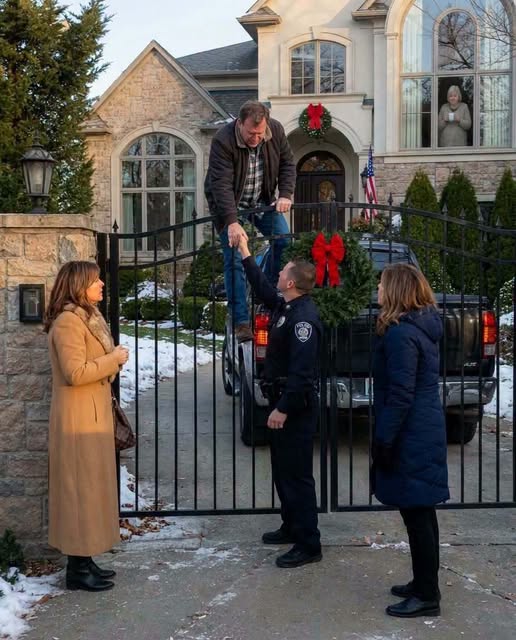
After Richard passed away, the dynamic of our family shifted in ways I refused to acknowledge for a long time. Initially, my children remained close, but as the years progressed, visits became infrequent and phone calls turned into sparse, hurried messages. The true turning point arrived when I suffered a sudden health scare. I spent a terrifying night in the hospital, and though my children were aware of my condition, not one of them came to sit with me or offered to help me return home. Sitting in my quiet house afterward, the realization hit me with the force of a physical blow: I had been clinging to the assumption that they would always be there when I needed them, but that reality had long since evaporated. I was effectively alone in the house where I had once poured every ounce of my energy into their upbringing. The silence of the rooms, once filled with their laughter and chaos, now felt heavy with the weight of my own misplaced expectations.
A few weeks after my recovery, Michael told me to stop calling whenever I felt lonely or worried because everyone had their own lives. His words were cold, but they provided a strange sort of clarity. Instead of begging for their time, I became silent. I began to notice that our conversations had become transactional. Jennifer constantly inquired about Richard’s life insurance, Michael asked if my estate was organized, and Lisa persistently suggested I sell my home to move into a senior facility. My house was worth nearly $900,000, my investments totaled $600,000, and there was a $250,000 insurance policy. Their supposed concern for my future felt increasingly like a calculation of my assets rather than a genuine interest in my well-being. It was as if they were already auditing my life, measuring the value of my remaining years against the potential inheritance they felt entitled to claim.
I reached out to Thomas Brennan, the attorney who had handled Richard’s estate. Together, we reviewed my finances, beneficiaries, and security arrangements. I updated my will and shifted my assets to better reflect my own values, including directing my insurance proceeds to a local literacy nonprofit that Richard would have admired. I also installed a new security system, changed every lock, and updated the access codes to my home. For three months, the silence between us was absolute. I spent those months learning to exist on my own terms, finding a quiet strength in the independence I had previously feared. I stopped waiting for the phone to ring and began to cultivate a life that belonged entirely to me, rather than one defined by the needs or the neglect of my adult children.
When December arrived, they ignored my request for a quiet holiday and showed up at my gate, expecting to be welcomed inside. When Michael found the code failed, I eventually opened the gate, not because I yielded to their entitlement, but because I wanted an honest confrontation. We sat around the kitchen table, and for the first time, I spoke plainly about my hospital stay and the deep hurt caused by their absence. I told them that I had updated my estate plans to protect myself, not to punish them, but to ensure that my future was no longer treated as a resource to be managed. The air in the room was thick with tension, yet for the first time in years, the pretense of a happy, functional family was stripped away.
The conversation was difficult and raw. Jennifer immediately asked if the house was still part of the estate, while Lisa admitted that selling the property had seemed like a convenient solution for them. Michael acknowledged that work had taken priority over our relationship. Their questions were painful, yet they were honest. I told them that I did not require perfect children or constant attention, but I did need to know that they cared for me as a person, not as a collection of accounts. I explained that my estate plans were not permanent; they were a reflection of our current relationship, and I was willing to revisit them if things changed. I needed them to understand that the gates were locked not to keep them out forever, but to ensure that when they entered, it was for the right reasons.
Michael apologized for his absence, and for the first time in years, I felt he was being sincere. We shared a dinner that was far from perfect, but it was a beginning. Jennifer helped with the dishes, and Lisa made coffee. Nothing was magically fixed, but the wall between us had been breached. Later that evening, I placed a family photograph back on the wall, a small gesture of hope. I had protected my future, but I had not closed the door on the possibility of a genuine reconciliation. I looked at the photograph of Richard and our younger family, reminding myself that while mistakes are inevitable, they do not have to be the final chapter of our story. I chose to keep the door open, waiting to see if they would walk through it with their hearts instead of their agendas. The process of forgiveness would be slow, but for the first time in years, I felt a sense of peace settling over my home, knowing I had finally established the boundaries necessary for us to eventually find our way back to one another. The path forward remained uncertain, but it was finally, truly, my own.