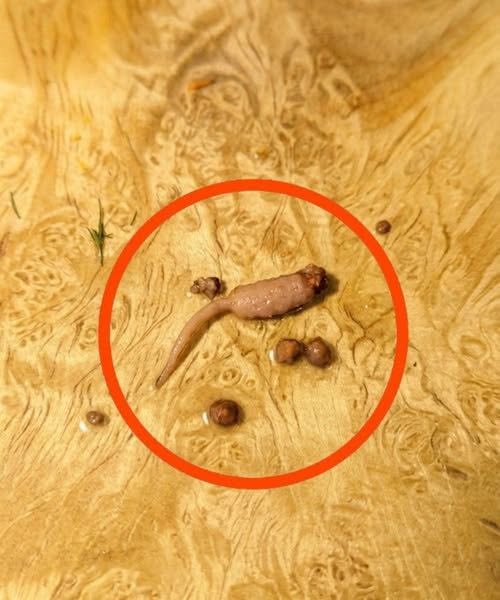
This surge of panic is a natural response to the unknown, but it often stems from a misunderstanding of what meat truly is. When we purchase ground beef, we are buying a complex biological product that is not perfectly uniform. It is composed of muscle fibers, fat, and connective tissues such as sinew or tendons. During the industrial grinding process, these fibrous components can be stretched, twisted, and elongated. When these pieces are subjected to the high heat of a frying pan, they frequently react by curling, tightening, and hardening into shapes that look remarkably different from the surrounding muscle tissue. This physical transformation is a standard reaction to heat, not an indication that the product has been compromised or spoiled.
It is helpful to remember that meat is a natural, organic material. Because it is sourced from living animals, it contains various structural elements that serve different biological functions. Connective tissue is essentially the “glue” that holds muscle fibers together, providing strength and support to the animal. While we are accustomed to seeing ground beef as a homogenous red mass, the reality of its composition includes these structural proteins. When we see a pale, rubbery, or stringy object in the pan, it is almost always a piece of this harmless connective tissue that has simply been isolated by the cooking process. These fibers are essentially collagen, which is a structural protein found throughout the body of the animal. When the meat is ground, these tough strands are broken down but not eliminated entirely.
Distinguishing between these harmless structural elements and actual food spoilage is a vital skill for any home cook. Spoilage is typically accompanied by unmistakable warning signs: a sour or off-putting odor, a slimy or tacky texture on the surface of the raw meat, or a significant discoloration that persists even after cooking. If the meat smells fresh, has been handled and stored at appropriate temperatures, and does not show signs of decay, the presence of a stray piece of sinew is not a cause for concern. It is simply a byproduct of the natural anatomy of the animal. Unlike parasites, which would have distinct biological segments or movement, connective tissue is inert and consistent in its rubbery texture.
The tendency for these tissues to curl and harden during cooking can certainly be off-putting, especially if you are not expecting to see them. However, recognizing that this is a normal part of the meat’s structure can help you maintain your composure in the kitchen. There is no need to discard an entire meal based on the appearance of a single piece of connective tissue. Understanding the composition of the food we prepare allows us to move past initial fear and approach our cooking with greater confidence and clarity. By accepting that meat is a raw, natural product, we can better appreciate the process of preparing food for our families without letting minor, visual anomalies derail our dinner plans.
Ultimately, the best way to handle these moments is to remain observant but calm. If you encounter a piece of tissue that looks unusual, take a moment to inspect it. If it lacks the segments or movement associated with living organisms and simply appears to be a tough, pale, or rubbery strand, you can be reassured that it is a natural part of the beef. By educating ourselves on the reality of food production, we can prevent unnecessary waste and enjoy our home-cooked meals without the shadow of unfounded anxiety. When in doubt, rely on your senses of smell and touch to confirm the freshness of your ingredients, and remember that a little bit of knowledge goes a long way in keeping your kitchen a safe and stress-free environment for you and your family. If you find a piece of sinew that is too tough to chew, simply remove it from your plate and continue enjoying your meal with the peace of mind that comes from knowing your food is safe.
{"post":111328,"page":2,"next":[{"id":111325,"title":"The Unseen Architect: Discovering a Hidden Life Form Within the Quiet Confines of a Shared Home","url":"https:\/\/new24.info\/111325"},{"id":111321,"title":"My Daughter Asked Me to Organize Her Gender Reveal for 50 Guests \u2013 10 Minutes Before It Started, the Bakery Told Me Not to Serve the Cake","url":"https:\/\/new24.info\/111321"},{"id":111318,"title":"Miley Cyrus debuts new name following a difficult week","url":"https:\/\/new24.info\/111318"},{"id":111315,"title":"Cruel Valentine Dinner Test Reveals Why A Seven Year Romance Failed","url":"https:\/\/new24.info\/111315"},{"id":111312,"title":"My Neighbor Begged to Borrow My Late Dad\u2019s Canoe \u2014 Days Later, I Found It Cracked Behind His Shed, and His Excuse Left Me Speechless","url":"https:\/\/new24.info\/111312"},{"id":111308,"title":"My Neighbor Begged to Borrow My Late Grandma\u2019s Sewing Machine \u2014 Three Days Later, I Found It Outside in the Rain with a Note Taped to It","url":"https:\/\/new24.info\/111308"},{"id":111304,"title":"Relatives Mocked Her Retail Job Before Discovering She Owned Everything Around","url":"https:\/\/new24.info\/111304"},{"id":111300,"title":"Walking Off A Train Exposed My Fiance And Saved My Career","url":"https:\/\/new24.info\/111300"},{"id":111291,"title":"From sickly to stunning: The polio survivor who became a Hollywood icon","url":"https:\/\/new24.info\/111291"},{"id":111289,"title":"Addressing Recent Misinformation Regarding the Health and Personal Life of Dolly Parton","url":"https:\/\/new24.info\/111289"},{"id":111286,"title":"A Denim Dress and a Public Reckoning: How We Escaped Our Stepmother\u0027s Control","url":"https:\/\/new24.info\/111286"},{"id":111283,"title":"The Legal and Ethical Conflict Surrounding an Eighty-Six Year Sentence for a Teenage Offender","url":"https:\/\/new24.info\/111283"},{"id":111279,"title":"My Neighbor Constantly Borrowed My Appliances \u2013 When She Returned My Mixer Dirty and Broken, I Taught Her a Lesson","url":"https:\/\/new24.info\/111279"},{"id":111276,"title":"I Turned Down a Millionaire to Marry My Broke Best Friend\u2014Then He Showed Me the Letter My Parents Had Hidden for Years","url":"https:\/\/new24.info\/111276"},{"id":111271,"title":"This iconic actor went from $150 a month to running a farm with his famous wife","url":"https:\/\/new24.info\/111271"},{"id":111264,"title":"Leaving My Husband After A Delivery Room Betrayal Brought Me Total Peace","url":"https:\/\/new24.info\/111264"},{"id":111260,"title":"Uncovering Hidden Truths About My Daughter Brought Ultimate Justice And Healing","url":"https:\/\/new24.info\/111260"},{"id":111256,"title":"I Went to Pick up My 19-Year-Old Daughter After Her Summer Job \u2013 She Walked Out Carrying a Newborn and Said, \u0027Mom... She\u0027s Mine Now\u0027","url":"https:\/\/new24.info\/111256"},{"id":111253,"title":"My Son Rolled His Eyes and Giggled at Our Waiter with Down Syndrome \u2013 So I Taught Him a Lesson He\u0027ll Never Forget","url":"https:\/\/new24.info\/111253"},{"id":111249,"title":"The Quiet Charm of Homemade Jam","url":"https:\/\/new24.info\/111249"}]}