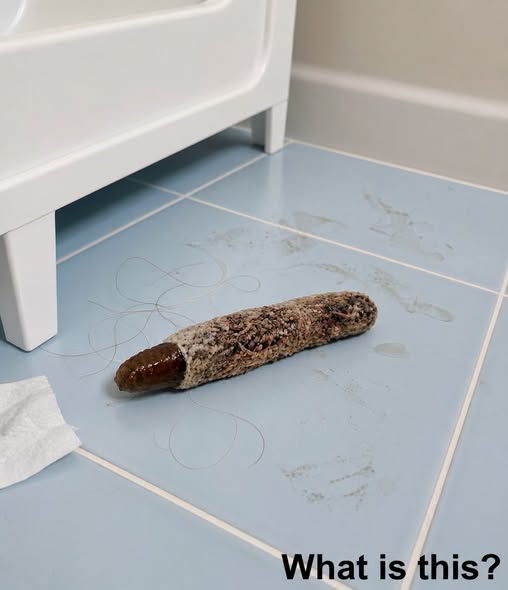
…that had suddenly claimed a space in our sanctuary. I called out to my girlfriend, my voice sounding unnaturally sharp in the small, tiled room. She arrived, eyes heavy with the fatigue of the evening, and leaned down to peer at the object. Her confusion was genuine, a mirror of my own, as she poked at the debris with a hesitant finger. She swore she had never seen it before, her denial carrying a weight of genuine bewilderment that only deepened the mystery. We stood there for what felt like an hour, trapped in a silent, mutual appraisal of this strange, architectural curiosity. Was it a discarded piece of jewelry, a fragment of some forgotten craft project, or something far more biological and unsettling?
The object possessed a structural integrity that felt deliberate, almost aggressive in its construction. It was not merely a piece of lint or a stray thread; it was a curated collection of our own domestic detritus, woven together with a precision that suggested a motive. We turned it over in our hands, our movements careful, almost reverent, as if we were handling a piece of evidence from a crime scene. The fear was visceral, a cold prickle at the base of my neck that refused to dissipate despite the lack of any obvious threat. We were both pretending we weren’t scared, but the tension in the room was a tangible force, thickening the air between us.
Was it alive? The question hung in the air, unasked but omnipresent. I found myself staring at the tiny, mottled surface, searching for movement, for a sign of respiration or intent. The idea that something could be watching us from inside that casing, that it had been observing our private lives from the shadows of the bathroom floor, was a deeply uncomfortable realization. We were the masters of this apartment, or so we had believed, yet here was evidence of a tenant who had never paid rent and never introduced itself.
We circled back to the same haunting conclusion: this thing did not look dropped, it looked built. That distinction changed everything. It transformed the object from a piece of trash into a monument of survival. I began to imagine something small, patient, and methodical, working in the dark corners of our home while we brushed our teeth and showered just a few feet away. Every hair, every microscopic speck of dust on that tube suddenly felt like a clue we had overlooked for weeks. We had been living in a state of blissful ignorance, unaware of the quiet industry occurring beneath our very feet.
Eventually, the need for an answer drove us to the inevitable digital investigation. We took high-resolution photographs, zooming in until the pixels blurred, and cross-referenced the images with every entomological database we could find. The search was frantic, a desperate attempt to reclaim our sense of control over our own environment. Finally, we landed on the most unsettling, yet strangely logical, answer: it was a case-bearing moth larva. The realization hit us with the force of a physical blow, followed immediately by a wave of profound, reflective calm.
These creatures, we learned, were not monsters, but rather ingenious architects. They construct their own portable houses from the very materials we shed daily—lint, hair, and the microscopic debris of human existence. They are the silent cleaners of the cracks and crevices, living entirely within the margins of our lives. They are not dangerous, merely hidden, yet their presence forced us to reconsider the boundaries of our own home. The fear that had gripped us earlier began to fade, replaced by a complex, lingering sense of awe at the resilience of life.
That night, the apartment didn’t feel fully ours anymore. The walls seemed thinner, the corners deeper, and the floorboards more significant. It felt like a place we were sharing with quiet, unseen tenants we had only just learned to see. We had spent so long believing we were the sole occupants of this space, only to discover that we were part of a much larger, more intricate ecosystem. The larva, in its humble, self-constructed shell, had reminded us that nature does not wait for an invitation to enter our lives; it simply adapts to the conditions we provide.
I looked at the bathroom floor one last time before turning off the light. The spot where the larva had been was empty, the creature having moved on to some other dark, dust-filled corner of the apartment. I no longer felt the urge to hunt it down or eradicate the evidence of its existence. Instead, I felt a strange, newfound respect for the tiny architect that had been living alongside us, spinning its life out of the discarded remnants of our own. We were not alone, and for the first time, that realization didn’t feel like an intrusion; it felt like a lesson in humility. The apartment was a shared space, a microcosm of the world outside, and we were merely the largest, loudest, and perhaps the least observant residents in the house.
As I climbed into bed, I listened to the house settling around us—the creak of the floorboards, the hum of the refrigerator, the distant rustle of the wind. These sounds, once just background noise, now seemed like the rhythms of a larger, interconnected life. We drifted into sleep, no longer the sole proprietors of our domestic domain, but rather participants in a quiet, enduring partnership with the unseen. The mystery had been resolved, not with a confrontation, but with a quiet acceptance of the world as it truly is: crowded, persistent, and endlessly fascinating in its smallest details.