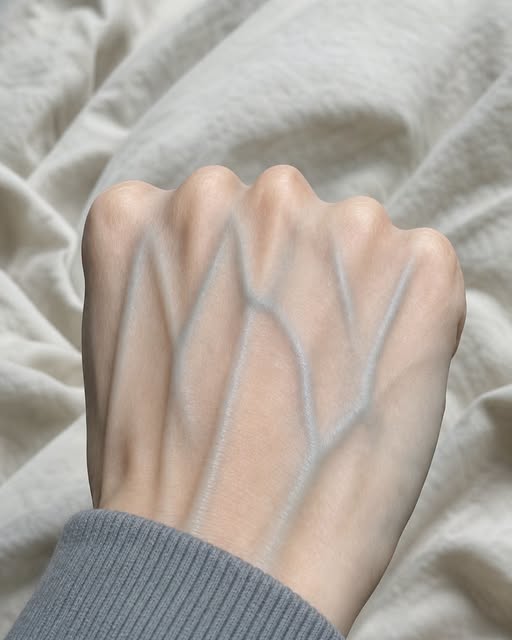
while others may whisper of deeper circulatory developments that require a more nuanced understanding. Visible veins often mark a quiet story of change rather than an immediate health catastrophe. As we age, our skin naturally becomes thinner and loses some of its elasticity, which makes the underlying vascular structure much more apparent to the naked eye. Similarly, a reduction in total body fat can remove the natural cushioning that once obscured these vessels, bringing them closer to the surface. This is a common occurrence as people progress through different life stages, and it is rarely a cause for concern on its own.
Environmental factors also play a significant role in how our veins appear. During hotter days, your body works harder to regulate its internal temperature by dilating blood vessels to increase blood flow near the skin’s surface, which can cause veins to appear more prominent. Intense exercise has a similar effect; as muscles work, they require more oxygenated blood, causing veins to swell and become more visible during and shortly after a strenuous workout. These are standard physiological responses to physical exertion and heat exposure, reflecting the body’s efficient ability to adapt to its surroundings.
Beyond lifestyle and environment, genetics remain one of the most influential factors in vein visibility. Some individuals are simply born with more translucent skin or a vascular structure that sits closer to the surface, making their blue or green lines a permanent, natural feature of their anatomy. For many people, these changes are simply the result of getting fitter, leaner, or older. It is important to recognize that for the vast majority of cases, these visible lines are not a sign that something is breaking inside your body, but rather a reflection of your unique biological makeup and current activity level. Many people find that these features are simply part of their physical identity.
However, it is equally important to acknowledge that your body also speaks in warnings. While many visible veins are benign, there are specific patterns that warrant professional medical attention. Veins that are accompanied by persistent pain, localized swelling, unusual heat, noticeable skin color changes, or feelings of numbness deserve careful observation rather than dismissal. These signals can sometimes point to underlying circulatory issues or venous conditions that are far easier to manage when addressed early rather than being ignored for months at a time. Recognizing these specific symptoms is a critical step in proactive health management.
The real skill in monitoring your health is learning to notice patterns: what is new, what is gradually getting worse, and what simply feels wrong based on your baseline. If you notice that a vein is becoming increasingly tender, or if the skin surrounding it begins to change texture or color, it is time to consult a healthcare provider. A medical checkup can provide the necessary clarity to distinguish between common, harmless changes and conditions that might require clinical intervention. Do not hesitate to seek guidance if you feel that something is fundamentally different from your norm.
When in doubt, seeking a professional opinion is the most prudent course of action. A doctor can evaluate your specific symptoms, review your medical history, and determine if further diagnostic testing is needed to ensure your circulatory system is functioning as it should. This proactive approach not only helps in identifying potential issues early but also provides significant peace of mind. Understanding the difference between normal physiological changes and symptoms that require attention is a vital component of maintaining long-term vascular health. By staying informed, you can better distinguish between simple aesthetic changes and genuine health concerns.
In conclusion, while the sudden appearance of visible veins can be startling, it is frequently a benign consequence of aging, genetics, or environmental factors. By maintaining a balanced perspective and paying attention to specific warning signs like pain, swelling, or skin changes, you can better navigate these physical shifts. When persistent or concerning symptoms arise, early medical consultation remains the gold standard for ensuring your health and well-being, providing the evidence-based clarity needed to address any underlying concerns effectively and safely.
{"post":111213,"page":2,"next":[{"id":111210,"title":"Reflecting on the Life, Character, and Professional Legacy of Actor Chance Perdomo","url":"https:\/\/new24.info\/111210"},{"id":111207,"title":"The Quiet Empowerment Behind the Iconic Style of Dolly Parton","url":"https:\/\/new24.info\/111207"},{"id":111202,"title":"I Trusted My Lazy 18-Year-Old Brother-in-Law with My Toddlers While I Bought Groceries \u2013 I Returned to an Empty House","url":"https:\/\/new24.info\/111202"},{"id":111199,"title":"My 6-Year-Old Son\u0027s Friends Started Laughing at Him When They Saw Him Pushing a Toy Baby in a Stroller \u2013 But His Response Left Me Speechless","url":"https:\/\/new24.info\/111199"},{"id":111196,"title":"I Turned Down a Millionaire to Marry My Broke Best Friend \u2013 But on Our Wedding Day, While We Were Eating Burgers, My Husband Pulled Something Out of His Pocket and Said, \u0027Dear, There\u0027s Something You Don\u0027t Know About Me\u0027","url":"https:\/\/new24.info\/111196"},{"id":111194,"title":"A Practical Guide to Identifying and Managing Household Insects for a Healthier Home Environment","url":"https:\/\/new24.info\/111194"},{"id":111191,"title":"Clarifying the Legacy and Estate Planning of Dolly Parton Amidst Persistent Misinformation Regarding Her Personal Life","url":"https:\/\/new24.info\/111191"},{"id":111185,"title":"What to Know About the Dolly Parton Health Claims","url":"https:\/\/new24.info\/111185"},{"id":111181,"title":"There\u2019s a Hidden Face in This Snowy Forest Scene","url":"https:\/\/new24.info\/111181"},{"id":111177,"title":"Hidden Garage Routine Leads Husband To Uncover Astonishing Decades Old Secret","url":"https:\/\/new24.info\/111177"},{"id":111173,"title":"Hidden Hospital Footage Revealed My Paralyzed Husband Was Faking His Severe Injuries","url":"https:\/\/new24.info\/111173"},{"id":111152,"title":"Hidden Brown Folder Reveals A Shocking Family Betrayal During Birthday","url":"https:\/\/new24.info\/111152"},{"id":111167,"title":"The Enduring Grace of Dolly Parton: Reflecting on a Career Defined by Resilience and Lasting Community Service","url":"https:\/\/new24.info\/111167"},{"id":111164,"title":"The Sunflower Secret: Unraveling Forty Years of Silence Following My Twin Sister\u2019s Disappearance","url":"https:\/\/new24.info\/111164"},{"id":111161,"title":"Charming Production Glitches and Behind-the-Scenes Secrets of Television\u2019s Most Famous Stranded Castaways","url":"https:\/\/new24.info\/111161"},{"id":111157,"title":"My MIL Met a Stranger at the Hotel Bar and Decided to Stay with Him \u2013 Then She Called Me at Midnight and Said, \u0027Please Help Me. Don\u0027t Tell My Son\u0027","url":"https:\/\/new24.info\/111157"},{"id":111153,"title":"The Officer Who Walked Into That Restaurant And Ended My Marriage At The Window Table","url":"https:\/\/new24.info\/111153"},{"id":111148,"title":"Widow Discovers Her Missing Husband Traveling Under Fake Name During Flight","url":"https:\/\/new24.info\/111148"},{"id":111144,"title":"If you see window grills with a curve at the bottom here\u2019s what it means","url":"https:\/\/new24.info\/111144"},{"id":111141,"title":"Dolly Parton, 80, private final days revealed as family insider shares why she stepped away from the spotlight","url":"https:\/\/new24.info\/111141"}]}