
Born Eric Hilliard Nelson on May 8, 1940, in Teaneck, New Jersey, Ricky was practically destined for a life in entertainment.
His parents, Ozzie Nelson and Harriet Hilliard, were already established performers who became famous through The Adventures of Ozzie and Harriet. The program began on radio in the 1940s before becoming one of television’s most enduring family sitcoms.
Ricky’s childhood, however, wasn’t always as carefree as the family image audiences saw.
He was reportedly a quiet and introspective boy who suffered from severe asthma. Producer John Guedel once described the young Ricky as likable but difficult to read — a child who seemed to keep much of what he was thinking to himself.
Eventually, Ricky and his older brother David joined their parents on The Adventures of Ozzie and Harriet, allowing viewers to watch the boys grow up on screen.
That extraordinary exposure would eventually provide Ricky with the perfect platform for another career.
Music.
In 1957, when he was just 17, Ricky performed on the television show and soon released his first single, a cover of Fats Domino’s “I’m Walkin’.”
The record became a hit, and suddenly Ricky Nelson wasn’t simply the teenage son from a popular television family.
He was a recording star.
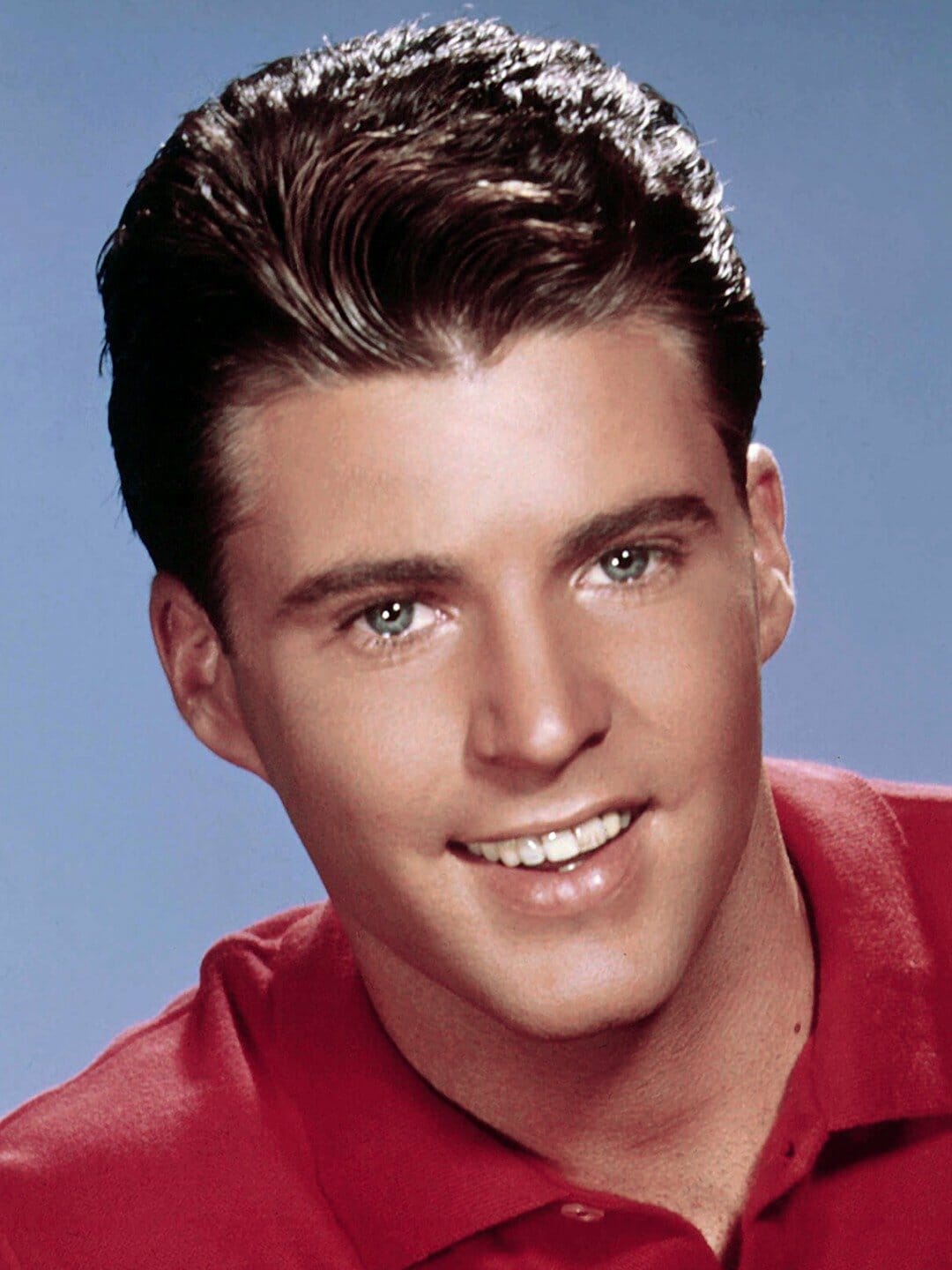
His family’s television program gave him something few young musicians could dream of having: direct access to millions of potential listeners. Nelson could perform a song on television and then watch audiences rush out to buy the record.
Hits followed, including “Poor Little Fool,” “Travelin’ Man,” “It’s Late,” “Hello Mary Lou,” “Fools Rush In,” “For You” and, years later, “Garden Party.”
His combination of good looks, a reserved personality and rock-and-roll appeal made him one of the defining teen idols of his generation.
But Nelson’s personal life was also changing.
In the early 1960s, he became involved with Kristin Harmon, whose family moved in the same Hollywood circles as the Nelsons.
They married in April 1963.
Together they had four children: daughter Tracy, twin sons Gunnar and Matthew, and youngest son Sam.
Although Nelson’s career evolved as musical tastes changed, he continued recording and performing for years.
The clean-cut teenage idol matured into an adult musician who wanted to be taken seriously for his music rather than simply remembered as the handsome boy from television.
His 1972 hit “Garden Party” became one of the clearest expressions of that struggle.
The song was inspired by Nelson’s experience performing at a rock-and-roll revival concert at Madison Square Garden, where some audience members reacted negatively when he played newer material instead of sticking entirely to his old hits.
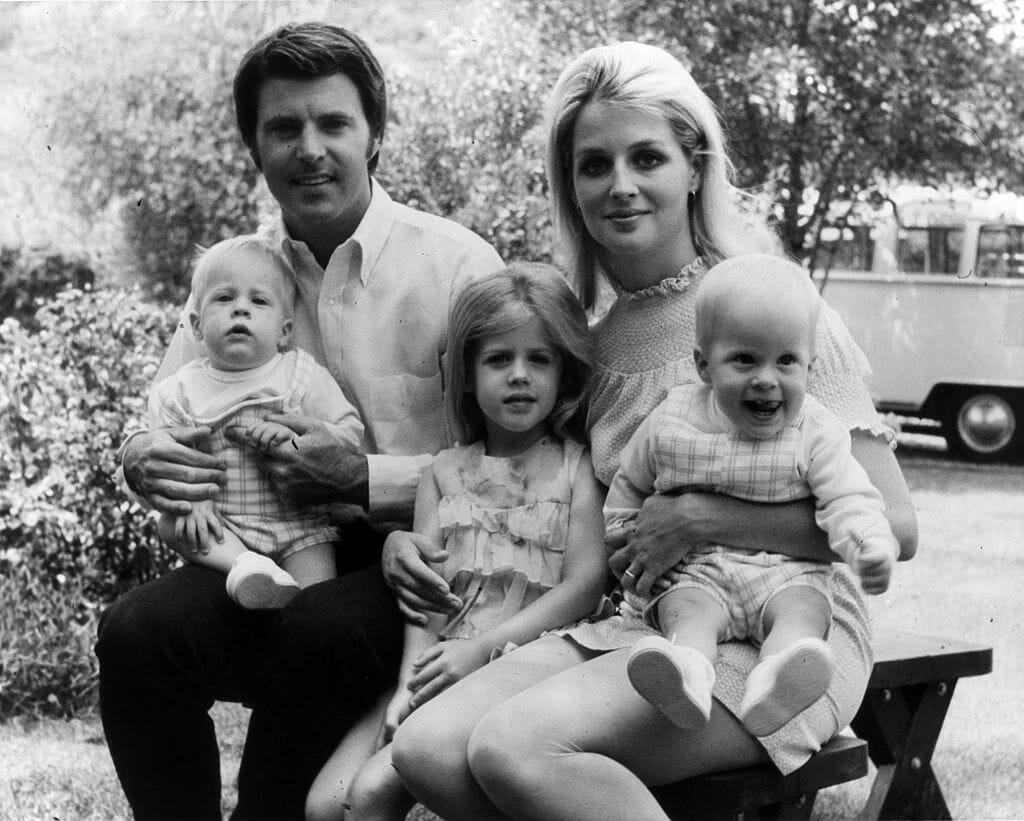
Nelson turned the experience into one of the most memorable songs of his career, delivering the famous message that you can’t please everyone, so ultimately you have to please yourself.
More than a decade later, Nelson was still touring.
But flying was reportedly something he deeply disliked.
Despite spending years traveling for performances, Nelson was said to be uncomfortable with air travel. Eventually, he began using a vintage Douglas DC-3 for touring with his band.
That aircraft would become central to the final chapter of his life.
Nelson was scheduled to perform in Dallas on New Year’s Eve 1985.
His twin sons, Gunnar and Matthew, were reportedly supposed to join him for part of the trip.
According to Gunnar, everything changed when their father contacted them shortly before they were supposed to meet him.
“We were supposed to be on the plane on that trip,” Gunnar later recalled.
Their father called before the twins were due to travel to meet him and changed the plans.
The boys did not board the aircraft.
It was a seemingly small decision at the time.

Soon afterward, it became unimaginably significant.
On December 31, 1985, Nelson’s DC-3 was traveling from Guntersville, Alabama, toward Dallas when a fire broke out aboard the aircraft.
Smoke filled the cabin as the pilots desperately attempted to get the plane onto the ground.
The aircraft made an emergency landing near De Kalb, Texas.
The pilots survived.
Those in the passenger cabin did not.
Nelson was killed at just 45 years old, along with his girlfriend, Helen Blair, and five members of his touring entourage.
The tragedy immediately generated questions about what had caused the fire.
And before long, disturbing rumors began circulating.
One particularly sensational claim suggested that drug use aboard the aircraft might somehow have contributed to the blaze. The rumor became attached to Nelson’s death despite a lack of credible evidence supporting it.
Members of Nelson’s family strongly rejected those claims.
His brother David publicly defended him, while others who knew what happened that day maintained that Nelson and Blair had been asleep when the trouble began.
The official investigation pointed in a very different direction.
The National Transportation Safety Board concluded that the fire most likely originated in the cabin area and cited the aircraft’s gasoline-fueled heater as a suspected source, though investigators could not definitively establish the precise ignition sequence.
Nelson’s daughter Tracy later expressed her belief that mechanical problems were responsible.
The aging DC-3 had reportedly experienced issues, and its heating system became an important focus after the crash.
Whatever the precise cause, there was one fact that remained especially haunting for Nelson’s family.
Matthew and Gunnar could have been there.
Had the original plan remained unchanged, the twins might have been traveling with their father when the aircraft caught fire.
Instead, Nelson’s last-minute decision kept them away from the doomed flight.
Over the years, the story has sometimes been described as a “premonition,” suggesting Nelson somehow sensed that something terrible was about to happen.
There is no way to know exactly what Nelson was feeling when he changed the plans or whether he truly anticipated danger.
But the outcome was undeniable.
His sons were not aboard.
Matthew and Gunnar were 18 when their father died.
They would soon follow him into music.
Performing together as Nelson, the twins achieved major success with their 1990 debut album After the Rain. Their single “(Can’t Live Without Your) Love and Affection” reached No. 1 on the Billboard Hot 100.
Their success created a remarkable piece of American music history: the Nelson family became the first family with No. 1 records across three successive generations — Ozzie Nelson, Ricky Nelson, and Matthew and Gunnar.
But their father’s influence extended far beyond chart statistics.
As the twins grew older, they increasingly embraced Ricky’s musical legacy, performing his songs and sharing stories about the man they remembered not simply as a rock-and-roll icon, but as their father and friend.
Matthew once described honoring Ricky through music as “an ongoing labor of love” and “an open letter to our dad.”
Ricky Nelson’s own accomplishments eventually received the recognition they deserved. He was inducted into the Rock and Roll Hall of Fame in 1987, two years after his death.
His life had ended suddenly at 45, but his influence continued through the music he left behind and through the children who carried the Nelson name into another generation.
And for Matthew and Gunnar, one decision their father made shortly before his final flight would always carry an especially powerful meaning.
They were supposed to be traveling with him.
At the last minute, they weren’t.
Whether it was intuition, concern about the aircraft, a simple change of plans or something Nelson himself could never fully explain, that decision spared his sons from being aboard the plane when tragedy struck.
Ricky Nelson’s voice was silenced far too soon on New Year’s Eve 1985.
But his music — and the family members who survived because they weren’t on that final flight — ensured that his story didn’t end there.
{"post":111205,"page":2,"next":[{"id":111218,"title":"The Hidden Truth: Why Your Toilet Habits Are Costing You Thousands (And How to Fix It)","url":"https:\/\/new24.info\/111218"},{"id":111213,"title":"Understanding Why Veins Become Visible: Distinguishing Normal Changes From Potential Medical Concerns","url":"https:\/\/new24.info\/111213"},{"id":111210,"title":"Reflecting on the Life, Character, and Professional Legacy of Actor Chance Perdomo","url":"https:\/\/new24.info\/111210"},{"id":111207,"title":"The Quiet Empowerment Behind the Iconic Style of Dolly Parton","url":"https:\/\/new24.info\/111207"},{"id":111202,"title":"I Trusted My Lazy 18-Year-Old Brother-in-Law with My Toddlers While I Bought Groceries \u2013 I Returned to an Empty House","url":"https:\/\/new24.info\/111202"},{"id":111199,"title":"My 6-Year-Old Son\u0027s Friends Started Laughing at Him When They Saw Him Pushing a Toy Baby in a Stroller \u2013 But His Response Left Me Speechless","url":"https:\/\/new24.info\/111199"},{"id":111196,"title":"I Turned Down a Millionaire to Marry My Broke Best Friend \u2013 But on Our Wedding Day, While We Were Eating Burgers, My Husband Pulled Something Out of His Pocket and Said, \u0027Dear, There\u0027s Something You Don\u0027t Know About Me\u0027","url":"https:\/\/new24.info\/111196"},{"id":111194,"title":"A Practical Guide to Identifying and Managing Household Insects for a Healthier Home Environment","url":"https:\/\/new24.info\/111194"},{"id":111191,"title":"Clarifying the Legacy and Estate Planning of Dolly Parton Amidst Persistent Misinformation Regarding Her Personal Life","url":"https:\/\/new24.info\/111191"},{"id":111185,"title":"What to Know About the Dolly Parton Health Claims","url":"https:\/\/new24.info\/111185"},{"id":111181,"title":"There\u2019s a Hidden Face in This Snowy Forest Scene","url":"https:\/\/new24.info\/111181"},{"id":111177,"title":"Hidden Garage Routine Leads Husband To Uncover Astonishing Decades Old Secret","url":"https:\/\/new24.info\/111177"},{"id":111173,"title":"Hidden Hospital Footage Revealed My Paralyzed Husband Was Faking His Severe Injuries","url":"https:\/\/new24.info\/111173"},{"id":111152,"title":"Hidden Brown Folder Reveals A Shocking Family Betrayal During Birthday","url":"https:\/\/new24.info\/111152"},{"id":111167,"title":"The Enduring Grace of Dolly Parton: Reflecting on a Career Defined by Resilience and Lasting Community Service","url":"https:\/\/new24.info\/111167"},{"id":111164,"title":"The Sunflower Secret: Unraveling Forty Years of Silence Following My Twin Sister\u2019s Disappearance","url":"https:\/\/new24.info\/111164"},{"id":111161,"title":"Charming Production Glitches and Behind-the-Scenes Secrets of Television\u2019s Most Famous Stranded Castaways","url":"https:\/\/new24.info\/111161"},{"id":111157,"title":"My MIL Met a Stranger at the Hotel Bar and Decided to Stay with Him \u2013 Then She Called Me at Midnight and Said, \u0027Please Help Me. Don\u0027t Tell My Son\u0027","url":"https:\/\/new24.info\/111157"},{"id":111153,"title":"The Officer Who Walked Into That Restaurant And Ended My Marriage At The Window Table","url":"https:\/\/new24.info\/111153"},{"id":111148,"title":"Widow Discovers Her Missing Husband Traveling Under Fake Name During Flight","url":"https:\/\/new24.info\/111148"}]}