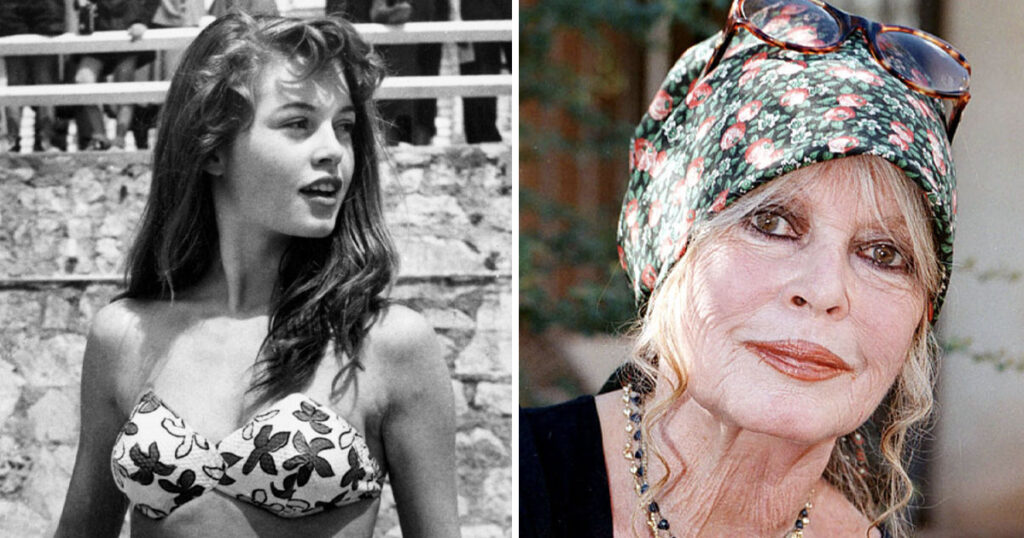
Born Brigitte Anne-Marie Bardot on September 28, 1934, in Paris, France, she grew up in a well-to-do family and initially dreamed of becoming a ballerina.
Her appearance soon opened another door.
Bardot began modeling as a teenager and appeared on the cover of Elle magazine when she was still remarkably young. The exposure helped bring her to the attention of the French film industry, and by the early 1950s, she was appearing on screen.
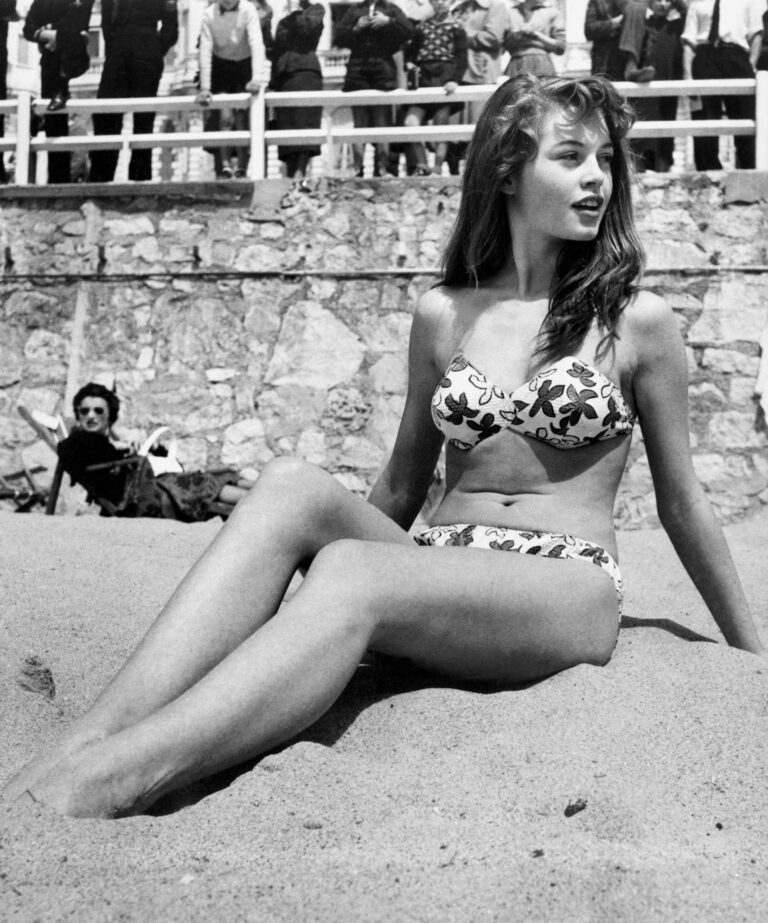
Few could have predicted just how famous she would become.
Bardot later admitted that she had not grown up thinking of herself as particularly beautiful. Yet within a few years, she would become an international symbol of glamour and sensuality.
“I’m a girl from a good family who was very well brought up,” she once reflected. “One day I turned my back on it all and became a bohemian.”
Her career changed dramatically with the release of And God Created Woman in 1956, directed by her then-husband Roger Vadim.
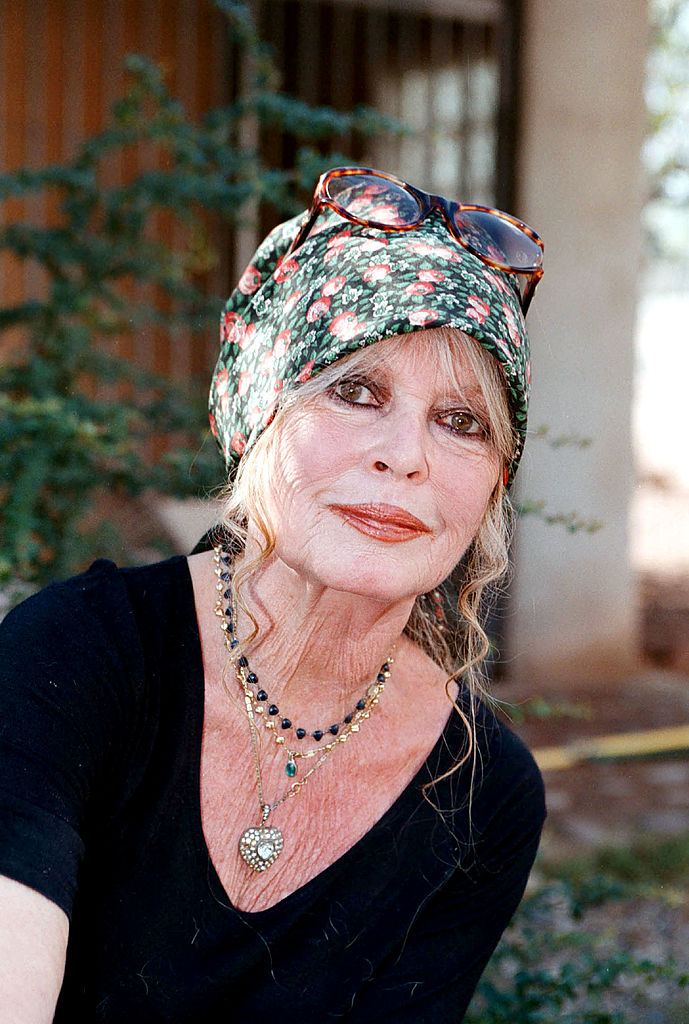
The movie transformed Bardot into an international sensation.
Her blonde hair, distinctive makeup and effortless style were copied by women around the world, while her uninhibited screen presence challenged many of the conventions surrounding female stars of the era.
Bardot soon became much more than an actress.
She became a cultural phenomenon.
Hollywood attempted to capitalize on her popularity, but Bardot’s relationship with American cinema was never as successful as her European career.
She appeared opposite major stars, including Sean Connery in the 1968 Western Shalako, but several attempts to establish her more firmly with American audiences failed to achieve the success that had been expected.
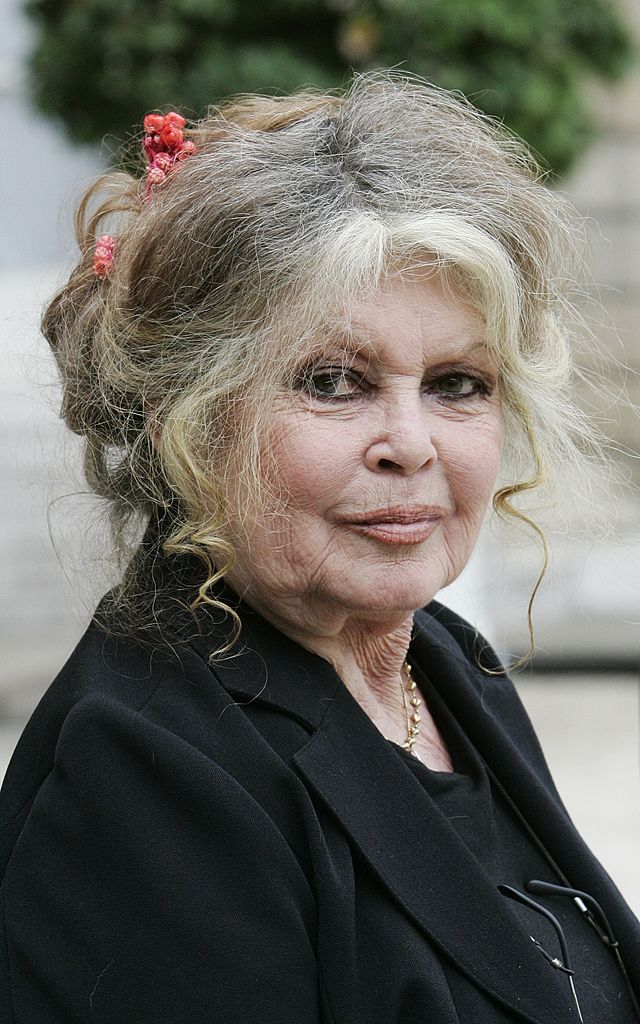
By then, however, Bardot didn’t need Hollywood to make her famous.
She was already one of the most photographed women in the world.
But there was a darker side to that attention.
In 1973, while still internationally famous, Bardot unexpectedly announced that she was leaving acting.
She was only 39.
Rather than desperately holding onto celebrity, Bardot said she felt she needed to escape it.
“The majority of great actresses met tragic ends,” she later told The Guardian. “When I said goodbye to this job, to this life of opulence and glitter, images and adoration, the quest to be desired, I was saving my life.”
Bardot said that while she initially enjoyed the attention, fame eventually became suffocating.
“In the beginning, I enjoyed having people talking about me, but very quickly, it suffocated and destroyed me,” she said.
After leaving cinema, Bardot increasingly withdrew from the entertainment world.
Then she found a completely different purpose.
Animals had been important to her for years, and in 1986 she established the Brigitte Bardot Foundation, dedicating much of the next chapter of her life to animal welfare.
Her first husband, Roger Vadim, once suggested that Bardot’s connection with animals went back to an emotional need she had carried since childhood.
“She did not get much affection from her parents, and when we started dating, she didn’t want jewels, but a dog,” Vadim told People.
According to him, Bardot found something comforting in animals that she didn’t find in fame.
“The innocence and honesty of animals reassured her,” he said.
Her foundation eventually became involved in animal-welfare initiatives around the world, supporting rescue efforts, conservation projects and facilities caring for mistreated animals.
When asked years later what motivated her to keep going despite physical difficulties associated with aging, Bardot gave a characteristically direct answer:
“The suffering of animals.”
Yet while Bardot developed a reputation for extraordinary devotion to animals, her relationship with her own child remained one of the most controversial and painful parts of her life.
On January 11, 1960, Bardot gave birth to her only son, Nicolas-Jacques Charrier, whose father was her second husband, actor Jacques Charrier.
Bardot later spoke with unusual bluntness about the fact that she had not wanted to become a mother.
Unlike many public figures who might have attempted to soften such feelings decades later, Bardot did almost the opposite.
In her 1996 memoir Initiales B.B., she described her pregnancy in extremely harsh terms and wrote openly about her emotional rejection of motherhood.
The comments became deeply controversial, particularly because Nicolas was alive and able to read what his mother had written about his birth.
Following Bardot and Charrier’s divorce in 1963, Nicolas was raised primarily by his father.
Bardot was largely absent from her son’s childhood, and the distance between mother and son continued as Nicolas became an adult.
He eventually built a life far removed from his mother’s celebrity world.
In 1984, Nicolas married Norwegian model Anne-Line Bjerkan and settled in Norway. They had two daughters, Anna-Camilla and Thea-Josephine.
Bardot reportedly was not invited to the wedding.
That meant the woman who had once been among the most famous faces on Earth was becoming a grandmother while remaining emotionally distant from her only child.
The situation became even more painful after Bardot published her memoir.
Nicolas and his father objected to the deeply personal material she had included about the pregnancy, their family and Nicolas’s early life.
Legal action followed, and Bardot was ordered to pay damages over passages found to have violated their privacy.
The episode exposed just how damaged the family relationship had become.
Years later, Bardot continued to acknowledge that she had never experienced motherhood in the conventional way.
“I had a son who did not provoke in me a terrible development of the maternal fiber — it’s not my fault,” she said in 2014.
Her words remained controversial, but they also reflected something Bardot had rarely attempted to hide: becoming a mother had not transformed her emotionally in the way society expected.
Over time, however, something changed.
The relationship between Bardot and Nicolas gradually became less hostile.
By the late 2000s, reports indicated that mother and son had begun reconnecting after decades of distance.
Bardot herself acknowledged the pain that had existed between them.
“During Nicolas’s childhood, our relationship was painful,” she said. “For him as for me.”
Nicolas continued living in Norway, but visits to his mother in France eventually became part of their relationship.
Sometimes he reportedly visited alone, while on other occasions members of his family accompanied him.
That gave Bardot an opportunity to know her granddaughters and, eventually, younger generations of the family.
Her feelings toward Nicolas also appeared to soften considerably.
“I love him in a special way,” Bardot said.
She noted that physically he resembled his father much more than her.
“He does not look like me. Physically, he inherited a lot from his father.”
Bardot’s granddaughters have generally lived much more privately than their world-famous grandmother. Claims that either became a major celebrity who directly “followed in Bardot’s footsteps” should therefore be treated cautiously; their lives have largely remained outside the international spotlight that surrounded Bardot.
That contrast is perhaps appropriate.
Brigitte Bardot’s own experience with fame was complicated from almost the beginning.
She became an international beauty icon despite once considering herself unattractive.
She achieved extraordinary celebrity and then walked away from acting while still young because she believed fame was destroying her.
She rejected many traditional expectations placed on women of her generation, including the assumption that motherhood would automatically become the center of her life.
And after decades of estrangement from her only son, the two eventually found some degree of reconciliation.
Bardot’s life therefore cannot easily be reduced to the glamorous photographs that made her famous.
Behind the blonde hair and movie-star image was a woman whose choices repeatedly generated admiration, criticism and controversy.
Her relationship with Nicolas may never have resembled a conventional mother-son bond, and nothing can erase the painful years between them.
But after decades of distance, they eventually managed to reconnect — allowing Bardot to become part of the family life of the son, granddaughters and later descendants she once barely knew.
{"post":111120,"page":2,"next":[{"id":111117,"title":"The Hidden Costs of Deception: Why Supermarket Meat Labels Are Failing to Tell the Truth","url":"https:\/\/new24.info\/111117"},{"id":111114,"title":"Test Your Sharp Eyes With This Cozy Bedroom Hidden Object Challenge","url":"https:\/\/new24.info\/111114"},{"id":111111,"title":"Clarifying the Truth Regarding Dolly Parton and Her Recent Public Appearances","url":"https:\/\/new24.info\/111111"},{"id":111107,"title":"After Four Months Without Work, My Husband Finally Got a Job \u2013 Just Hours Into His First Day, He Came Home Pale and Refused to Tell Me What Happened","url":"https:\/\/new24.info\/111107"},{"id":111104,"title":"My 16-Year-Old Daughter Saved $4,000 All Summer for Her First Car \u2013 Then She Told Me Who She\u0027d Given It All To, and I Couldn\u0027t Say a Word","url":"https:\/\/new24.info\/111104"},{"id":111101,"title":"My Neighbor Covered My Car in Concrete for \u0027Blocking Her Lake View\u0027 \u2013 Then My 8-Year-Old Daughter Wiped the Smile off Her Face","url":"https:\/\/new24.info\/111101"},{"id":111098,"title":"Which Shoes Match This Dress Best? \u2013 Wake Up Your Mind","url":"https:\/\/new24.info\/111098"},{"id":111096,"title":"The Cream Envelope In My Purse That Revealed Which Daughter Had Been Erasing The Other","url":"https:\/\/new24.info\/111096"},{"id":111090,"title":"Before her death, Dolly Parton revealed the name she had chosen for her unborn daughter","url":"https:\/\/new24.info\/111090"},{"id":111086,"title":"Dolly Parton fans blown away by her real hair after years of seeing her in wigs","url":"https:\/\/new24.info\/111086"},{"id":111084,"title":"What Your Choice of Footwear Reveals About Your Inner Personality and Personal Style","url":"https:\/\/new24.info\/111084"},{"id":111081,"title":"Building Bridges: How to Foster Open Communication and Prevent Your Child from Facing Hidden Digital Pressures","url":"https:\/\/new24.info\/111081"},{"id":111078,"title":"The Secret Contract That Redefined My Sister\u2019s Life and My Family\u2019s Future","url":"https:\/\/new24.info\/111078"},{"id":111068,"title":"Dolly Parton\u0027s Tribute Responses Leave Fans Divided \u2014 One Touched Hearts, Another Sparked Outrage","url":"https:\/\/new24.info\/111068"},{"id":111066,"title":"Reflecting on the Final Public Appearances and Enduring Legacy of the Beloved Icon Dolly Parton","url":"https:\/\/new24.info\/111066"},{"id":111061,"title":"My 8-Year-Old Son Gave Up His Lunch Money to Buy a Little Girl with Down Syndrome a Red Birthday Dress \u2013 The Next Morning, Our Lawn Was Covered with Lunchboxes, but What Was Inside the Biggest One Made Him Go Pale","url":"https:\/\/new24.info\/111061"},{"id":111058,"title":"Every Graduate\u0027s Sibling Had to Make Them a Gift for Prom \u2013 I Worried About My Brother with Down Syndrome Until I Saw What He\u0027d Made Me","url":"https:\/\/new24.info\/111058"},{"id":111053,"title":"Remembering Peter Cullen: The Iconic Voice Behind Optimus Prime and Eeyore","url":"https:\/\/new24.info\/111053"},{"id":111050,"title":"A little girl called 911 crying: \u201cDaddy\u2019s snake is so big it hurts!\u201d\u2026","url":"https:\/\/new24.info\/111050"},{"id":111037,"title":"Dolly Parton Once Revealed the Life-Changing Discovery That Came After Her Surgery \u2014 and Why She Never Regretted It","url":"https:\/\/new24.info\/111037"}]}