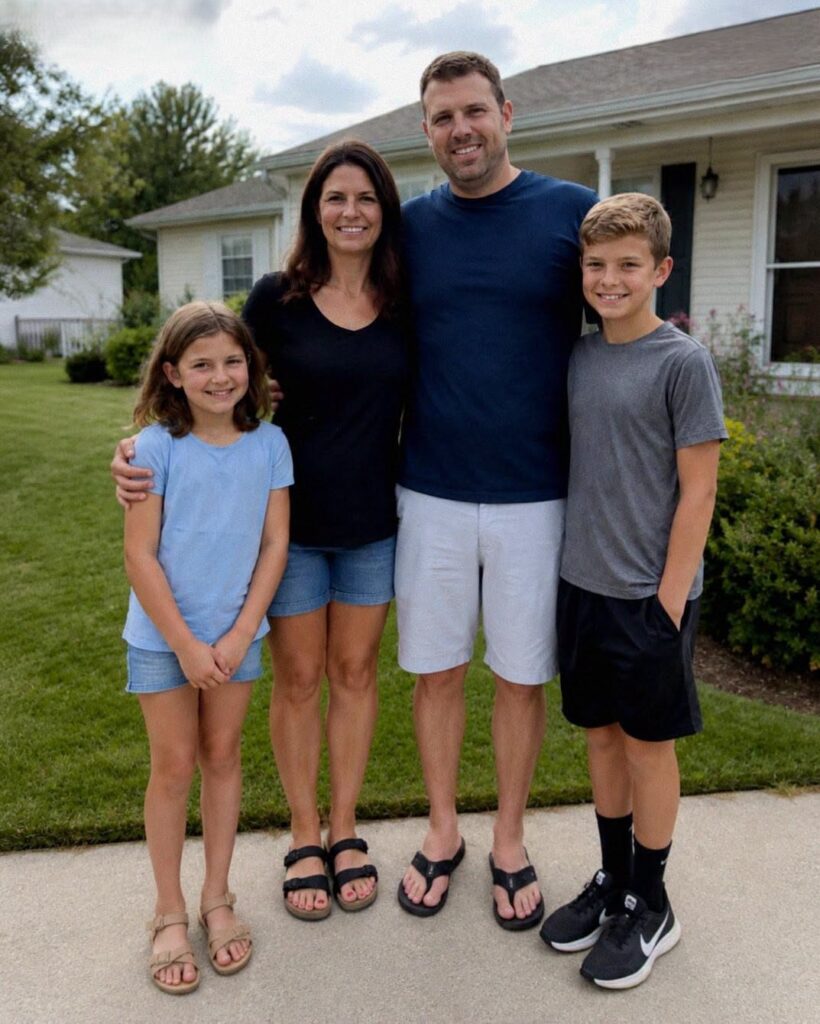
Then I saw his hands shaking.
My name is Claire, and my husband, Daniel, and I have been married for eleven years.
That summer had nearly broken us.
In April, the company Daniel worked for shut down with almost no warning.
One Friday, he had a job.
By Monday morning, he didn’t.
At first, we treated it like a temporary setback.
Daniel updated his résumé.
I picked up a few extra shifts at the dental office where I worked.
We told our daughter Lily, nine, and our son Max, six, that Dad was simply “looking for something better.”
They believed us.
Mostly.
But one month became two.
Then three.
By July, we both understood this wasn’t going to resolve as quickly as we’d hoped.
We canceled our summer vacation.
Takeout disappeared.
Every purchase became a conversation.
I worked more hours.
Daniel spent entire days at the dining-room table submitting applications.
Some weeks he sent out twenty or more.
Most disappeared into silence.
Others led to interviews followed by the same carefully worded rejection.
“We’ve decided to move forward with another candidate.”
Every one seemed to take something out of him.
Daniel had always been the kind of man who found a solution.
Broken sink?
He fixed it.
Car wouldn’t start?
He figured it out.
A child woke up crying at two in the morning?
He was already halfway down the hallway before I sat up.
But unemployment gave him nothing concrete to repair.
There was no screw to tighten.
No wire to replace.
No obvious thing he could do better the next time.
One night, I woke around midnight and realized he wasn’t beside me.
I found him sitting alone at the kitchen table.
His laptop was open.
The only light came from the screen.
“I applied for eleven jobs today,” he said without looking up.
I rested my hand on his shoulder.
“Come to bed.”
He rubbed both palms over his face.
“Do you know how many answered?”
“Daniel.”
“Zero.”
I pulled out the chair beside him.
“You only need one.”
He gave a short laugh.
“That’s easy to say when zero keeps showing up.”
I hated hearing him talk like that.
I wanted to tell him that his paycheck had never been what made him valuable to us.
That being unemployed didn’t make him less capable.
Less of a husband.
Less of a father.
But after months of rejection, almost every reassurance sounded like pity to him.
So I took his hand instead.
“We’re still here.”
Daniel stared at the laptop.
“For now.”
That scared me more than I told him.
By August, our savings were almost gone.
Even the kids had begun changing their behavior.
Lily stopped asking whether we could go anywhere before school started.
Max began cutting coupons from grocery flyers because he had seen me doing it.
One afternoon, I found six of them tucked beside his cereal bowl.
He looked proud.
“These save money.”
I kissed the top of his head and went into the bathroom afterward because I didn’t want him to see me cry.
Then, on a Tuesday morning, Daniel came into the kitchen holding his phone.
There was something strange about his face.
For one horrible second, I thought someone had died.
Then he said, “I got it.”
I stared at him.
“What?”
“The job.”
I screamed.
Actually screamed.
Lily came running downstairs.
“What happened?”
“Your dad got the job!”
Max appeared behind her.
“Does that mean pizza?”
Daniel laughed.
Really laughed.
The kind of laugh I hadn’t heard from him in months.
“Apparently it means pizza.”
That night, we bought the kids whatever they wanted.
Lily ordered something with so many toppings it barely qualified as pizza anymore.
Max wanted plain cheese.
I opened a cheap bottle of champagne Daniel and I had been saving for an occasion that never seemed to come.
Daniel poured his into a plastic cup and lifted it.
“To employment.”
I tapped mine against his.
“To never hearing ‘we went with another candidate’ again.”
He smiled.
“For at least a week.”
The new job was with a civil-engineering contractor that worked closely with the county.
Roads.
Drainage systems.
Underground utilities.
It wasn’t glamorous.
Daniel didn’t care.
“The salary’s better,” he kept saying.
“And the benefits.”
Then, as if he were afraid to believe it too much, he’d add, “And it’s stable.”
That word mattered more than anything.
Stable.
For the first time all summer, I slept without mentally calculating how many weeks we could survive.
Daniel started the following Monday.
That morning, he came downstairs wearing a new shirt and the expensive shoes we had bought months earlier, back when we still assumed he’d need them for interviews.
I immediately grabbed my phone.
He groaned.
“Claire.”
“Stand still.”
“I’m going to work, not kindergarten.”
“First day is first day.”
“No pictures.”
I took one anyway.
He tried not to smile.
Failed.
Before he left, I kissed him at the door.
“Tonight we’re celebrating properly.”
“Didn’t we already celebrate?”
“Pizza doesn’t count.”
“It absolutely counted.”
“I bought steaks.”
His eyebrows went up.
“You bought steaks?”
“Don’t make me regret it.”
He kissed me again.
“Six o’clock.”
For months, we had said no to almost everything.
That afternoon, I wanted one dinner where we didn’t talk about money.
I took the steaks from the refrigerator early.
By three, the kitchen smelled like garlic and butter.
I set out the nicer plates.
At 3:47, I heard the front door open.
I looked at the clock.
Daniel wasn’t supposed to be home for hours.
For a second, I thought maybe I had heard one of the kids.
Then his footsteps came quickly through the hallway.
“Daniel?”
He appeared in the kitchen still wearing his work clothes.
The smile he’d left with that morning was gone.
His face was pale.
“What happened?”
He didn’t answer.
Instead, he turned around and locked the front door.
Then he pulled the blinds shut.
“Daniel?”
He moved into the living room and closed those blinds too.
My stomach tightened.
“What are you doing?”
He looked toward the stairs.
“Where are the kids?”
“Upstairs.”
“Get them.”
“You’re scaring me.”
“Claire.”
He came toward me.
“Get Lily and Max.”
I stared at him.
“Did something happen at work?”
“Pack a bag.”
“What?”
“For you and the kids. Clothes, medication, whatever you need for a few days.”
“Daniel.”
“Please.”
His hands were shaking.
In eleven years, I had seen my husband angry.
I had seen him exhausted.
I had seen him drunk exactly twice.
I had watched him grieve his father.
I had seen terror on his face when Max needed emergency surgery for appendicitis.
I had never seen him like this.
“Did someone threaten you?”
“No.”
“Are you in trouble?”
“No.”
“Then tell me what’s happening.”
Daniel pulled out his phone.
He stared at it for a second before unlocking the screen.
“I had a meeting this morning.”
“Okay.”
“They assigned me to a county drainage project.”
He searched through several photographs.
“A field crew found something after the storms last week.”
“What kind of something?”
“A failure underground.”
He turned the phone toward me.
It showed a map projected onto a wall.
Colored lines ran beneath several streets.
One section had been highlighted in red.
I recognized the neighborhood.
Then I recognized our street.
Then our house number.
Someone had circled it.
My mouth went dry.
“What is this?”
Daniel swallowed.
“There’s an old stormwater tunnel under part of the neighborhood.”
“Under our house?”
“Near it. Maybe partly under the property. They’re still trying to map exactly where.”
I looked at the image again.
“Since when is there a tunnel?”
“Decades.”
“Why did nobody tell us?”
“Because it’s buried infrastructure. Nobody thinks about it until something goes wrong.”
I looked at him.
“And something went wrong.”
He nodded.
“Part of the tunnel collapsed.”
I waited.
“What does that mean?”
“Some of the soil above it may not be properly supported anymore.”
I stared at him.
“Daniel.”
“They found movement.”
“What kind of movement?”
“Enough that they’re worried.”
“About what?”
He looked directly at me.
“The ground giving way.”
I laughed once.
It wasn’t amusement.
It was my brain refusing the sentence.
Then I saw Daniel’s expression.
“You’re serious.”
“Yes.”
I looked up at the ceiling.
Our children were directly above us.
“Why hasn’t anyone warned the neighborhood?”
“They’re working on it now. They were still confirming the affected properties when my supervisor saw our address on my employee paperwork.”
“He knew this was our house?”
“He asked whether I had family here.”
“What did you say?”
“I said yes.”
Daniel’s voice dropped.
“He told me, ‘Get them out. We’ll handle the notifications.’”
That was enough.
I turned toward the stairs.
“Lily! Max! Shoes on! Now!”
Suddenly, every normal sound inside the house felt threatening.
The refrigerator humming.
A pipe ticking.
Max running across his bedroom.
Lily opening a drawer.
I raced upstairs and grabbed a duffel bag.
Clothes.
Toothbrushes.
Chargers.
Medication.
Our insurance folder.
Important documents.
I had no idea what people were supposed to take when told the earth beneath their home might no longer be reliable.
Lily appeared in the doorway.
“What’s happening?”
“We have to leave for a little while.”
“Why?”
“I’ll explain in the car.”
Max came down the hallway carrying three stuffed animals.
“One,” I told him automatically.
He hugged all three tighter.
“But the others will be scared.”
I looked at Daniel.
“Fine. Three.”
We were almost out the door when I glanced toward the neighboring house.
Martha.
She was eighty-two.
Widowed.
She lived alone.
She didn’t drive anymore.
“I have to get Martha.”
Daniel grabbed my arm.
“The county will warn everyone.”
“They haven’t warned her yet.”
“Claire.”
“She’s alone.”
He looked at Martha’s house.
Then back at me.
“Fast.”
I ran across the yard.
Daniel followed.
I pounded on Martha’s door.
She eventually opened it wearing slippers.
“Claire?”
“Pack a bag.”
She blinked.
“What?”
“There’s a problem underground. We need to leave.”
She looked toward Daniel.
“Construction?”
Daniel shook his head.
“An old drainage tunnel partially collapsed.”
Martha’s expression changed.
“Under here?”
“Possibly close enough that they’re evacuating.”
She didn’t argue after that.
I helped her grab medication while Daniel folded her walker and put it into our car.
As we came outside, I looked across the street.
“Other people.”
Daniel followed my gaze.
“We can’t knock on fifty doors.”
“No.”
I pointed at the houses nearest us.
“But we can knock on these.”
So we did.
We warned the people directly beside us and across the street while heading toward the car.
A woman two houses down didn’t even ask questions.
She grabbed her toddler and left.
Another neighbor demanded proof.
Daniel showed him the map.
He immediately went pale.
Then we reached Mr. Hargrove.
He stood in his doorway with his arms folded.
“You’re telling me the street might collapse?”
“I’m telling you engineers found significant soil movement.”
“And the county hasn’t said anything?”
“They’re about to.”
“So right now it’s a rumor.”
Daniel’s jaw tightened.
“It’s not a rumor.”
Mr. Hargrove shook his head.
“I’ll wait for something official.”
Daniel stepped closer.
“Then at least get your wife out.”
“Don’t tell me what to do in my own house.”
I grabbed Daniel’s sleeve.
“Enough.”
He looked furious.
“We warned him.”
“That’s all we can do.”
We left.
Twenty minutes later, we reached my sister Rachel’s house.
The kids immediately began asking questions.
Was our house going to fall down?
Would their toys still be there?
What about Max’s stuffed animals?
What about Kevin, the plastic dinosaur he had somehow forgotten after insisting every stuffed animal needed rescuing?
I kept telling them we didn’t know yet.
Less than an hour later, every phone in the neighborhood started buzzing.
Emergency alert.
Temporary evacuation.
Possible ground instability.
Residents instructed not to remain inside affected properties.
Daniel stared at his phone.
“There.”
I expected him to look relieved.
Instead, he walked outside.
I found him sitting on Rachel’s back steps.
I lowered myself beside him.
“You got us out before the alert.”
Daniel stared at the yard.
“I might’ve ruined the job.”
I turned.
“What?”
“I left.”
“Your supervisor told you to.”
“He told me to get my family out. I don’t think he meant vanish for the rest of my first day.”
“Daniel, half the neighborhood was just evacuated.”
“I know.”
He rubbed his hands together.
“But when you’re new, you don’t know what counts against you.”
I stared at him.
“I waited four months for someone to give me a chance.”
His voice cracked.
“Four months, Claire.”
I stayed quiet.
“Then on day one, I leave before the afternoon is even over.”
“This isn’t you skipping work.”
“It doesn’t matter if I lose the paycheck.”
“Daniel.”
He shook his head.
“Supporting this family was the one thing I was supposed to do.”
That hurt.
Not because he didn’t support us.
Because I finally understood how much he had tied his worth to a paycheck during those months.
I took his hand.
“All summer, you thought supporting us meant bringing home money.”
He looked away.
“It does matter.”
“Of course it matters.”
I squeezed his fingers.
“But today supporting us meant coming home.”
He finally looked at me.
“You did your job.”
“I left my job.”
“No.”
I shook my head.
“You came home because you knew your children might be sleeping above unstable ground.”
His eyes filled.
“You supported this family today, Daniel.”
He looked away quickly.
That night, none of us slept much.
Daniel checked his phone every time the screen lit up.
He pretended he wasn’t worried.
I pretended not to notice.
At 7:12 the next morning, his phone rang.
He stared at the screen.
“It’s my supervisor.”
“Answer it.”
For four months, nearly every important phone call had brought bad news.
I could see that history on Daniel’s face as he swiped to answer.
“Hello?”
He listened.
“Yes, sir.”
Pause.
“No, we’re safe.”
Another pause.
Daniel frowned.
“You want me where?”
He listened again.
“Yes.”
His posture changed.
“Absolutely.”
When he hung up, I waited.
“Well?”
Daniel looked at me.
Then smiled.
“I’m not fired.”
I laughed.
“What did he say?”
“He said I did exactly what he told me to do.”
“Of course you did.”
“He wants me at the emergency operations office.”
“For what?”
“They need help updating the property maps and coordinating field information.”
I smiled.
“So you’re going?”
He was already standing.
“Absolutely.”
We couldn’t return home for five days.
Part of our street needed major repairs.
Several yards were dug up.
One driveway cracked badly enough that it had to be replaced.
Crews mapped the damaged tunnel, stabilized portions of the soil, and installed temporary supports while permanent repairs were planned.
Our house was eventually cleared.
When we walked back inside, Lily went straight to her bedroom.
Max immediately began looking for the dinosaur he had abandoned during the evacuation.
Daniel stood in the kitchen for a long time.
Nothing looked different.
Same refrigerator.
Same table.
Same blinds he had slammed shut five days earlier.
But I knew we would never forget how quickly an ordinary afternoon had changed.
Three weeks later, I finally cooked the steaks.
We ate outside on folding chairs because crews were still working along the street.
Daniel came home directly from work.
His expensive first-day shoes were ruined.
His shirt was dusty.
There was a streak of dirt along one sleeve.
Max looked at the plate in front of him.
“Is this Dad’s first-day dinner or his first-month dinner?”
Daniel picked up his fork.
“Don’t care.”
He cut into the steak.
“I’m finally eating it.”
I pulled out my phone.
Daniel groaned.
“Seriously?”
“First month is first month.”
He shook his head.
“No pictures.”
I took one anyway.
This time he didn’t even pretend to object.
Behind him, the street was still torn apart.
Orange barriers lined the road.
Construction equipment sat where our neighbors normally parked.
His expensive shoes were ruined.
His shirt was dusty.
And the stable job he had been so desperate to keep had turned into the very reason our family got out before the official warning arrived.
Daniel smiled at the camera.
For months, he had believed getting that job would prove he could take care of us again.
But the first thing that job asked him to do wasn’t earn a paycheck.
It was choose us.
And when it mattered, he didn’t hesitate.
{"post":111107,"page":2,"next":[{"id":111104,"title":"My 16-Year-Old Daughter Saved $4,000 All Summer for Her First Car \u2013 Then She Told Me Who She\u0027d Given It All To, and I Couldn\u0027t Say a Word","url":"https:\/\/new24.info\/111104"},{"id":111101,"title":"My Neighbor Covered My Car in Concrete for \u0027Blocking Her Lake View\u0027 \u2013 Then My 8-Year-Old Daughter Wiped the Smile off Her Face","url":"https:\/\/new24.info\/111101"},{"id":111098,"title":"Which Shoes Match This Dress Best? \u2013 Wake Up Your Mind","url":"https:\/\/new24.info\/111098"},{"id":111096,"title":"The Cream Envelope In My Purse That Revealed Which Daughter Had Been Erasing The Other","url":"https:\/\/new24.info\/111096"},{"id":111090,"title":"Before her death, Dolly Parton revealed the name she had chosen for her unborn daughter","url":"https:\/\/new24.info\/111090"},{"id":111086,"title":"Dolly Parton fans blown away by her real hair after years of seeing her in wigs","url":"https:\/\/new24.info\/111086"},{"id":111084,"title":"What Your Choice of Footwear Reveals About Your Inner Personality and Personal Style","url":"https:\/\/new24.info\/111084"},{"id":111081,"title":"Building Bridges: How to Foster Open Communication and Prevent Your Child from Facing Hidden Digital Pressures","url":"https:\/\/new24.info\/111081"},{"id":111078,"title":"The Secret Contract That Redefined My Sister\u2019s Life and My Family\u2019s Future","url":"https:\/\/new24.info\/111078"},{"id":111068,"title":"Dolly Parton\u0027s Tribute Responses Leave Fans Divided \u2014 One Touched Hearts, Another Sparked Outrage","url":"https:\/\/new24.info\/111068"},{"id":111066,"title":"Reflecting on the Final Public Appearances and Enduring Legacy of the Beloved Icon Dolly Parton","url":"https:\/\/new24.info\/111066"},{"id":111061,"title":"My 8-Year-Old Son Gave Up His Lunch Money to Buy a Little Girl with Down Syndrome a Red Birthday Dress \u2013 The Next Morning, Our Lawn Was Covered with Lunchboxes, but What Was Inside the Biggest One Made Him Go Pale","url":"https:\/\/new24.info\/111061"},{"id":111058,"title":"Every Graduate\u0027s Sibling Had to Make Them a Gift for Prom \u2013 I Worried About My Brother with Down Syndrome Until I Saw What He\u0027d Made Me","url":"https:\/\/new24.info\/111058"},{"id":111053,"title":"Remembering Peter Cullen: The Iconic Voice Behind Optimus Prime and Eeyore","url":"https:\/\/new24.info\/111053"},{"id":111050,"title":"A little girl called 911 crying: \u201cDaddy\u2019s snake is so big it hurts!\u201d\u2026","url":"https:\/\/new24.info\/111050"},{"id":111037,"title":"Dolly Parton Once Revealed the Life-Changing Discovery That Came After Her Surgery \u2014 and Why She Never Regretted It","url":"https:\/\/new24.info\/111037"},{"id":111035,"title":"Why Persistent Household Odors Demand Immediate Investigation Before Structural Damage Occurs Behind Your Drywall Surfaces","url":"https:\/\/new24.info\/111035"},{"id":111029,"title":"With heavy hearts, we announce the passing of this legendary man who became such a big part of our childhood.","url":"https:\/\/new24.info\/111029"},{"id":111027,"title":"The Quiet Strategy: Reclaiming My Life After My Children Left Me on a Remote Road","url":"https:\/\/new24.info\/111027"},{"id":111024,"title":"The Symbolic Significance of Placing Elephant Statues at Your Home Entrance","url":"https:\/\/new24.info\/111024"}]}