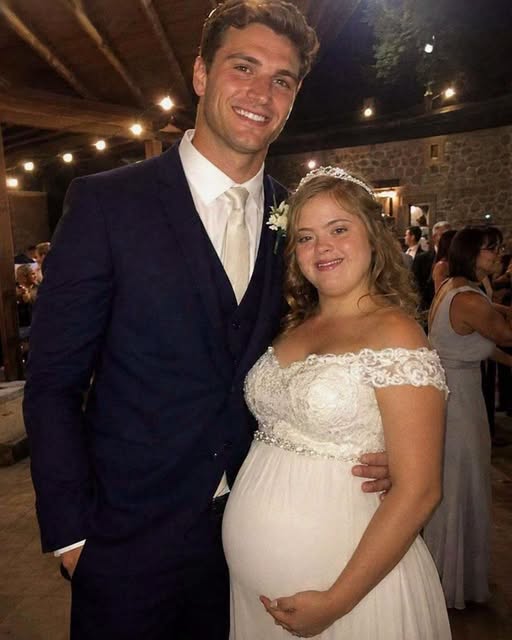
The paper was a legal contract, cold and precise, detailing a six-figure sum my parents had promised Ben if he would marry Rosie and assume full responsibility for her legal, medical, and residential affairs. It was a calculated maneuver designed to strip her of autonomy, with the final, chilling provision being her permanent placement in a state-run residential facility. Ben had signed it, but not for the reasons I initially feared. He had accepted the money only to funnel every cent into a private account for Rosie, using the time he bought to help her secure independent legal counsel. He had been her shield, fighting a silent war against the people who were supposed to protect her most. He knew that if he refused, my parents would simply find someone else, someone who might not care for her at all.
When the news came that Rosie and her twin daughters had survived the harrowing birth, the relief was tempered by the burning rage I felt toward my parents. I found them in the waiting area, their faces masks of performative concern. I did not wait for pleasantries. I confronted them with the contract, my voice echoing through the hallway as I demanded to know how they could justify treating my sister like a commodity. Their excuses withered under the weight of their own exposed cruelty, their faces paling as they realized their secret was no longer a tool of control but a weapon of their own undoing.
Ben stood by my side, his presence steady and unwavering. He made it clear to my parents that his marriage to Rosie was never a business arrangement; it was a choice born of genuine love and profound respect. He had played their game only to dismantle it from the inside, ensuring that when the time was right, Rosie would be the one holding the keys to her own life. The transformation was swift and absolute. The contract was voided, and my parents were forced to resign as trustees, stripped of the power they had wielded so callously for years.
In the weeks that followed, I watched Rosie step into a version of herself I had always known was there but had been stifled by our parents’ overbearing shadow. She took control of her financial and legal affairs with a quiet, fierce competence that left no room for doubt. She was not a person to be managed; she was a woman building a family, raising her daughters, and navigating the complexities of adulthood with grace. She was finally the architect of her own existence, making decisions about her home and her future without waiting for permission from anyone.
The revelation of the secret contract had threatened to shatter our world, but it ultimately served as the catalyst for a necessary liberation. It forced a reckoning within our family that had been decades in the making. We had to confront the uncomfortable truth that our protection had often functioned as a cage. Loving Rosie, we realized, was not about shielding her from the world or making decisions on her behalf; it was about honoring her right to stumble, to succeed, and to define her own path.
There were moments of profound tension between Ben and me as the dust settled. The secrecy had been a heavy burden, and the deception, however well-intentioned, left scars. Yet, the marriage survived, not because of the contract, but because of the woman at its center. Rosie had learned the truth about the arrangement, the money, and the initial deception, and she had still chosen Ben. She saw the man who had risked everything to ensure she could live on her own terms, and she chose to walk beside him as an equal partner, forgiving the silence because she understood the necessity of the sacrifice.
Seeing them together now, in the quiet rhythm of their home, I am struck by the depth of their connection. They have built a life that is entirely their own, unencumbered by the expectations of others. My parents are still in our lives, but the dynamic has shifted permanently. They no longer dictate, and we no longer defer. The power structure that once defined our family has been dismantled, replaced by a foundation of mutual respect and genuine autonomy that allows us to breathe again.
I often reflect on that day in the hospital, on the way the light hit the linoleum floor and the weight of the paper in my hands. It was the day I stopped seeing my sister as someone who needed to be rescued and started seeing her as the formidable woman she had always been. Rosie taught us that dignity is not something to be granted by others; it is an inherent right that we must fight to protect. She did not need us to choose her life for her; she only needed us to stand back and let her live it.
The twins are growing, and the house is filled with the chaotic, beautiful noise of a life lived authentically. Ben and Rosie move through their days with a quiet, unspoken understanding, a partnership forged in the fires of a difficult truth. We are all different now, changed by the realization that the most profound act of love is the act of letting go. Rosie is the heart of this family, and for the first time, she is truly, undeniably free.