That was simply Dolly.
Now, following Parton’s death at 80 on August 25, Stella has shared an intimate detail about her sister’s final days — including an extraordinary offer Dolly reportedly made as her health deteriorated.
Even if doctors could no longer save her, Stella said Dolly was willing to let them try experimental treatments if doing so might someday help somebody else.
Stella Parton Shares Dolly’s Final Wish
In an emotional tribute to her older sister, Stella reflected on the generosity she says remained central to Dolly’s personality until the end.
“My sister was one of the most generous, thoughtful and kind people I’ve ever known. What the world saw is exactly who she was.”
Then Stella revealed something Dolly had apparently told her during her final period of illness.
“She told me recently that if there was no hope for her, she would still allow her medical team to try experimental drugs in the hope of helping others in the future.”
For Stella, the offer perfectly represented the sister she had known all her life.
Even while confronting her own mortality, Dolly was apparently considering whether her experience could somehow benefit another patient.
It also echoed the philanthropic work that had become an increasingly important part of Parton’s legacy.
Throughout her life, she donated to numerous causes, most famously creating the Imagination Library, which has provided hundreds of millions of free books to children.
Her $1 million donation to Vanderbilt University Medical Center during the COVID-19 pandemic also supported research connected to development of the Moderna vaccine.
But Stella’s revelation suggests that Dolly’s desire to contribute to medical progress may have continued even as she faced her own health crisis.
‘What the World Saw Is Exactly Who She Was’
Parton’s carefully crafted appearance was famously theatrical.
There were the enormous blonde wigs, high heels, rhinestones, dramatic makeup and endlessly self-deprecating jokes.
Yet Stella said there was nothing artificial about the kindness underneath it all.
The generosity audiences associated with Dolly was apparently exactly what her family experienced privately.
“My sister was always thinking of others.”
Stella encouraged fans searching for a way to honor Dolly to follow that example — helping people, offering kindness and giving their time or resources when possible.
For Stella, continuing Dolly’s legacy isn’t simply about playing her records.
It is about living according to the values Dolly demonstrated.
Their Tuesday-Morning Tradition Meant Everything
Behind the celebrity tributes and worldwide mourning, Stella is also grieving something far more ordinary.
Tuesday mornings.
For years, the sisters maintained a quiet ritual away from cameras and crowds.
They would speak before sunrise with coffee in hand, catching up on family news and gossip and making plans together.
It was a routine that reminded Stella of their childhood in Tennessee.
“We would catch up on gossip, as sisters do, and drink coffee and make plans, as it has always been our way.”
Those conversations were between sisters rather than celebrities.
There was no audience.
No stage.
No carefully prepared interview.
Just two women who had known each other since childhood talking over morning coffee.
Following Dolly’s death, Stella acknowledged that Tuesdays will never feel quite the same.
“My Tuesday morning coffee time will never be the same but her love, respect and goodness will remain.”
‘My Big Sister Dolly Got Her Wings’
Stella also reflected on Dolly’s strong Christian faith while imagining what might have happened after her death.
Her tribute managed to combine grief with the same sense of humor that characterized so much of the Parton family’s public storytelling.
“My big sister Dolly got her wings this past Tuesday. If anyone gets to heaven I’m sure she made it right on time.”
Then came an image that longtime fans could easily picture.
“I know she’s showing out big time, in all her sparkles and shine.”
It was an affectionate way of imagining Dolly remaining unmistakably herself even beyond this life.
For Stella, faith appears to offer some comfort.
But that doesn’t eliminate the enormous personal loss.
The Parton Family Had Already Experienced Profound Grief
Dolly’s death comes after years of painful losses within the large Parton family.
Dolly and Stella grew up among 12 children born to Robert Lee Parton and Avie Lee Owens in Tennessee.
Their modest childhood would later become central to Dolly’s music and identity, particularly through songs such as “Coat of Many Colors.”
Despite the extraordinary directions their lives eventually took, the siblings remained deeply connected.
Stella previously spoke about the deaths of brothers David, Randy and Floyd and described how difficult repeated family losses had been.
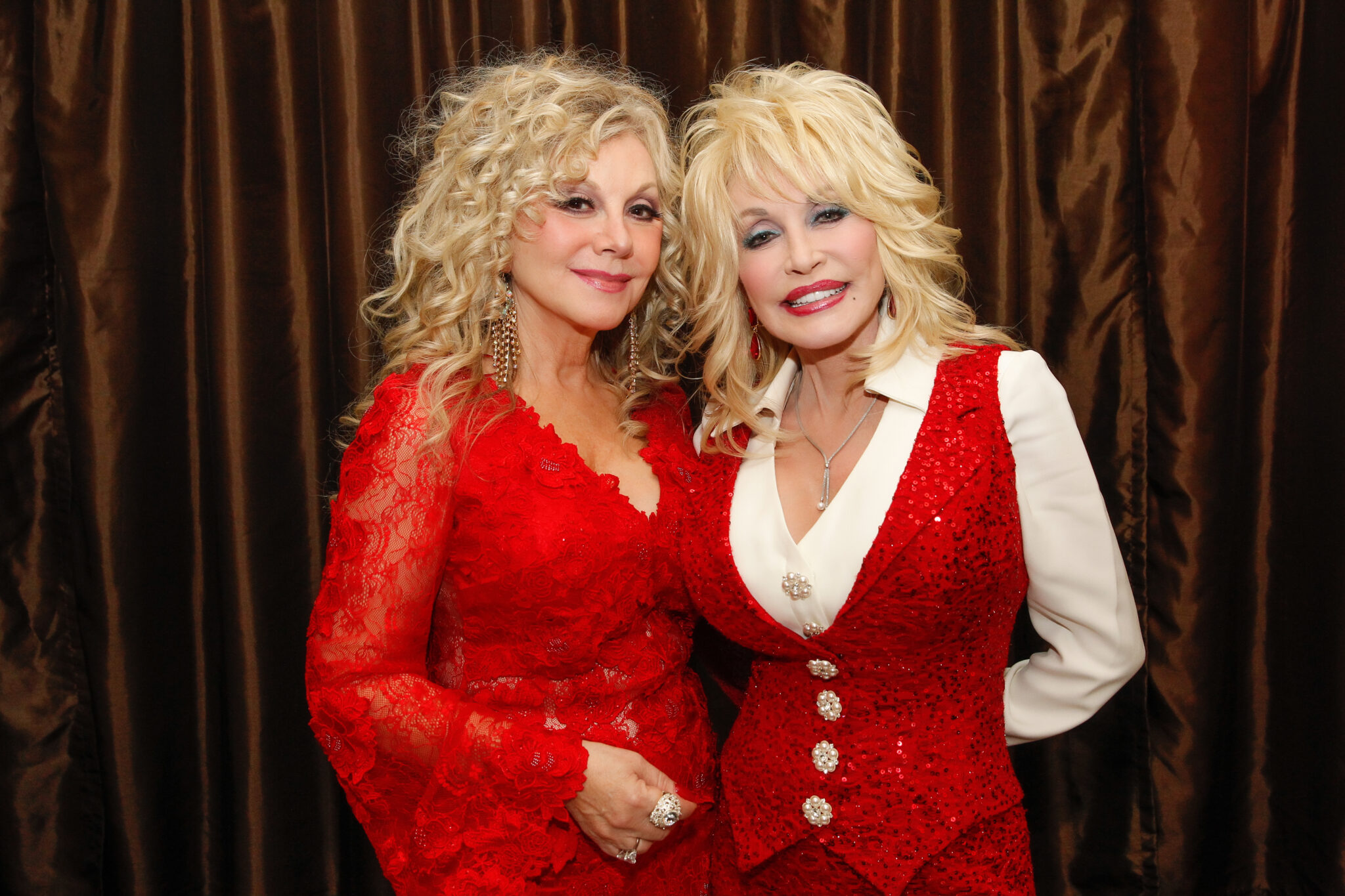
Growing up in such a large family created what Stella described as a “soul connection.”
“We were very emotionally connected, and still are in a real emotional way.”
She admitted that grief had at times left her feeling almost emotionally paralyzed.
Now she is confronting another loss — arguably the most public one imaginable, but also one that remains intensely private.
To millions of people, Dolly Parton was an icon.
To Stella, she was her big sister.
Dolly’s Final Offer Reflected a Lifetime of Giving
Perhaps that is what makes Stella’s revelation about the experimental treatments so powerful.
Dolly spent much of her career giving things away.
Money.
Books.
Opportunities.
Songs.
Time.
And, according to her sister, even when her own medical options were becoming limited, she was apparently willing to give something else: herself as an opportunity for doctors to learn.
There is no guarantee an experimental treatment would have produced information capable of helping another patient.
But Stella’s account suggests that Dolly was willing to try if there was even the possibility.
For someone whose career was built around connecting with strangers through music, the sentiment seems remarkably consistent.
And Stella believes that is how people should remember her sister.
Not only as the woman behind “Jolene,” “9 to 5” and “I Will Always Love You.”
Not simply as the blonde superstar in rhinestones and stilettos.
But as someone who remained concerned about what she could do for others, even when she was the person who needed help.
“She left the world a better place by being in it so let’s follow her example.”
For Stella, the Tuesday-morning phone calls have ended.
The coffee will still be there, but her sister will not.
What remains, she says, is Dolly’s love — and an example of generosity that lasted until the very end.