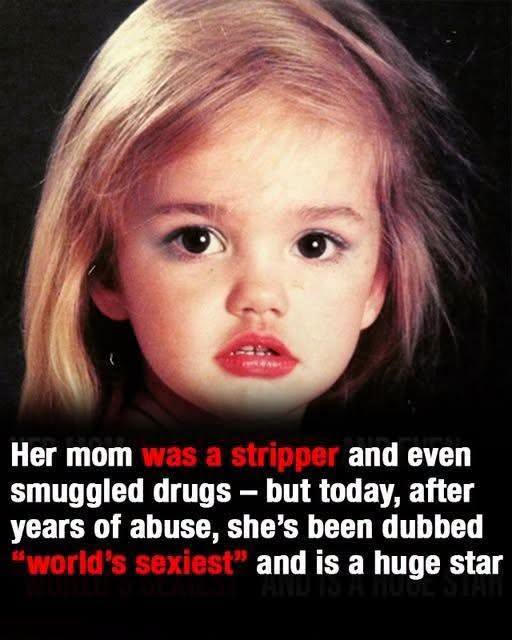
These environments, while unconventional and often frightening for a young child, became the backdrop of her formative years. Minka frequently accompanied her mother to the venue, Crazy Girls, where the sounds of rock music and the atmosphere of the adult entertainment industry became her daily reality. When her mother earned enough money, they would celebrate with late-night grocery runs, a small, fleeting luxury in a life defined by constant unpredictability. Minka has since reflected on these years with a nuanced perspective, acknowledging that while her childhood was chaotic and inconsistent, it ultimately fostered a remarkable level of adaptability that would serve her well in the high-pressure world of Hollywood.
The instability of her home life deepened when her mother struggled with severe addiction, leading to legal troubles and eventual incarceration. During these periods of separation, Minka was moved between various friends and acquaintances, a transient existence that left her feeling untethered. In one of these temporary homes, she endured physical abuse, a painful chapter that she would later have to confront as she sought to heal from the trauma of her upbringing. By the time she reached her teenage years, she was effectively fending for herself, taking on work in an adult video store to survive. She has described this period as the most difficult to process, carrying a heavy burden of shame that she hid for much of her life, yet she views this time as the moment she had to be the bravest.
Her path to recovery began with a difficult decision to leave a toxic, coercive relationship, a situation that involved the trauma of an unwanted pregnancy and the agonizing choice to have an abortion. With her mother’s support, she navigated that crisis, but the weight of her past remained. She initially sought stability in the medical field, training as a scrub nurse, a role that offered a stark contrast to the chaos of her youth. However, the pull of the arts eventually drew her to Los Angeles, where she began the long, arduous process of auditioning and building a career from scratch.
Her breakthrough arrived with the role of Lyla Garrity on the hit series Friday Night Lights. Playing the high school cheerleader allowed her to channel her own experiences of small-town pressure and performative perfection into a character that felt deeply human. She took the role seriously, training with local cheer squads to ensure authenticity. The show, while not a mainstream juggernaut, became a critical darling, and Minka’s presence was a vital component of its success. She famously recalled receiving the news of her casting while living out of a suitcase in a friend’s apartment, a moment that felt like hitting the proverbial jackpot after years of uncertainty.
As her career flourished with roles in films like The Roommate and The Butler, her personal life remained a complex landscape. She navigated several high-profile relationships, including those with Taylor Kitsch, Derek Jeter, Chris Evans, Trevor Noah, and Jesse Williams. These public romances were often scrutinized, and she has been candid about the challenges of balancing personal vulnerability with the demands of fame. Her relationship with her mother, Maureen, remained the most significant and complicated bond of her life. Estranged for years due to financial disputes and the lingering effects of their shared trauma, they only began to mend their relationship as her mother’s health declined.
The diagnosis of terminal colon cancer in 2008 forced a reckoning. Minka chose to move past the resentment that had defined their estrangement, opting instead to be present for her mother’s final years. She spent time in hospice, ultimately holding her mother as she passed away. This experience was profoundly transformative, shifting her focus from professional achievement to service and advocacy. She became a vocal proponent of breast cancer awareness and partnered with ABLE, an organization dedicated to empowering vulnerable women in Africa, many of whom were former sex workers. For Minka, this work was a way to fill the void left by her mother’s death and to honor the struggles of women who, like her mother, were dealt a difficult hand.
Writing her memoir, Tell Me Everything, served as the final piece of her healing process. By documenting her journey—from the storage shed to the red carpet—she was able to reclaim her narrative. The book was a bestseller, praised for its raw honesty and its tribute to the resilience of working-class single mothers. It allowed her to stop hiding the parts of her history that once caused her shame, replacing that shame with a sense of ownership and pride. Today, Minka continues to evolve, finding joy in pursuits like cooking and baking, and building a life with her partner, Dan Reynolds.
She has moved beyond the labels of her past, standing now as a woman who has successfully integrated her history into a life of purpose and grace. Her journey is not merely a story of rags-to-riches, but one of profound internal growth, forgiveness, and the courage to be seen. By embracing the full spectrum of her experiences, she has found a way to live with authenticity, proving that even the most fractured beginnings can lead to a life of strength, stability, and enduring peace.